The KFC300 Flight Control System is a flight controller with an integrated FPV-system category design, built around a redundant GPS/INS navigation core, high-precision differential BeiDou/GPS positioning, and a dual-antenna directional module. For teams running repeated flights over construction sites, those characteristics address the two things that matter most in progress monitoring work: consistent positioning flight after flight, and enough interface capacity to integrate the airframe, payloads, and telemetry links you already operate. This spotlight explains what the KFC300 is, who it suits, the operational problems it is designed to address, and what procurement teams should verify before purchasing.
What the KFC300 Flight Control System Is
The KFC300 Flight Control System is manufactured by Shenzhen Juyingfei Technology Co., Ltd. and is positioned as a high-accuracy, high-reliability, multi-redundancy controller with a wide range of interface options. At its core is an STM32H743 processor paired with a highly redundant high-precision integrated navigation system (GPS/INS). Positioning is handled by a high-precision differential BeiDou/GPS module and a UM982 dual-antenna RTK module, while the dual-antenna directional module provides orientation reference.
Sensor redundancy is a defining feature of the design. The unit carries three accelerometers (ICM-42688-P/ICM-20689/ICM-20689), three gyroscopes with the same part mix, an RM3100 magnetic sensor, two MS5611 barometers, and an MS4525DO airspeed sensor. It also provides three-way voltage detection with a 0-60V detection range. According to the manufacturer, the system has undergone rigorous testing under extreme temperature, pressure, and environmental conditions, and is backed by what the company describes as a dual assurance of quality and production capacity.
Who This Controller Is For
The KFC300 is aimed at B2B operators who need a flight control core they can build a mission-specific platform around, rather than a consumer-grade autopilot. For construction progress monitoring specifically, the relevant users include:
- Survey and mapping teams flying repeatable routes over active sites, where positioning consistency between weekly or monthly flights matters.
- Enterprise drone departments integrating custom payloads - cameras, sensors, or survey equipment - that need the interface capacity the KFC300 provides.
- Integrators and OEMs building monitoring platforms who need open compatibility and customization options, which the manufacturer lists as a design priority.
- Operators working in demanding climates, where the specified -40°C to 85°C operating and storage range is a practical requirement rather than a nice-to-have.
Operational Problems It Addresses
Construction progress monitoring places specific demands on a flight control system. Sites change between flights, structures create complex signal environments, and schedules leave little room for integration rework. The KFC300's published configuration maps to several of these pain points:
- Positioning reliability: the combination of GPS/INS integrated navigation, differential BeiDou/GPS positioning, and dual-antenna RTK is designed to maintain accurate position and heading data - the foundation of repeatable monitoring flights.
- Sensor redundancy: three accelerometers, three gyroscopes, and duplicated barometers provide multiple data sources per measurement type, supporting the high-reliability operating profile the manufacturer describes.
- Integration burden: with over 40 interfaces - 16 PWM channels, 2 CAN interfaces, 1 S.Bus interface, 2 I2C channels, 6 expansion serial ports (one RS232, five TTL), 3 voltage monitoring channels, and more than 10 other interfaces - the controller is built to connect to varied airframes and peripherals without custom engineering at every step.
- Power variability: the DC 9V-50V supply range and sub-10W power consumption give integrators flexibility in how the system is powered from the aircraft's electrical architecture.
- Connector durability: the J30J aerospace-grade connector is specified for the main connector, a detail relevant to platforms subject to vibration and repeated connect/disconnect cycles.
Key Specifications at a Glance
The table below consolidates the published specifications relevant to a construction monitoring procurement decision.
| Attribute | KFC300 Specification |
|---|---|
| Processor | STM32H743 |
| Navigation | Highly redundant high-precision integrated navigation (GPS/INS) |
| Positioning | High-precision differential BeiDou/GPS module; UM982 dual-antenna RTK |
| Directional reference | Dual-antenna directional module |
| IMU | 3 accelerometers (ICM-42688-P/ICM-20689/ICM-20689); 3 gyroscopes (ICM-42688-P/ICM-20689/ICM-20689) |
| Other sensors | RM3100 magnetic sensor; 2x MS5611 barometers; MS4525DO airspeed sensor |
| Interfaces | 40+ total: 16 PWM, 2 CAN, 1 S.Bus, 2 I2C, 6 expansion serial (1x RS232, 5x TTL), 3 voltage monitoring, 10+ other |
| Voltage detection | 3-way, 0-60V range |
| Connector | J30J (aerospace-grade) |
| Power supply | DC 9V-50V; consumption under 10W |
| Weight / size | 147g; 90 x 64 x 33 mm |
| Operating / storage temperature | -40°C to 85°C (both) |
Complementary Video and Data Links
A flight controller is only one part of a monitoring platform; the imagery and telemetry still have to reach the ground. Within the same category on our marketplace, the V31 VIDEO&DATA&RC LINK from Chinowing Technology is a digital video transmitter offering 800MHz and 1.4GHz band selection, a 3-5 km ground-to-ground transmission distance, up to 50 km ground-to-air, and video delay of less than 300ms. For teams needing high-bandwidth video in electromagnetically complex environments, the NanoHD F1/F6 optical fiber video transmission system from GREAT MAINLINK offers a zero-electromagnetic-interference, modular alternative. The Swiftlink Series P40 from Zhejiang Tianze Communication Technology provides TDD bidirectional transmission with a maximum 150 km distance under good air-to-ground vision. These are optional context items - compatibility with the KFC300 should be confirmed with the supplier for any specific pairing.
What Buyers Should Verify Before Purchasing
Procurement teams should treat the published specification as the starting point of due diligence, not the end of it. Before committing to the KFC300, verify the following with the supplier:
- Airframe compatibility: confirm that the 16 PWM channels, 2 CAN interfaces, and serial port mix match your aircraft's flight control wiring and any existing autopilot ecosystem.
- Payload integration: list every camera, sensor, and peripheral you intend to fly, and confirm the required interfaces and power draws are available within the 40+ interface set and sub-10W consumption budget.
- Positioning workflow: differential and RTK positioning depend on correction data and antenna configuration. Ask exactly what ground infrastructure the UM982 dual-antenna RTK module requires on your sites - contact us for the datasheet if this is not documented in your brief.
- Firmware and customization scope: the manufacturer cites open compatibility and customization; get the specific supported software environments and customization process in writing.
- Certifications: the supplied product data does not list certifications. If your operation or region requires specific compliance documentation, request it directly from the supplier.
- Environmental fit: the -40°C to 85°C operating range is a specification, not a site-specific guarantee of performance. Match it against the actual conditions at your monitoring sites, including enclosure and airflow in your airframe.
Procurement Notes for Southern African Operations
For teams operating in Southern Africa, two aspects of the KFC300's published specification deserve particular attention. First, the 85°C upper operating limit and the rigorous extreme-condition testing described by the manufacturer are relevant where monitoring flights take place in high-ambient-temperature environments - though real installed performance depends on your airframe's thermal design, so validate rather than assume. Second, BeiDou support alongside GPS in the differential positioning module is worth confirming against your GNSS planning assumptions for the region. Lead times, import logistics, and local support arrangements are not covered in the supplied product data; contact us for the datasheet and current availability information.

Featured product
KFC300 Flight Control System
The KFC300 Flight Control System features industry-leading hardware and software configurations, exceptional performance design, open compatibility and customization, as well as dual assurance of quality and production capacity. It integrates a highly redundant high-precision integrated navigation system (GPS/INS), a...
Products mentioned in this guide
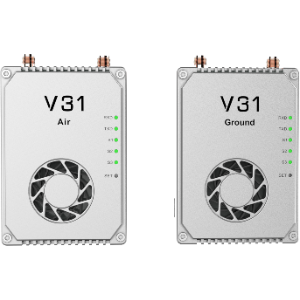
V31 VIDEO&DATA&RC LINK
V31 digital video transmitter is a device with high functional integration and excellent performance. It integrates functions such as image transmission, network protocol...
View product details →
Optical fiber video transmission
NanoHD F1/f6 fiber optic video transmission system adopts a modular design, supporting multi-scenario applications. it is integratedwith high-definition cameras and features...
View product details →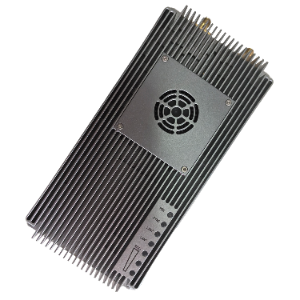
Swiftlink Series
S1400-P40 is a self-developed TDD bidirectional graph integrated wireless transmission device. The product has the functions of real-time interference detection, adaptive...
View product details →Frequently asked questions
What is the KFC300 Flight Control System?
The KFC300 is a flight controller with FPV-system category hardware from Shenzhen Juyingfei Technology Co., Ltd. It integrates a highly redundant high-precision GPS/INS navigation system, a high-precision differential BeiDou/GPS positioning module, and a dual-antenna directional module, with over 40 interfaces and an STM32H743 processor.
Is the KFC300 suitable for construction progress monitoring?
Its published features - redundant navigation, differential BeiDou/GPS positioning, dual-antenna RTK, and extensive interface options - align with the positioning consistency and integration needs of repeated monitoring flights. Site-specific performance figures are not included in the supplied data; contact us for the datasheet.
What interfaces does the KFC300 provide?
More than 40 in total: 16 PWM channels, 2 CAN interfaces, 1 S.Bus interface, 2 I2C channels, 6 expansion serial ports (one RS232, five TTL), 3 voltage monitoring channels, a J30J aerospace-grade connector, and over 10 other interfaces.
What are the KFC300's power and environmental specifications?
It operates on DC 9V-50V with power consumption under 10W, weighs 147g, measures 90 x 64 x 33 mm, and is specified for -40°C to 85°C in both operating and storage temperature ranges. The manufacturer states it has undergone rigorous testing under extreme temperature, pressure, and environmental conditions.
Does the KFC300 support RTK positioning?
Yes. The system includes a UM982 dual-antenna RTK module together with a high-precision differential BeiDou/GPS positioning module and a dual-antenna directional module. For details on required ground infrastructure and correction workflows, contact us for the datasheet.
Need help selecting the right system?
Tell us your mission, payload, and operating environment. Our team will help you compare options and request the right datasheets from verified suppliers.