A flight controller with FPV system is the core decision in any public safety UAV build: it determines whether your aircraft can hold attitude in gusty conditions near a fire line, survive a single sensor failure over a crowded area, and keep operators supplied with reliable first-person video and telemetry. The specification sheet tells you most of what you need — if you know how to read it. This explainer walks through the key specifications of the KFC100 Flight Control System, a professional swarm and patrol plane control system from Shenzhen Juyingfei Technology, and explains what each one means in practice for emergency response and public safety procurement teams.
Why Flight Controller Specifications Decide Mission Fit
In public safety and emergency response, the flight controller is not a commodity component — it is the safety-critical brain of the aircraft. A patrol or swarm platform flying over an incident scene cannot tolerate attitude estimation errors, sensor dropouts, or connector failures. Specifications matter because they map directly to mission outcomes: processor capability determines how much autonomy and sensor fusion the system can run; sensor redundancy determines fault tolerance; interface count determines what payloads and links you can integrate; and the thermal envelope determines whether the unit survives the environment it will actually be flown in. When evaluating any flight controller with FPV system category product, treat every line of the datasheet as a procurement question, not marketing copy.
Processor and Sensor Redundancy: The Foundation of Trustworthy Flight
The KFC100 is built around an STM32H743 processor. For buyers, the practical significance is that this is a high-performance microcontroller class commonly used in professional autopilots, giving headroom for real-time attitude control, navigation, and swarm or patrol mission logic. The processor alone, however, tells you less than the sensor suite does.
The KFC100 carries two ICM-42688-P accelerometers and two ICM-42688-P gyroscopes, two MS5611 barometers, support for an external compass module, and an optional MS4525DO airspeed module. Here is what each of these means for mission fit:
- Dual accelerometers and dual gyroscopes (a redundant IMU arrangement): if one inertial sensor drifts or fails mid-flight, the controller can continue estimating attitude from the second unit. For public safety operators, this is the difference between recovering an aircraft and losing it over a scene.
- Dual MS5611 barometers: redundant altitude sensing reduces the risk of altitude estimation errors during low-altitude patrol or swarm operations, where a barometer glitch can trigger a dangerous climb or descent.
- External compass module support: mounting the compass away from power lines, motors, and other magnetic interference sources on the airframe improves heading accuracy — critical for autonomous patrol routes and coordinated swarm flying.
- Optional MS4525DO airspeed module: for fixed-wing patrol aircraft, airspeed sensing enables more reliable speed control than GPS-derived ground speed alone, which matters in wind and during loitering over an incident.
When comparing controllers, ask suppliers exactly which sensors are duplicated, whether they are on separate buses, and how the flight software handles a sensor disagreement. If a supplier cannot answer these questions, request the datasheet before proceeding.
Interfaces: How Much Ecosystem Can You Keep?
The KFC100 provides more than 25 interfaces: 12 PWM control channels, 1 CAN bus, 1 S.Bus port, 2 I2C channels, 7 UART expansion ports, and 2 voltage monitoring ports, all using SHB1.0 locking connectors. In procurement terms, this interface set answers three questions.
First, actuation capacity: 12 PWM channels support fixed-wing patrol aircraft with multiple control surfaces, throttle, and auxiliary functions such as payload release or gimbal control. Second, integration flexibility: 7 UART ports and 2 I2C channels give room for airspeed sensors, telemetry radios, FPV-related peripherals, and GNSS receivers without forcing trade-offs between them. CAN bus support matters for modern redundant sensor and power modules. Third, physical reliability: SHB1.0 locking connectors resist vibration-induced disconnection — a common failure point in non-locking connector designs, and a meaningful consideration for aircraft flown repeatedly in emergency response conditions.
The 2 dedicated voltage monitoring ports (with a 12.6–50V monitoring range) allow the controller to track battery state directly. For public safety teams, accurate voltage monitoring supports go/no-go decisions before launch and low-battery alerts during extended patrol sorties.
Power, Weight, and Thermal Envelope: The Practical Constraints
The KFC100 operates on DC 14.8–50V, consumes less than 10W, weighs 22g, and measures 43 × 43 × 11.3 mm. Each of these numbers has a direct procurement consequence.
- Operating voltage DC14.8–50V: the controller can run across common multi-cell lithium battery configurations, which simplifies power system design on both electric fixed-wing and larger patrol platforms. Confirm compatibility with your specific battery and power distribution architecture before purchase.
- Power consumption under 10W: low draw preserves endurance on battery-limited patrol missions and reduces heat generated inside a tightly packed fuselage.
- 22g weight and a 43 × 43 × 11.3 mm footprint: the unit fits small patrol and swarm airframes where every gram and cubic centimetre affects payload and endurance budgets.
- Operating temperature -20°C to 85°C (storage -40°C to 85°C): this envelope is relevant for buyers in hot regions such as the Middle East, where ground temperatures and enclosed-fuselage soak temperatures can exceed what consumer-grade electronics tolerate. Always verify the temperature your controller compartment will actually reach on the ground in summer, not just ambient air temperature.
The FPV and Data Link Side of the System
A flight controller with FPV system category purchase is really two decisions: the autopilot and the link that carries video, telemetry, and control. The KFC100's published specification covers the control system itself; it does not list an integrated video transmitter, so buyers should plan the link as a separate line item and confirm integration details with the supplier — contact us for the datasheet if integration specifics are not published.
Within the same category on our marketplace, two companion products illustrate what link specifications to look at. The D03 VIDEO&DATA&RC LINK from Chinowing Technology is a multi-link data transceiver with an 820–845MHz (or P900 MHz, 902–928MHz) operating frequency, transmit power of 100mW–1W, air rates up to 1000kbps, 128-bit AES encryption, and a stated transmission distance of 5–30km ground-to-ground or 30–60km ground-to-air. Its 128-bit AES encryption is particularly relevant for public safety operations where telemetry and video must not be interceptable. The C LINK Series (C40) from Zhejiang Tianze Communication is a 10W-transmission-power graphics and digital integrated device supporting point-to-point, point-to-multipoint, trunk, and star networking, with a stated range of up to 50km under good air-to-ground visibility, and it is positioned for fire prevention, inspection, and monitoring use cases.
The procurement rule: match link range, frequency band, and encryption to your regulatory environment and mission radius, then verify that the link's interface type (for example, the D03's S-BUS and TTL/RS232 interfaces) connects cleanly to the flight controller's UART and S.Bus ports.
Specification Summary: KFC100 at a Glance
| Specification | KFC100 Value | What It Means in Practice |
|---|---|---|
| Processor | STM32H743 | High-performance MCU class with headroom for swarm and patrol mission logic |
| IMU | 2x ICM-42688-P accelerometers, 2x ICM-42688-P gyroscopes | Redundant inertial sensing for fault tolerance in flight |
| Barometers | 2x MS5611 | Redundant altitude estimation for low-altitude operations |
| Compass | External module supported | Remote mounting reduces magnetic interference |
| Airspeed module | MS4525DO (optional) | Adds true airspeed control for fixed-wing patrol aircraft |
| Control channels | 12 PWM | Supports multi-surface fixed-wing and auxiliary payloads |
| Expansion | 1x CAN, 1x S.Bus, 2x I2C, 7x UART, 2x voltage monitoring ports | Room for links, sensors, and peripherals without trade-offs |
| Voltage monitoring range | 12.6–50V | Battery state tracking across common multi-cell setups |
| Operating voltage | DC14.8–50V | Flexible power system design |
| Power consumption | <10W | Preserves endurance on battery-limited missions |
| Weight / dimensions | 22g / 43 × 43 × 11.3 mm | Fits compact patrol and swarm airframes |
| Operating temperature | -20°C to 85°C (storage -40°C to 85°C) | Suitable for hot-climate deployments, subject to installation verification |
What to Ask Suppliers Before You Buy
Specification sheets are a starting point. Before committing to a flight controller with FPV system for a public safety program, put these questions to the supplier:
- How does the flight software vote between the dual IMUs and dual barometers, and what happens on sensor disagreement?
- Which flight software and ground control station versions is the KFC100 compatible with, and is the protocol documented?
- What is the recommended installation and vibration-isolation approach on my specific airframe, and can the supplier provide integration guidance?
- Which FPV video and data links are validated to work with the controller's UART, S.Bus, and CAN interfaces?
- What is the real thermal behaviour inside a fuselage at high ambient temperatures, and is the -20°C to 85°C rating validated at the module level or the system level?
- Are there certifications, compliance documents, or test reports available? If not published, contact us for the datasheet and any supporting documentation.
Suppliers who answer these questions with documentation — not assurances — are the ones whose specifications you can build a mission program around. The KFC100's published data gives procurement teams a strong technical baseline: redundant inertial and barometric sensing, an extensive interface set with locking connectors, a wide voltage and temperature envelope, and a 22g footprint sized for patrol and swarm aircraft. Validate the remaining integration details with the supplier, and pair the controller with a link whose range, encryption, and interfaces match your operational radius and security requirements.

Featured product
KFC100 Flight Control System
KFC100 Flight Control System is a professional Swarm & Patrol plane Control system. The Technical Specifications are as follow. Processor:STM32H743 Sensors Accelerometers (2x):ICM-42688-P*2 Gyroscopes (2x):ICM-42688-P*2 Compass :External module supported Barometers (2x):MS5611 Airspeed Module:MS4525DO (optional)...
Products mentioned in this guide
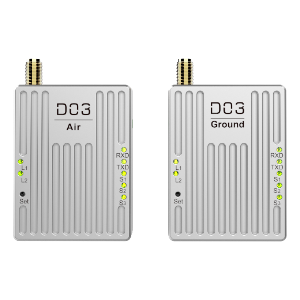
D03 VIDEO&DATA&RC LINK
D03 multi - link data transceiver is a high - performance data transmission device. It uses a military - grade data transceiver module and an integrated link design, specifically...
View product details →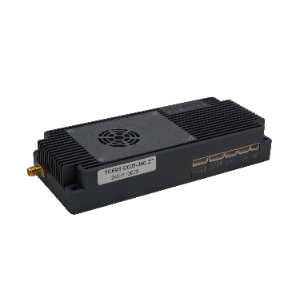
C LINK Series
C40 belongs to the TC69B series of 10W transmission power, low power consumption of graphics and digital integrated equipment. The device supports multiple transmission modes,...
View product details →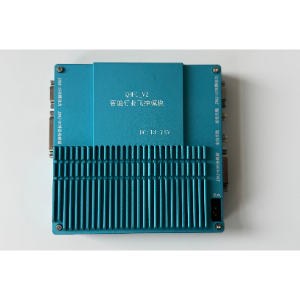
QHFC_V2
It internally integrates multiple core modules, including high-precision direction-finding and positioning satellite navigation units, dual-redundant full-temperature-calibrated...
View product details →Frequently asked questions
What processor does the KFC100 Flight Control System use, and why does it matter?
The KFC100 uses an STM32H743 processor. This is a high-performance microcontroller class widely used in professional autopilots, providing the processing headroom needed for real-time attitude control, navigation, and the swarm and patrol mission functions the system is designed for.
Does the KFC100 have sensor redundancy?
Yes. The published specification lists two ICM-42688-P accelerometers, two ICM-42688-P gyroscopes, and two MS5611 barometers, plus support for an external compass module and an optional MS4525DO airspeed module. This dual-sensor arrangement gives the controller a fallback if a primary inertial or altitude sensor fails in flight.
What voltage and temperature ranges does the KFC100 support?
The KFC100 operates on DC 14.8–50V, monitors voltage across a 12.6–50V range, and is rated for operation from -20°C to 85°C with storage from -40°C to 85°C. Buyers in hot regions such as the Middle East should still verify the temperature inside their specific fuselage installation, which can exceed ambient conditions.
Can the KFC100 integrate with FPV video and data links?
The KFC100 provides 7 UART expansion ports, 1 S.Bus port, and 1 CAN bus, which are the typical integration points for video and data links. The controller's published specification does not list an integrated video link, so plan the link separately — for example, the D03 VIDEO&DATA&RC LINK or the C LINK Series (C40) in the same category — and confirm integration details with the supplier. Contact us for the datasheet if you need specifics.
How many interfaces does the KFC100 offer, and what connector type does it use?
The KFC100 provides more than 25 interfaces: 12 PWM control channels, 1 CAN bus, 1 S.Bus port, 2 I2C channels, 7 UART expansion ports, and 2 voltage monitoring ports. All connections use SHB1.0 locking connectors, which resist vibration-induced disconnection — an important reliability factor for aircraft flown repeatedly in emergency response conditions.
Need help selecting the right system?
Tell us your mission, payload, and operating environment. Our team will help you compare options and request the right datasheets from verified suppliers.