A flight controller with an FPV system is the decision-making and visibility core of an inspection UAV: it stabilises the airframe, executes the mission, and feeds live video to the operator. For infrastructure inspection teams, the specifications that matter most are not headline numbers but architecture questions — whether the controller is open or closed, whether it ports across airframe types and hardware platforms, and whether the video link and ground station integrate cleanly. This guide explains what those specifications mean in practice, how they affect mission fit, and what to ask suppliers before you buy, using the AEC-22 flight control UAV system as the reference product.
What Flight Controller Specifications Actually Mean
Flight controller datasheets tend to lead with feature lists, but for procurement purposes the specifications fall into a small number of practical categories. Understanding what each one controls helps you separate marketing language from engineering substance.
- Architecture (open vs. closed): An open source or open architecture controller exposes its software stack so your team can inspect, modify, and extend it. A closed system locks you into the vendor's update cycle. For inspection programmes that evolve over years, openness is a long-term cost factor, not a developer nicety.
- Airframe support: A controller rated for both multi-rotor and fixed-wing platforms can serve inspection fleets that mix hovering-capable multi-rotors (close-range structure work) with fixed-wing platforms (linear infrastructure corridors). One controller family across both types simplifies training and spares.
- Scalability and module compatibility: A highly scalable controller that is compatible with various functional modules lets you add payloads and capabilities without replacing the core system. This is the difference between a controller you grow into and one you grow out of.
- Hardware portability: A controller that adapts to a variety of master control chips and ports across different hardware platforms protects you from single-chip supply risk and lets you reuse your software investment when hardware changes.
- Physical footprint: Small volume matters for inspection airframes where payload bay space is contested between sensors, batteries, and communications equipment.
How These Specifications Affect Infrastructure Inspection Mission Fit
Infrastructure inspection — power lines, pipelines, bridges, towers, and industrial sites — places specific demands on a flight control stack. Match the specification categories above to the mission profile before comparing any two products.
- Fleet flexibility: Inspection programmes rarely run a single airframe type. A controller such as the AEC-22, which supports both multi-rotor and fixed-wing configurations, allows one software baseline across mixed fleets, reducing pilot training and maintenance overhead.
- Customisation for payload workflows: Inspection teams often need flight behaviour tuned to sensor requirements — altitude holds for corrosion mapping, corridor tracking for pipeline routes. A controller described as offering a high degree of freedom, where users can flexibly customise and adjust it to their own needs, supports this directly.
- Integration with communications: Inspection flights frequently operate beyond simple line-of-sight video. The flight controller must coexist with data links, mesh radios, and ground stations — which is why the communications specifications of the surrounding system deserve equal scrutiny.
- Upgrade path: Infrastructure assets are inspected repeatedly over years. A controller with powerful scalability and painless platform transplantation lowers the cost of keeping the fleet current as requirements change.
The AEC-22: What the Supplied Data Says
The AEC-22 Open Source Flight Control UAV System from Shenzhen Skyevtol Network Co. Ltd. is a small-volume flight control system for multi-rotor and fixed-wing platforms. Its documented characteristics map closely to the specification categories above:
- Open source architecture, described as offering high fit and platform painless transplantation.
- Highly scalable, and can be quickly scaled and made compatible with various functional modules.
- A high degree of freedom: users can flexibly customise and adjust it according to their own specific needs and ideas.
- Adaptable to a variety of master control chips, and portable across different hardware platforms — a stated benefit for development efficiency for both professional developers and amateurs.
- Small physical volume, suitable for integration into compact inspection airframes.
Note what the supplied data does not cover: processor specifics, sensor suite details, supported telemetry protocols, environmental ratings, and certification status are not included. Contact us for the datasheet on any of these points. For infrastructure inspection procurement, that gap is normal — controller datasheets often separate marketing summaries from full technical documentation — but it means you should request the complete specification set before shortlisting.
The FPV and Ground Segment: Evaluating the Full System
A flight controller is only as useful as the video and control links around it. FPV system specifications — video transmission band, transmission power, and ground station capability — determine whether operators can actually see and command the aircraft during inspection flights. The related products below illustrate the ground and link components that complete a system around a controller like the AEC-22. Note that the supplied data does not state that these products are integrated with the AEC-22; treat this as an illustration of how to read component specifications, not as a verified bundle.
| Component | Model | Documented specifications |
|---|---|---|
| Mesh handheld terminal | ZHZS600-MSG | 2W transmission power; compact handheld/wearable design; establishes wireless links in complex environments; supports HD video, voice walkie-talkie, and IP data transmission |
| Dual-screen handheld ground station | T30s | Two 10.1-inch HD screens; aviation aluminium body; image and data transmission integrated; one-control-two and two-vehicles-one-control; 40ms remote control response; 3.5-hour battery life with external power option; Intel i7 6500U with multiple memory and drive options; V21 integrated with external V31, plus third-party link support |
| FPV video transmitter | BAT MAX 5.8W | PandaRC BAT MAX VTX, 5.8W, supporting 4.9G / 5.8G / 6G, for FPV racing drones and fixed wing |
When reading specifications like these, ask how each number translates to your mission. A 2W mesh radio matters for inspection corridors with terrain obstruction. A 40ms control response delay matters for close-proximity structural work. Dual-screen ground stations matter when one operator must monitor flight telemetry and payload video simultaneously. Band options on a VTX (4.9G / 5.8G / 6G in the BAT MAX example) matter for frequency coordination in congested radio environments — a real concern around industrial sites.
Questions to Ask Suppliers Before You Buy
Use this checklist when evaluating any flight controller with an FPV system for an inspection programme. Each question targets a specification category that datasheets frequently leave vague.
- Portability proof: Can you demonstrate porting your stack across at least two master control chips or hardware platforms? The AEC-22 claims this capability — ask any vendor to evidence it.
- Module compatibility: Which functional modules are confirmed compatible today, and which require custom integration work?
- Airframe coverage: Is fixed-wing support as complete as multi-rotor support in firmware and tooling, or is one an afterthought?
- Integration responsibility: Who owns the integration between the controller, the video link, and the ground station — you, the vendor, or a third party?
- Full datasheet: Request the complete technical specification, including environmental ratings, interface definitions, and any certification status. If it is not published, contact us for the datasheet and we will connect you with the manufacturer.
- Support terms: For open source systems, clarify what the vendor still supports — updates, patches, and hardware availability over a multi-year inspection cycle.
Procurement Notes for North African Infrastructure Programmes
For inspection teams operating in North Africa, two specification categories deserve extra weight. First, radio environment: transmission power and band flexibility (as seen in the 2W mesh handheld and the multi-band VTX options above) affect performance in desert terrain and around long linear assets, where link margins are tested over distance. Second, supply-chain resilience: the ability to port a flight control stack across different hardware platforms — a documented strength of the AEC-22 — reduces exposure to regional component sourcing delays. Neither point is a substitute for compliance verification: import, spectrum, and airworthiness requirements vary by country, and you should confirm the applicable regulatory status with the supplier and local authorities. Contact us for the datasheet and current availability information for any product referenced here.
The practical takeaway for buyers: treat the flight controller and FPV system as one integrated procurement decision. An open, portable, scalable controller such as the AEC-22 gives inspection teams the architectural flexibility to adapt as missions and hardware evolve — but every claim should be verified against the full datasheet, and the surrounding link and ground-station components should be specified with the same rigour as the controller itself.

Featured product
AEC-22 Open Source Flight Control UAV System Small Volume Multi-Rotor Fixed Wing
AEC-22 Open Source Flight Control UAV System Small Volume Multi-rotor Fixed Wing 1. The AEC-22 offers high fit, platform painless transplantation, high degree of freedom, and powerful scalability. 2. The AEC-22 is highly scalable and can be quickly scaled and compatible with various functional modules. 3. The...
Products mentioned in this guide
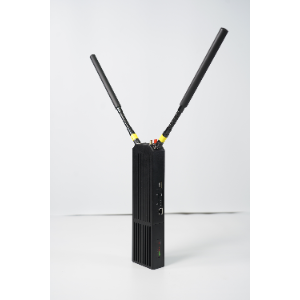
Self-organizing network handheld terminal
Mesh handheld device, small in size and compact in design, can be held or worn, with 2W of transmission power. This product can quickly establish wireless links for users in...
View product details →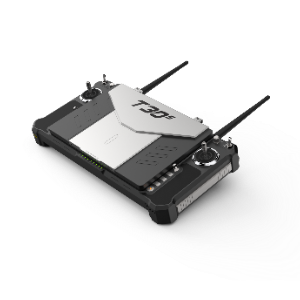
T30s Dual-screen Handheld Ground Station
The T30s dual - screen handheld ground station is specifically designed for the operation of various types of unmanned vehicles. It is powerful and exquisitely designed. With two...
View product details →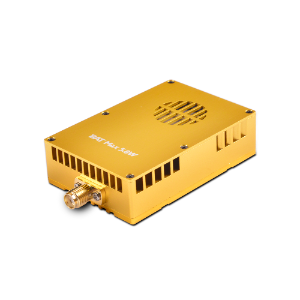
BAT MAX 5.8W
PandaRC BAT MAX VTX 5.8W 4.9G 5.8G 6G FPV Racing Drone Fixed Wing
View product details →Frequently asked questions
What does an open source flight controller mean for a commercial inspection operation?
It means the underlying software architecture is exposed, so your team or integrator can inspect, customise, and adjust the system to your specific mission needs. The AEC-22 is described as an open source flight control UAV system offering a high degree of freedom and powerful scalability. For inspection programmes, this typically translates into more control over upgrades and payload integration, though you should confirm ongoing vendor support terms with the supplier.
Can the AEC-22 be used on both multi-rotor and fixed-wing inspection drones?
Yes. The supplied product data describes the AEC-22 as a flight control UAV system for both multi-rotor and fixed-wing platforms, with high fit and painless platform transplantation. This makes it relevant for inspection fleets that mix airframe types. For configuration details and supported setups, contact us for the datasheet.
Is the AEC-22 compatible with other manufacturers' ground stations and video links?
The supplied data does not state specific compatibility with third-party ground stations or video links. The AEC-22 is described as highly scalable and compatible with various functional modules, and adaptable to a variety of master control chips, but integration with specific products — such as the T30s dual-screen ground station or the BAT MAX 5.8W VTX listed on our marketplace — should be verified with the manufacturer. Contact us for the datasheet and integration guidance.
What FPV system specifications matter most for infrastructure inspection?
The specifications that most directly affect inspection missions are transmission power (which influences link reliability over long or obstructed corridors), frequency band options (which matter for coordination in congested radio environments), and ground station capability (screen count, control response delay, and operating endurance). For example, the T30s ground station documents a 40ms remote control response and 3.5-hour battery life, and the ZHZS600-MSG handheld provides 2W transmission power with HD video, voice, and IP data transmission. Match these figures to your specific mission profile rather than treating higher numbers as automatically better.
Does the AEC-22 come with certifications or environmental ratings for deployment in North Africa?
The supplied product data does not include certification status, environmental ratings, or operating temperature ranges. Do not assume these from the general description — contact us for the datasheet, and confirm import, spectrum, and airworthiness requirements with the relevant authorities in your operating country before deployment.
Need help selecting the right system?
Tell us your mission, payload, and operating environment. Our team will help you compare options and request the right datasheets from verified suppliers.