The AR8032S, marketed as the world's first 150M-7GHz full-band communication chip for mining and stockpile measurement and other industrial applications, is a RISC-V-based wireless communication SoC from Hefei Kuxin Microelectronics Co., Ltd. It integrates baseband processing, an RF front-end, and upper-layer communication protocol stacks into a single chip, running on the Alibaba Xuantie E907 RISC-V CPU IP at a 400MHz clock frequency. For mining and stockpile measurement teams building UAVs, ground sensors, or industrial IoT endpoints, the practical significance is consolidation: one compact, low-power silicon platform that can be designed into miniaturized communication systems instead of stacking separate baseband, RF, and protocol components.
What the AR8032S Actually Is
According to the product description, the world's first 150M-7GHz full-band communication chip is a single-chip wireless communication SoC. Its defining characteristics are threefold. First, full-band operation from 150MHz to 7GHz, which is an unusually wide frequency span for a single integrated device. Second, architectural integration: baseband processing, the RF front-end, and upper-layer communication protocol stacks all live on one die. Third, the processing core is the Alibaba Xuantie E907 RISC-V CPU IP clocked at 400MHz, a choice the supplier ties to compact design, rapid processing, and ultra-low power consumption.
The supplier positions the chip for next-generation IoT devices, industrial sensors, and miniaturized communication systems. For detailed electrical characteristics, interface definitions, power consumption figures, and package information beyond what is listed in the product description, contact us for the datasheet.
Who This Chip Is For
The AR8032S is a component, not a finished drone or radio. Its natural buyers are engineering and procurement teams who design or specify the communication layer of a system. In the mining and stockpile measurement context, that typically means:
- UAV manufacturers building survey and stockpile measurement platforms that need an integrated, power-efficient communication SoC on board.
- Mining technology integrators deploying industrial sensors and IoT endpoints across pits, haul roads, and stockpile yards.
- System architects who need to cover multiple frequency bands across different sites or regulatory environments without redesigning the radio hardware each time.
- Teams miniaturizing payloads, where board space and power budget are constrained and a single-chip solution reduces integration complexity.
If your organization buys complete drones off the shelf and never touches the electronics stack, this chip is not a direct purchase. It becomes relevant when you are specifying a custom platform, qualifying a supplier's design, or evaluating whether a vendor's communication architecture meets your operational requirements.
Operational Problems It Addresses in Mining and Stockpile Measurement
Mining sites are difficult radio environments: heavy machinery, terrain shadowing, dust, and long distances between the pit, the stockpile area, and the office. Stockpile measurement workflows add their own demands, with UAVs flying survey patterns that generate data needing reliable transfer. A full-band communication SoC speaks to several of these pain points at the design level:
- Frequency flexibility. Coverage from 150MHz to 7GHz means a single chip design can potentially be configured for different bands as site requirements or spectrum conditions change, rather than being locked to one band.
- Integration overhead. Combining baseband, RF front-end, and protocol stacks on one chip reduces the component count, board area, and integration effort compared with multi-chip radio designs.
- Power budget. Ultra-low power consumption, as described by the supplier, matters for battery-powered UAVs and remote sensors where every milliamp affects endurance or maintenance intervals.
- Processing capability. The 400MHz RISC-V E907 core provides on-chip processing headroom for running communication protocol stacks without an external host processor.
It is worth being precise about what the product data supports. The description documents the chip's architecture, frequency range, CPU, and target applications. It does not document field performance in mining environments, range figures, throughput numbers, or certifications. Those details should be requested directly: contact us for the datasheet.
How It Compares to Related Communication Products
The AR8032S sits in a broader ecosystem of communication chips and modules available on the marketplace. The table below compares documented attributes only, so you can see which product class fits which role. These products solve different problems and should not be treated as drop-in substitutes for one another.
| Attribute | AR8032S (main product) | D-MT ad hoc network module | Wi-Fi HaLow link (ZT-AH-R900M) | RX3700 GNSS RFIC |
|---|---|---|---|---|
| Type | Full-band wireless communication SoC | Ad hoc network module | Wi-Fi HaLow module with power amplifier board | Dual-channel GNSS RF chip |
| Frequency range | 150MHz to 7GHz | Wideband/narrowband waveforms, dynamically loadable (band details: contact us for the datasheet) | 730MHz to 950MHz | 1.16GHz to 1.65GHz (both channels) |
| Documented range | Not specified; contact us for the datasheet | Ultra-long-distance communication, up to 256 network nodes | More than 5 km ground; more than 30 km ground-to-air | Not applicable (GNSS receiver front-end) |
| Key architecture | RISC-V E907 CPU at 400MHz; integrated baseband, RF front-end, protocol stacks | Software-defined radio, domestic chips, independent IP | Wi-Fi HaLow with dedicated power amplifier | Dual-channel direction finding, NF 3 dB @ AGC, 81 mW dual-channel power |
| Typical role | Miniaturized IoT, industrial sensors, custom communication systems | Anti-jamming mesh networking for unmanned platforms and emergency communications | Long-range low/mid-rate links for sensors and cameras | High-precision GNSS signal processing in positioning systems |
The pattern is straightforward. If you need long-range point-to-point or ground-to-air links, the Wi-Fi HaLow solution documents specific range figures. If you need resilient mesh networking across many nodes, the D-MT module is built for that. If you need GNSS reception for positioning, the RX3700 is a dedicated RFIC. If you are designing a compact device and want a single chip that can operate across a very wide frequency range, the AR8032S is the product in this group built for that job.
What Buyers Should Verify Before Purchasing
Because the AR8032S is a design-in component, due diligence matters more than for a finished product. Before committing, procurement and engineering teams should:
- Confirm band fit. Verify that the specific frequencies you plan to operate on within the 150MHz to 7GHz span are actually supported with the performance you need, and request the datasheet for band-specific specifications.
- Request regulatory status. Ask the supplier which radio certifications the chip or reference design holds, and confirm certification requirements in your own market before deployment.
- Quantify power consumption. The description states ultra-low power consumption; get the actual figures for your intended operating mode so you can model UAV endurance and sensor battery life accurately.
- Assess integration effort. Confirm available development tools, protocol stack support, reference designs, and the level of RF engineering expertise required on your side.
- Check supply terms. For a chip sourced from a specialized supplier, confirm minimum order quantities, lead times, and long-term availability for your production planning.
For any specification not listed in the product description, contact us for the datasheet rather than assuming a value.
Considerations for West African Mining Operations
For teams deploying UAV-based stockpile measurement and site monitoring in West Africa, the communication layer deserves early attention. Large open-pit sites, long haul distances, and remote sensor locations put sustained demand on radio links, and spectrum regulations vary by country. A full-band chip such as the AR8032S is architecturally relevant here because a single hardware design can potentially be adapted to different band plans as your footprint grows across sites or borders. That said, the practical steps remain the same: confirm local spectrum rules with the relevant national authority, verify which bands your chosen frequencies fall into, and validate real-world link performance in your specific terrain before scaling a fleet. The product data does not include region-specific certifications or deployment results, so treat those as items to confirm with the supplier.
Key Takeaways for Procurement Teams
- The AR8032S is a full-band (150MHz to 7GHz) RISC-V-based communication SoC that integrates baseband, RF front-end, and protocol stacks on a single chip, aimed at IoT devices, industrial sensors, and miniaturized communication systems.
- It is a design-in component for engineering teams, not a finished radio or drone; its value shows up in reduced integration complexity and power-efficient single-chip designs.
- Match the product to the problem: use dedicated modules like the D-MT for ad hoc networking or the ZT-AH-R900M for documented long-range links, and the AR8032S when wide-band flexibility in a compact SoC is the priority.
- Verify band-specific performance, certifications, power figures, and supply terms directly with the supplier; the public description does not cover these details.
- In West Africa and other regions, confirm local spectrum regulations and validate link performance in actual site conditions before fleet-wide rollout.

Featured product
The world's first 150M-7GHz full-band communication chip
The world's first RISC-V-based wireless communication SoC supporting full-band operation from 150MHz to 7GHz integrates baseband processing, RF front-end, and upper-layer communication protocol stacks into a single chip. Powered by the Alibaba Xuantie E907 RISC-V CPU IP with a 400MHz clock frequency, this solution...
Products mentioned in this guide
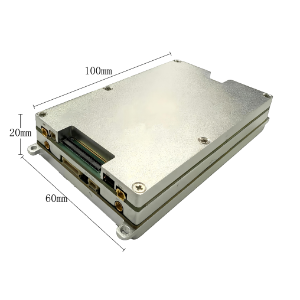
D-MT
The D-MT ad hoc network module adopts domestic chips and a software-defined radio architecture, with complete independent intellectual property rights. It supports dynamic loading...
View product details →
WiFi HaLow long-distance wireless link
Zhongtian Core's main products: WIFI HaLow is a module working in the frequency band of 730M~950M, which can achieve physical throughput of 150 Kbps-32.5Mbps and support...
View product details →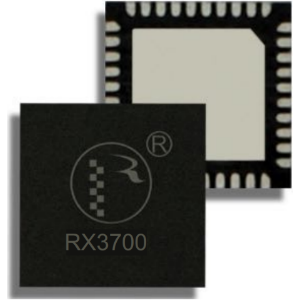
RX3700Dual-channel Wideband GNSS RFIC
"Dual-Channel Multi-Mode Multi-Band GNSS RF Chip 1.Dual channels, both covering the frequency range of 1.16 GHz to 1.65 GHz. 2.Supports Dual-Channel Direction Finding Mode. 3.IF...
View product details →Frequently asked questions
What is the AR8032S and who makes it?
The AR8032S is a RISC-V-based wireless communication SoC from Hefei Kuxin Microelectronics Co., Ltd. It integrates baseband processing, an RF front-end, and upper-layer communication protocol stacks into a single chip, and supports full-band operation from 150MHz to 7GHz.
Is the AR8032S a finished radio or drone communication module?
No. It is a chip (SoC) intended to be designed into devices such as IoT hardware, industrial sensors, and miniaturized communication systems. If you need a finished long-range link or networking module, related products like the D-MT ad hoc network module or the Wi-Fi HaLow long-distance wireless link may be more appropriate.
What are the power consumption and range figures for the AR8032S?
The product description states ultra-low power consumption but does not list specific power or range figures. For detailed electrical and performance specifications, contact us for the datasheet.
Why does full-band coverage from 150MHz to 7GHz matter for mining applications?
Mining and stockpile measurement operations often span multiple sites and radio environments. A chip that supports operation across 150MHz to 7GHz gives system designers the flexibility to adapt a single hardware design to different frequency requirements instead of redesigning the radio for each band. Actual band-specific performance should be confirmed with the supplier.
Does the AR8032S come with certifications for use in West Africa?
The supplied product data does not include certification information for any region. Before deploying in West Africa or elsewhere, request certification documentation from the supplier and confirm your local spectrum regulations with the relevant national authority.
Need help selecting the right system?
Tell us your mission, payload, and operating environment. Our team will help you compare options and request the right datasheets from verified suppliers.