Chip specifications determine whether an agricultural drone can process crop data in the field or must land and offload it. For buyers evaluating edge AI hardware, the numbers that matter most are NPU throughput (measured in TOPS at a stated precision), CPU core configuration, memory capacity, and the physical interfaces available for cameras, sensors, and ground links. This guide explains what those specifications mean in practice for precision agriculture missions, using the UING Intelligence U-AI edge computing module as the worked example, and closes with the questions procurement teams should put to any chip supplier.
Why chip specifications matter in precision agriculture
In precision agriculture, the value of a drone flight is decided by how quickly imagery becomes actionable. A UAV that can run crop-detection or plant-counting models onboard — at the edge, on the aircraft itself — can flag problem zones in real time and adjust flight plans mid-mission. A UAV that only records raw video must land, transfer data, and process it later, which adds hours or days to the workflow. The chip that performs this onboard processing is therefore not a commodity component; it is the component that defines the mission profile. When comparing modules, buyers should read the specification sheet as a statement of what the aircraft can do autonomously, not just a list of silicon features.
Compute specifications: CPU, NPU, and GPU explained
The U-AI deep learning neural network edge computing module from UING Intelligence Technology (Shenzhen) Co., Ltd. is built on the RK3588 chip. Its CPU is an eight-core configuration: four Cortex-A76 cores at 2.4GHz paired with four Cortex-A55 cores at 1.8GHz. This big.LITTLE-style arrangement matters in practice because agricultural workloads are mixed — a crop-classification model may run continuously while the CPU also handles camera control, telemetry logging, and communications. The high-performance A76 cores absorb bursts of computation, while the efficiency-oriented A55 cores handle background tasks, which helps manage power draw during long field missions.
The NPU (neural processing unit) is the specification most directly tied to AI mission fit. The U-AI module's NPU delivers 6 TOPS at int8 precision. TOPS (tera-operations per second) indicates how many inference operations the accelerator can perform, and the precision qualifier — int8, in this case — tells you the data format assumed in that figure. A model quantized to int8 will run efficiently on this NPU; a model requiring higher-precision arithmetic will not achieve the same throughput. Buyers should therefore ask two questions of any supplier: how many TOPS at which precision, and whether their target model can be quantized to that format. For onboard tasks such as weed detection, canopy analysis, or fruit counting with compact models, 6 TOPS int8 is a meaningful figure; for very large models, contact us for the datasheet to discuss supported model architectures.
The GPU — an ARM Mali-G610 MC4 — rounds out the compute stack. In an agricultural UAV context, the GPU is relevant for image preprocessing, display pipelines, and workloads that benefit from parallel graphics-style processing, complementing the NPU's dedicated inference role. The three compute blocks serve different purposes: CPU for general logic, NPU for neural inference, GPU for visual and parallel workloads.
Memory: why capacity options affect model choice
The U-AI module supports 4GB, 8GB, and 16GB RAM configurations. Memory capacity determines how large a model can be held in RAM, how much video can be buffered, and how many concurrent processes the system can sustain. A lightweight detection model with a single 4K camera stream may fit comfortably in a smaller configuration; multi-stream video analytics with a larger network will benefit from the higher options. The published data notes the range extends upward, but the ceiling is truncated in the listing — contact us for the datasheet to confirm the maximum supported configuration before finalizing a bill of materials.
Interfaces: the specifications that decide integration effort
For system integrators, interface specifications often matter more than raw compute. The U-AI module provides the following hardware interfaces:
- 1 Gigabit Ethernet port — for high-bandwidth data paths to companion computers, payload processors, or ground-link radios.
- 1 USB Type-C port — for peripherals, configuration, and data transfer.
- 1 HDMI 2.0 video input supporting 4K — the entry point for camera feeds; the supported frame rate is not fully specified in the listing, so contact us for the datasheet.
- 3 UART ports — the standard serial links for flight controllers, telemetry radios, and sensor nodes.
- 4 GPIO pins — for direct control of triggers, relays, and simple status signals.
- Onboard WiFi at 1200Mbps plus Bluetooth at 4Mbps — for local configuration and short-range data exchange.
In a precision agriculture build, the typical wiring is straightforward: the camera feeds the HDMI 2.0 input, the flight controller and telemetry radio connect via UART, the Gigabit Ethernet port carries high-rate data to a radio or storage unit, and GPIO pins handle spray-system or payload triggers. The number of UART ports is worth checking carefully — three independent serial channels allow a flight controller, a radio, and an auxiliary sensor to coexist without multiplexing.
How edge AI chips fit alongside other chip categories in an agricultural UAV
An agricultural drone is a multi-chip system, and the AI module is only one part of the bill of materials. Three other chip categories from the SkyDrone Max marketplace illustrate the surrounding stack:
- Positioning: the RX1922 quad-channel GNSS anti-jamming RFIC from Guangzhou Haige Jingwei Information Industry Co., Ltd. supports array antennas with ±50° phase tuning at 1° steps, channel isolation of ≥ 60 dB, and approximately 2 W power consumption in quad-channel operation. For agricultural UAVs operating near infrastructure or in interference-prone environments, the RF front-end specification — gain range, IF output frequency, and package size (QFN60, 7 mm × 7 mm × 0.8 mm) — is as important as the AI compute specification.
- Motor control: the QF32MTF4AK8U7 integrated MCU and driver chip from Shenzhen Fujia Technology Co., Ltd pairs an ARM Cortex-M4 CPU at up to 120 MHz with an embedded triple half-bridge gate driver, 1000 mA sink/source capability, and built-in shoot-through prevention with 200 ns typical dead time. It supports both BLHELI32 and AM32 firmware, which is relevant for ESC design in multirotor platforms.
- Power conversion: TOLT-package MOSFETs in the 60V–300V range from Shenzhen SKY Semiconductor Limited, such as the SS014N10KS, serve inverter front-ends, brushless motor controllers, and high-power DC-DC modules. Low on-resistance and thermal performance specifications here directly affect flight endurance and reliability.
When evaluating a complete platform, procurement teams should review each chip category against its own specification set — TOPS and precision for AI compute, phase tuning and isolation for GNSS RF, dead time and driver current for motor control, on-resistance and thermal characteristics for power MOSFETs — rather than comparing them against each other.
What to ask suppliers before you buy
Specifications on a marketplace listing are a starting point. Before committing to a design-in, put these questions to the supplier:
- NPU precision and model support: Is the 6 TOPS figure measured at int8 only, and can the supplier confirm compatibility with your specific model architecture? Contact us for the datasheet to review supported frameworks.
- Memory ceiling: The U-AI module lists 4GB/8GB/16GB options with the range extending upward — confirm the maximum supported configuration and available memory types.
- HDMI input details: 4K is confirmed, but the supported frame rate is incomplete in the listing. Obtain the exact frame rate and input format list.
- Operating environment: Ask for the rated temperature range, power consumption, and any environmental qualifications relevant to agricultural field conditions — these are not stated in the supplied data.
- Software support: Confirm which operating system, SDK, and neural network runtime the module ships with, and whether long-term supply is available for production programs.
- Certification: For deployments in Europe, ask the supplier directly about CE marking and radio equipment compliance for the onboard WiFi and Bluetooth module — do not assume certification from a listing.
U-AI module specification summary
| Specification | U-AI module (RK3588-based) | What it means for agricultural UAVs |
|---|---|---|
| CPU | Four-core Cortex-A76 @ 2.4GHz + four-core Cortex-A55 @ 1.8GHz | Mixed workloads: inference orchestration, camera control, telemetry |
| NPU | 6 TOPS at int8 | Onboard inference for compact crop-detection and counting models |
| GPU | ARM Mali-G610 MC4 | Image preprocessing and display pipelines |
| RAM | 4GB / 8GB / 16GB, up to (contact us for the datasheet) | Model size and video buffering headroom |
| Video input | HDMI 2.0, 4K (frame rate not fully specified) | Camera feed entry point for 4K crop imaging |
| Data interfaces | 1x Gigabit Ethernet, 1x USB Type-C, 3x UART, 4x GPIO | Flight controller, radio, and payload integration |
| Wireless | WiFi @ 1200Mbps + Bluetooth @ 4Mbps onboard | Local configuration and short-range data exchange |
Reading a chip specification sheet as a mission statement — rather than a feature list — is the core skill for B2B buyers in precision agriculture. Compute figures tell you what the aircraft can decide onboard; interface figures tell you how much integration work your team will face; and the gaps in the listing tell you exactly which datasheet questions to ask before you order.

Featured product
Deep learning neural network edge computing (AI) module
Main technical parameters of the module: Based on the RK3588 chip, CPU: Four-core Cortex-A76 at 2.4GHz plus four-core Cortex-A55 at 1.8GHz / NPU: 6 TOPs at int8 / GPU: ARM Mail-G610 MC4 Module hardware interfaces: 1 Gigabit Ethernet port / 1 USB Type-C port / 1 HDMI 2.0 video input interface supporting 4K @ fps / 3...
Products mentioned in this guide

TOLT Package MOSFET (60V-300V)
TOLT packaged MOSFET (60V-300V): It has performance advantages such as low on resistance, excellent thermal performance, easy processing of gull wing pins, and high reliability....
View product details →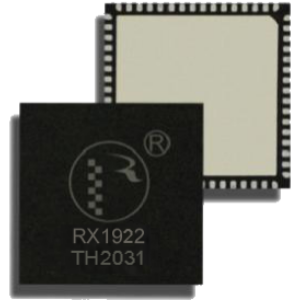
"RX1922 Qual-channel GNSS Array Anti-Jamming RFIC "
"Target Applications: Array Antennas, Phased Array Radar Receivers, Automotive Navigation Antennas L/S-Band Quad-Channel Anti-Jamming RF Chip 1.Integrated PLL (Phase-Locked Loop)....
View product details →
MCU+driver integrated chip QF32MTF4AK8U7
The MCU inside the package is AT32F421, it has embedded triple half-bridge gate driver to drive power MOSFETs with a current capability of 1000 mA (sink and source). The high- and...
View product details →Frequently asked questions
What does 6 TOPS at int8 mean for onboard crop analysis?
TOPS measures how many inference operations the NPU can perform per second, and int8 is the data precision assumed in that figure. The U-AI module's NPU delivers 6 TOPS at int8, which supports onboard inference for compact, quantized models such as weed detection or plant counting. For larger or higher-precision models, contact us for the datasheet to discuss supported architectures.
How much RAM does the U-AI module support?
The published data lists 4GB, 8GB, and 16GB configurations, with the range extending further upward. The maximum supported configuration is not fully stated in the listing, so contact us for the datasheet to confirm the ceiling before finalizing your order.
Can the U-AI module accept a 4K camera feed?
Yes. The module includes one HDMI 2.0 video input interface supporting 4K. The supported frame rate is not fully specified in the available data, so contact us for the datasheet to confirm the exact frame rate and input formats.
Which interfaces are available for integrating the module with a flight controller and sensors?
The module provides 3 UART ports, 4 GPIO pins, 1 Gigabit Ethernet port, and 1 USB Type-C port. UART ports are the standard connection for flight controllers and telemetry radios, GPIO pins handle triggers and status signals, and the Gigabit Ethernet port supports high-bandwidth data paths.
Is the U-AI module certified for use in Europe?
The supplied product data does not include certification information. Because the module has onboard WiFi and Bluetooth, ask the supplier directly about CE marking and radio equipment compliance for European deployments before purchasing.
Need help selecting the right system?
Tell us your mission, payload, and operating environment. Our team will help you compare options and request the right datasheets from verified suppliers.