A tethered power supply lets a drone stay airborne for as long as the system is connected to a ground power source, replacing battery-swap cycles with a continuous cable link. For construction progress monitoring teams evaluating this category, the specifications that matter most are input voltage, output voltage, maximum power, cable length, and the weight and footprint of the ground unit. This article explains what each of those specifications means in practice, using the tethered box G30 (AF-G30-100M) from Nanjing Airfly Electronic Technology Co., Ltd. as the reference product, and lists the questions procurement teams should put to any supplier before committing to a tethered power system.
What a Tethered Power Supply Actually Does
A tethered power system has two halves. The ground unit draws power from a fixed supply and converts it to a high DC voltage that travels down the tether cable. An airborne module mounted on the drone then converts that high voltage down to the low voltage the flight batteries and motors actually use. Neither half is useful without the other: the ground unit's output must fall within the airborne module's accepted input range, and the module's output must match the aircraft's power system.
The practical consequence for buyers is that you are never specifying one product in isolation. The tethered box G30 (AF-G30-100M), for example, outputs a fixed 1000VDC, which means it is intended to pair with airborne modules that accept an 850–1000VDC input range, such as the WF-1000S50-16K airborne module from the same manufacturer. If your aircraft's power system is built around 12S or 14S battery configurations, the A7 airborne module (650–900V input, 58–59V output, 6 kW) is the type of companion component you would evaluate instead. Ask any supplier to confirm the full ground-unit-to-airborne-module chain in writing before purchase.
Input Specifications: What 380VAC Three-Phase Means on Site
The AF-G30-100M accepts a 380VAC three-phase four-wire input. This is a common industrial supply standard, which matters for construction progress monitoring because sites typically have three-phase distribution boards available for cranes, hoists, and site offices. A three-phase input also supports the unit's 30 kW maximum power draw without requiring a single-phase circuit to carry an impractical current.
Practical questions to resolve with your electrical contractor before procurement:
- Is a 380VAC three-phase four-wire outlet available at the monitoring position, or will a temporary distribution point be needed?
- What is the available circuit capacity at that point, given the unit's 30 kW maximum power rating?
- Will the unit be moved between monitoring positions during the project, and does each position have compatible supply?
If your site or region uses a different distribution standard, confirm compatibility with the supplier directly. For buyers operating in East Africa, where three-phase supply standards can vary between countries and between grid-connected and generator-powered sites, this input specification is one of the first items to verify — contact us for the datasheet to confirm input tolerances before specifying a generator or site connection.
Output Voltage: Fixed 1000VDC and the Role of Compensation
The AF-G30-100M outputs 1000VDC, and the specification states that this voltage is not adjustable. High DC voltage over the tether is what allows meaningful power to reach the aircraft without excessive cable losses or excessively heavy conductors — the same principle behind the 1000VDC/167A output of the H39050C drone test power supply used for bench testing.
A fixed output simplifies matching but removes flexibility: your airborne module must accept 1000VDC. The product note also states that an output voltage of 750V+ with compensation is available as a customizable option. Voltage compensation refers to the unit adjusting its output to offset voltage drop along the cable, which becomes more significant with longer tethers. If your monitoring missions require tethers longer than the standard configuration, ask the supplier whether the compensated output option is the appropriate choice for your cable length.
Power Rating: What 30 kW Max Supports
The unit's maximum power output is 30 kW. In a tethered configuration, this figure defines the class of aircraft the system can sustain continuously. The product description positions the AF-G30-100M for industrial large aircraft and emergency scenarios, specifically large-scale water spraying and relay operations at altitudes of 200–300m. Those are high-draw, long-duration mission profiles — the same characteristics that make tethered power attractive for construction monitoring, where a fixed vantage point may need to be occupied for extended observation sessions rather than short battery-limited flights.
The matching logic for buyers: the aircraft's sustained power consumption, plus the conversion losses in the airborne module, must fit within the ground unit's 30 kW maximum. The WF-1000S50-16K airborne module, for instance, is rated at 16,000 W peak with a 50V output, while the smaller A7 module is rated at 6 kW. Your supplier should confirm the continuous power budget of the complete chain for your specific aircraft. Contact us for the datasheet if you need the detailed power curves to run this calculation.
Cable Length, Weight, and Footprint: The Site Logistics Specs
Three specifications govern how the system behaves on an active construction site:
- Cable length: The AF-G30-100M ships with a 120m, 25A cable, which is replaceable. The product note confirms that cable length and fiber optics can be customized. Since the stated operating scenario involves altitudes of 200–300m, buyers planning higher vantage points should discuss custom cable lengths with the supplier rather than assuming the standard 120m covers the mission.
- Weight: The ground unit weighs 46 ± 0.5 kg. That is manageable for two-person handling and vehicle transport between monitoring positions, but it is not a man-portable system in the way a battery kit is.
- Footprint: Dimensions are 500 × 480 × 460 mm (length × width × height), which defines the space needed at the ground station and the transport case required.
For construction progress monitoring specifically, the ground unit's placement matters: it needs to sit near a suitable power point with a clear vertical corridor for the cable. A 46 kg unit with a half-metre footprint can be positioned on a scaffold platform, a site office roof, or a vehicle, but the cable routing plan should be part of the site safety assessment.
Ground Unit vs. Airborne Module: Reading the Two Spec Sheets Together
The table below sets the AF-G30-100M ground unit against two airborne modules from the same manufacturer, using only published specifications. It illustrates how the two halves of a tethered system are specified differently and why both spec sheets must be reviewed during procurement.
| Attribute | Tethered box G30 (AF-G30-100M) | Airborne module WF-1000S50-16K | Airborne module A7 |
|---|---|---|---|
| Role | Ground power supply | Airborne DC-DC module | Airborne DC-DC module |
| Input | 380VAC, 3-phase 4-wire | 850–1000VDC | 650–900V |
| Output | 1000VDC, not adjustable | 50 ± 0.5VDC | 58–59V, 12S/14S |
| Power | 30 kW max | 16,000 W peak | 6 kW |
| Weight | 46 ± 0.5 kg | 6,500 g | 2.6 kg |
| Dimensions | 500 × 480 × 460 mm | 248 × 223 × 127 ± 1 mm | Contact us for the datasheet |
| Cable | 120m 25A, replaceable, customizable | Not applicable | Not applicable |
Note that the WF-1000S50-16K's 850–1000VDC input range accommodates the ground unit's 1000VDC output, while the A7's 650–900V input range does not — a concrete example of why pairing must be verified specification by specification.
What to Ask Suppliers Before Purchasing a Tethered Power System
Procurement teams should close the following gaps in writing before committing to a purchase order:
- Which airborne modules are certified or recommended to pair with the ground unit, and at what continuous power draw?
- Is the standard 120m cable sufficient for the planned operating altitude, or is a custom length with voltage compensation required?
- What are the input voltage tolerances around the 380VAC nominal, particularly if a generator will supply the unit?
- What fiber optic options are available for the tether, if a data link over the cable is part of the mission plan?
- What site preparation, grounding, and safety measures does the supplier require for a 1000VDC tether operating over an active worksite?
The AF-G30-100M's published data answers the core specification questions — power, voltages, cable, weight, and dimensions — but mission-specific details such as continuous power budgets for a particular aircraft, customization lead times, and regional input compatibility require direct supplier confirmation. Contact us for the datasheet and pairing guidance tailored to your construction monitoring requirement.
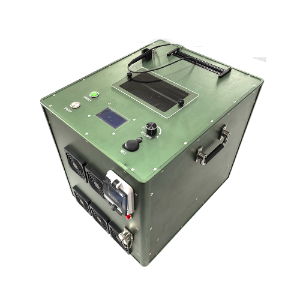
Featured product
tethered box G30(380S1000,46kg)
Product model: AF-G30-100M Scenario: Industrial large aircraft and emergency scenarios, suitable for large-scale water spraying and relay scenarios at altitudes of 200-300m Dimensions: 500mm * 480mm * 460mm (length, width, height) Weight: 46 ± 0.5kg Power: 30kw Max Input: 380vac (3-phase 4-wire swing wire)...
Products mentioned in this guide
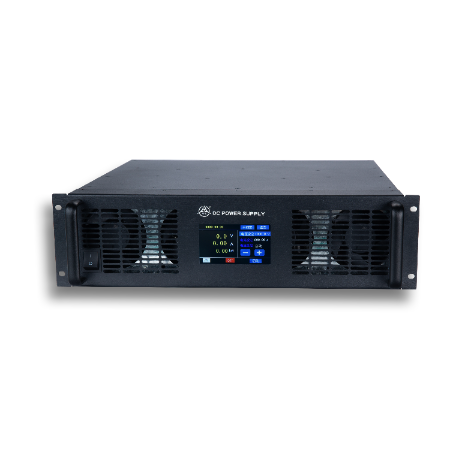
Drone Test Power Supply
Input:260Vac~530Vac;Output:1000Vdc/167A Power(KW):50;Weight(kg):24
View product details →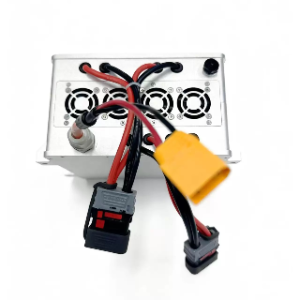
Airborne Module WF-1000S50-16K
Input voltage: 850~1000Vdc Output Voltage: 50±0.5Vdc Peak power: 16000W Weight: 6500g Overall dimensions: 248mm*223mm*127mm±1mm
View product details →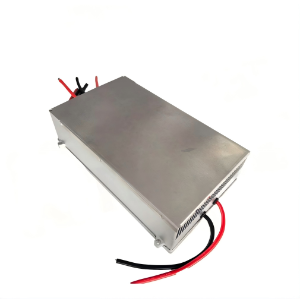
Airborne Module A7(800S59,2.6kg)
Power: 6KW Input voltage: 650-900V Output Voltage: 58-59V 12S/14S
View product details →Frequently asked questions
Is the output voltage of the tethered box G30 adjustable?
No. The AF-G30-100M outputs a fixed 1000VDC that is not adjustable. The manufacturer notes that an output voltage of 750V+ with compensation is available as a customizable option — contact us for the datasheet to discuss customized output configurations.
What input power does the AF-G30-100M require on site?
The unit requires a 380VAC three-phase four-wire supply and has a maximum power rating of 30 kW. Confirm available circuit capacity at your monitoring position with your electrical contractor before deployment.
How long is the tether cable, and can it be changed?
The standard configuration includes a 120m, 25A cable, which is replaceable. The product note confirms that cable length and fiber optics can be customized, so longer or shorter tethers can be arranged with the supplier.
How heavy and large is the ground unit?
The AF-G30-100M weighs 46 ± 0.5 kg and measures 500 × 480 × 460 mm (length × width × height). Plan for two-person handling and vehicle transport between monitoring positions on site.
Can this system support construction progress monitoring flights?
The published scenario for the AF-G30-100M is industrial large aircraft and emergency use, including large-scale water spraying and relay operations at 200–300m altitude. Tethered power suits missions that require long-duration operation from a fixed position, but you should confirm compatibility with your specific aircraft and monitoring payload — contact us for the datasheet and application guidance.
Need help selecting the right system?
Tell us your mission, payload, and operating environment. Our team will help you compare options and request the right datasheets from verified suppliers.