A hovering lighting robot is an airborne illumination platform that holds position over a work area and delivers wide-area lighting without fixed towers, generators on masts, or permanent site infrastructure. For construction progress monitoring, the relevant question is usually practical: can a site keep working, inspecting, and documenting after dark without waiting for permanent lighting to be installed? The Hovering Lighting Robot ER-T700 from Sichuan Evatech Technology Co., Ltd. is designed for exactly that role. It is an ultra-light intelligent all-domain hovering lighting system that can illuminate 8,000㎡ to 18,000㎡ — the equivalent of one to three football fields — at an illuminance of no less than 2Lux, and it can be deployed on site within 5 minutes.
What the ER-T700 Hovering Lighting Robot Is
The Hovering Lighting Robot is an ultra-light, intelligent, all-domain hovering lighting system built around a high-efficiency DOH lighting system available in 650W, 1000W, and 1300W power configurations. The airframe and structure use carbon fiber and aviation alloy materials with a highly integrated modular design, keeping the total system weight below 23kg. That weight class matters for procurement: it affects transport logistics, crew handling, and how quickly a unit can be moved between active work fronts on a large site.
Beyond the lighting hardware, the system is built around what the manufacturer describes as intelligent AI custody — a management layer that spans the control systems, the human-machine interaction system, and the safety intelligent management and control system. A redundant design covers computing power units, attitude sensors, power supplies, backup power supplies, and data communication links. For buyers evaluating aerial equipment for unattended or semi-unattended operation, this layered redundancy is one of the more significant differentiators to examine in detail.
Who This Product Is For
This system is aimed at B2B buyers who need deployable, wide-area illumination rather than permanent lighting infrastructure. Typical procurement profiles include:
- Construction contractors and project managers running night shifts or extended-hours schedules on large sites, where progress monitoring and general work both depend on adequate illumination.
- EPC and infrastructure firms working in remote areas where erecting temporary lighting masts and running cabling is slow, costly, or impractical.
- Emergency response and site security teams that need rapid, wide-area lighting without a fixed installation.
- Rental and equipment fleet operators looking for a multi-role lighting asset that can be reconfigured across projects.
It is worth being precise about scope: the ER-T700 is a lighting system, not an imaging or surveying payload. Teams conducting construction progress monitoring at night will typically pair illumination with their existing cameras, drones, or documentation workflows. Buyers should contact us for the datasheet to confirm integration options with their monitoring equipment.
Operational Problems It Addresses
Night work on construction sites is often constrained less by labor and equipment than by visibility. Temporary lighting towers cover limited footprints, require setup time, and can become obstacles as the site layout changes. The ER-T700 addresses several recurring problems:
- Coverage gaps: a single system provides high-brightness support across 8,000㎡ to 18,000㎡, reducing the number of lighting units needed to cover a large active work area.
- Deployment delay: the self-locking quick-installation expansion structure allows comprehensive lighting support at the scene within 5 minutes, which matters for shift changes, incident response, or unplanned night operations.
- Site congestion: an airborne lighting platform does not occupy ground space or require cabling across active work zones.
- Environmental limits: the system is rated to provide sufficient lighting support in strong winds of level 7, torrential rain, and at altitudes up to 4,100 meters — conditions that routinely stop simpler lighting setups.
Key Specifications at a Glance
The table below summarizes the published characteristics of the ER-T700. Any specification not listed here — including endurance, power source details, control range, and payload integration — is not covered in the available data, so contact us for the datasheet.
| Attribute | ER-T700 (published data) |
|---|---|
| Product category | Drones — hovering lighting system |
| Lighting system | High-efficiency DOH lighting, 650W / 1000W / 1300W power options |
| Illuminated area | 8,000㎡ – 18,000㎡ (1–3 football fields) |
| Illuminance | No less than 2Lux across the supported area |
| Wind resistance | Sufficient lighting support in level 7 strong winds |
| Weather tolerance | Torrential rain |
| Operating altitude | Up to 4,100 meters |
| Total system weight | Less than 23kg |
| Materials | Carbon fiber and aviation alloy, modular structure |
| Deployment time | Comprehensive lighting support within 5 minutes |
| Intelligence | AI custody across control, HMI, and safety management systems |
| Redundancy | Computing units, attitude sensors, power supplies, backup power, data links |
Relevance for North African Construction Projects
North Africa hosts a high volume of large-scale infrastructure and construction programs, often in remote regions where temporary site infrastructure is a logistical burden. Two published characteristics of the ER-T700 map directly onto that context. First, the 4,100-meter altitude rating covers high-elevation project sites. Second, the combination of low system weight (under 23kg) and 5-minute deployment suits operations where lighting needs shift between work fronts as the project advances. Buyers operating in coastal or desert climates should discuss environmental conditions specific to their sites with the supplier and request the datasheet for full environmental specifications.
How It Fits Alongside Other Aerial Equipment
The ER-T700 sits within a broader category of mission-specific aerial platforms on SkyDrone Max. For context: the H45 RTK logistics drone from HASU UAV Technology is a cargo and sensor platform with a 15kg standard payload and RTK positioning, suited to delivery and survey-adjacent missions rather than illumination. The G35-M350 tethered drone system from Nanjing Feiying supports flight durations of 48 hours or more at altitudes of 50–100m for compatible DJI M350 platforms, a different approach to persistent aerial presence. Buyers building a site-support fleet should treat these as complementary tools and match each platform to its specific task rather than expecting one system to cover all roles.
What Buyers Should Verify Before Purchasing
Because hovering lighting systems are deployed in safety-critical environments, procurement teams should verify the following before committing to a purchase:
- Power configuration: confirm which DOH lighting power option (650W, 1000W, or 1300W) matches your area and illuminance requirements, and whether the configuration is field-changeable.
- Regulatory status: verify airspace and UAV operating approvals required in your jurisdiction for hovering flight over or near active construction sites.
- Redundancy details: review the scope of the intelligent redundant design — computing units, attitude sensors, power supplies, backup power, and communication links — against your site's safety requirements.
- Integration: confirm compatibility with your existing construction progress monitoring cameras, drones, and documentation workflows.
- Environmental fit: validate level 7 wind, torrential rain, and altitude performance against the actual conditions of your project sites.
- Logistics: confirm transport, handling, and storage requirements for a system weighing under 23kg, and crew training expectations.
For any specification not published in the data above — including endurance figures, control range, power source, and pricing — contact us for the datasheet. SkyDrone Max can connect procurement teams with the manufacturer, Sichuan Evatech Technology Co., Ltd., for detailed technical documentation and configuration guidance.

Featured product
Hovering Lighting Robot
The hovering lighting robot is an ultra-light intelligent all-domain hovering lighting system. The hovering lighting robot has the following characteristics: high all-domain lighting efficiency, strong environmental adaptability, intelligence and ease of operation, small size and light weight, and multi-functionality...
Products mentioned in this guide
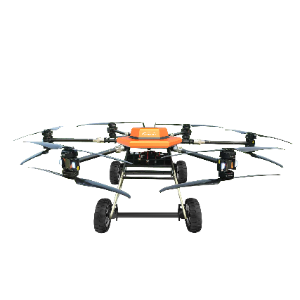
Large-payload amphibious UAV
The Heavy-Lift UAV (Firefighting UAV) is a 200kg heavy-lift firefighting UAV developed by Beijing Lingtian Intelligent Equpment Group. Featuring a 6-axis, 12-rotor design with...
View product details →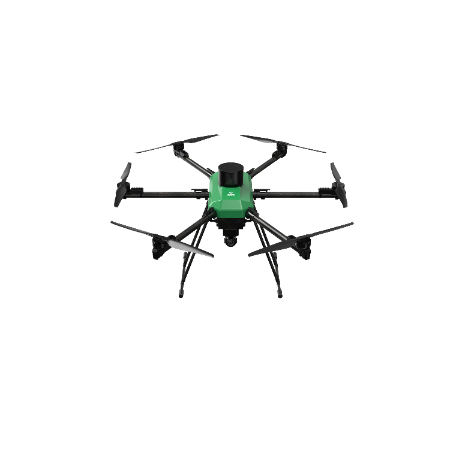
H45 RTK logistics drone
The H45 RTK drone enables faster delivery speeds and provides highly efficient instant logistics services. During natural disasters or emergencies, the drone can respond swiftly...
View product details →
Compatible with the DJI M350 Tethered Drone System
Typical Characteristics Small in size and light in weight. It can be stored in a backpack and carried easily. Simple to operate. There is no need to operate the tethered box...
View product details →Frequently asked questions
What is a hovering lighting robot used for on construction sites?
It is an airborne platform that holds position and provides wide-area illumination without fixed lighting masts or ground cabling. On construction sites it supports night work, shift extensions, incident response, and visibility for progress monitoring activities, covering areas of 8,000㎡ to 18,000㎡ at no less than 2Lux in the case of the ER-T700.
How large an area can the ER-T700 illuminate?
According to the manufacturer's published data, the ER-T700 provides high-brightness lighting support for an area of 8,000㎡ to 18,000㎡ — equivalent to one to three football fields — with an illuminance of no less than 2Lux, using a DOH lighting system with 650W, 1000W, or 1300W power options.
Can the ER-T700 operate in bad weather and at high altitude?
The published data states the system can provide sufficient lighting support in harsh environments including strong winds of level 7, torrential rain, and at altitudes of 4,100 meters. For detailed environmental operating limits, contact us for the datasheet.
How quickly can the system be deployed on site?
The ER-T700 uses a self-locking quick-installation expansion structure that allows the equipment to provide comprehensive lighting support at the scene within 5 minutes. The total system weight is less than 23kg, using carbon fiber and aviation alloy materials in a modular design.
Does the ER-T700 include cameras or imaging payloads for progress monitoring?
The available product data describes the ER-T700 as a lighting system with intelligent AI custody and redundant safety design; it does not list camera or imaging payloads. Teams that need imaging for construction progress monitoring should confirm integration options with their existing equipment — contact us for the datasheet for current configuration details.
Need help selecting the right system?
Tell us your mission, payload, and operating environment. Our team will help you compare options and request the right datasheets from verified suppliers.