A mission payload is the sensor package that turns a UAV platform into an operational tool, and for energy and utilities teams it is usually the component that determines whether a flight produces usable intelligence. For buyers evaluating optoelectronic pods, the core questions are: what sensors are included, how stable is the imaging platform, how accurately can it locate targets, and what documentation the supplier can provide. This FAQ addresses those questions using the Three-axis optoelectronic pods (model SH150S1, Shenzhen Shenghua Optoelectronics Technology Co., Ltd) as the reference example, alongside comparable pods listed on the marketplace.
What does a mission payload do in energy and utilities operations?
In the energy and utilities sector, UAV mission payloads are used for line inspection, detection and identification tasks, emergency rescue and firefighting support, disaster relief, accident investigation, and police and site security. An optoelectronic pod consolidates these capabilities into a single gimbal: visible-light zoom for daytime inspection of transmission lines, towers, and substations; infrared imaging for night visibility and heat-related detection work; and a laser rangefinder for measuring target distance and computing target position.
The SH150S1 three-light photoelectric pod is explicitly positioned for these scenarios. Its three-axis stabilization platform (pitch, roll, heading) is designed to keep imagery steady during flight, which matters when an inspector needs to read equipment conditions from a hovering UAV or track a moving target along a right-of-way.
What specifications should buyers verify in an optoelectronic pod?
Procurement teams should evaluate a pod against the mission profile, not the brochure headline. Based on the data available for the SH150S1, the following functional features are the ones to compare across suppliers:
- Stabilization: a three-axis (pitch, roll, heading) stabilized platform with high-precision gyroscopes for anti-shake performance.
- Daylight imaging: a Sony 30x optical zoom visible-light module for long-distance, high-definition visibility.
- Night imaging: a 55mm high-definition infrared lens for long-distance night visibility.
- Ranging and positioning: a 3km laser rangefinder that measures target distance and calculates target latitude, longitude, altitude, and other positional information.
- Tracking: the ability to capture a target and conduct stable real-time tracking.
- Servo and navigation: FOC-controlled servo system for fast, smooth rotation, and precise inertial navigation guidance for target position calculation.
Where a datasheet does not state a figure you need for your tender, such as exact stabilization accuracy values, weight, interface standards, or power draw, contact us for the datasheet rather than accepting verbal assurances.
How do comparable pods differ, and when does a lighter option make sense?
Not every utility mission needs a full three-light configuration. The marketplace lists alternatives that trade sensor count for simplicity or extended infrared resolution. The table below compares the SH150S1 with two related pods using only the data supplied by their manufacturers.
| Attribute | SH150S1 (Shenghua) | YPO-A2-30 (Digital Eagle) | YPO-A1-10 (Digital Eagle) |
|---|---|---|---|
| Configuration | Three-light pod: visible light, infrared, laser rangefinder | Three-axis triple-light pod | Three-axis single-light pod |
| Zoom | Sony 30x optical zoom (visible light) | 30x zoom in black light mode | 10x zoom in white light mode |
| Infrared | 55mm high-definition infrared lens | Infrared resolution of 1280*1024 | Not stated in supplied data |
| Laser rangefinder | 3km, with target latitude/longitude/altitude calculation | Not stated in supplied data | Not stated in supplied data |
| Tracking | Stable real-time target tracking | Not stated in supplied data | Not stated in supplied data |
| Stated use cases | Detection and combating, police security, line inspection, emergency rescue, firefighting and disaster relief, accident investigation | Not stated in supplied data | Not stated in supplied data |
A single-light pod such as the YPO-A1-10 may suit daylight-only patrol work where payload weight and cost are constrained. A triple-light pod such as the YPO-A2-30 or the Sakereye240A electro-optics pod from Zhejiang Rainbow Aerospace, which adds a refrigerated infrared thermal imager and supports various aircraft and vehicle platforms, fits teams that need day-and-night reconnaissance with target search, capture, recognition, and tracking. Match the configuration to the mission; paying for sensors you will not use is as much a procurement error as under-specifying.
Will the payload integrate with our existing UAV platform?
Integration is one of the most common sources of procurement delay. The SH150S1 data describes its stabilization, servo, and navigation subsystems but does not list compatible aircraft models, mounting interfaces, or data-link protocols, so contact us for the datasheet to confirm compatibility with your fleet before issuing a purchase order. The Sakereye240A, by contrast, is described by its manufacturer as adapting to various aircraft and vehicle platforms, which may simplify integration if you operate a mixed fleet.
When evaluating integration, ask the supplier three things: the physical and electrical interface standard, the software or SDK required to control the pod and retrieve imagery, and whether ground control station integration is documented. If any of these cannot be answered in writing, treat it as a red flag.
What compliance documentation should we request?
For energy and utilities buyers, particularly those operating under regulatory frameworks in markets such as West Africa where import and aviation approval processes can add lead time, documentation should be part of the tender package, not an afterthought. Request from each supplier:
- The full technical datasheet, including stabilization accuracy, weight, and power specifications.
- Any certifications the manufacturer holds for the product; where certificates are not listed in the product data, ask the supplier directly rather than assuming compliance.
- Export and import documentation support, since laser rangefinder modules can be subject to trade controls in some jurisdictions.
- Warranty terms, spare parts availability, and repair turnaround commitments.
The supplied product data for the SH150S1 and the comparison pods does not include certification details, so contact us for the datasheet and certification status of any unit you are shortlisting.
How should we evaluate suppliers of mission payloads?
Beyond the hardware, supplier evaluation should focus on verifiable evidence and support infrastructure. A practical checklist for procurement teams:
- Match stated use cases to your operations. The SH150S1 lists line inspection, emergency rescue, firefighting, and accident investigation among its application scenarios, which aligns with utility field work; a supplier whose product description does not mention your use case deserves scrutiny.
- Insist on datasheets over descriptions. Vague listings that omit stabilization accuracy, infrared resolution, or interface details are harder to hold to contract.
- Check the manufacturer's track record. Shenzhen Shenghua Optoelectronics, Jiangsu Digital Eagle, and Zhejiang Rainbow Aerospace are established Chinese UAV component manufacturers; ask each for reference deployments in utility or public-safety programs.
- Clarify support before purchase: firmware update policy, calibration services, and whether training for operators is included.
- Compare total cost of ownership, not unit price. A pod with a laser rangefinder and infrared capability may replace two separate payloads and their integration costs.
How do we run the procurement process for a payload like this?
A disciplined process for a mission payload purchase typically runs: define the mission profile (day, night, ranging, tracking requirements); shortlist pods whose stated capabilities match that profile; request datasheets and certification documentation; confirm platform compatibility in writing; pilot or demonstration-test where the supplier offers it; and negotiate support terms alongside price. Because the payload is the mission-critical element, budget schedule time for integration testing on your actual airframe before fleet-wide rollout.
For teams building a shortlist, start with the SH150S1 three-axis optoelectronic pod as a three-light reference configuration, then request datasheets for the YPO-A2-30, YPO-A1-10, and Sakereye240A to compare against your weight, budget, and sensor requirements. Where any specification is missing from the listing, contact us for the datasheet before making a decision.

Featured product
Three-axis optoelectronic pods
SH150S1 three-light photoelectric pod is widely used in the application scenarios of detection and combating, police security, line inspection, emergency rescue, firefighting and disaster relief, accident investigation and so on. Functional features: Three-axis (pitch, roll, heading) stabilization platform, can...
Products mentioned in this guide
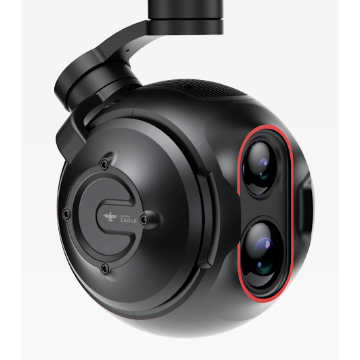
Optoelectronic pod
Three-axis triple-light pod, 30x zoom in black light mode, infrared resolution of 1280*1024
View product details →
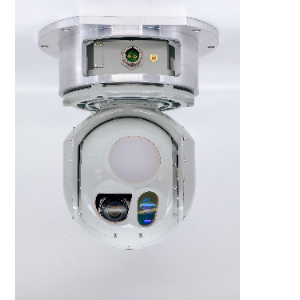
Electro-Optics pod
The Sakereye 240A electro-optical pod is equipped with visible light television, refrigerated infrared thermal imager, and laser rangefinder, and has functions such as day and...
View product details →Frequently asked questions
What sensors does the SH150S1 optoelectronic pod include?
It is a three-light pod combining a Sony 30x optical zoom visible-light module for long-distance daytime imaging, a 55mm high-definition infrared lens for night visibility, and a 3km laser rangefinder that measures target distance and calculates target latitude, longitude, and altitude.
Is the SH150S1 suitable for power line inspection?
Yes. The manufacturer lists line inspection among its application scenarios, alongside detection and combating, police security, emergency rescue, firefighting and disaster relief, and accident investigation. The 30x optical zoom and three-axis stabilization are the features most relevant to inspecting towers, conductors, and substation equipment from a UAV.
Which UAV platforms is the SH150S1 compatible with?
The supplied product data describes the pod's stabilization, servo, and navigation systems but does not list specific compatible aircraft models or mounting interfaces. Contact us for the datasheet to confirm compatibility with your fleet. By comparison, the Sakereye240A electro-optics pod is described as adapting to various aircraft and vehicle platforms.
What stabilization accuracy does the SH150S1 achieve?
The manufacturer states that the pod uses a high-precision gyroscope with high stabilization accuracy and strong anti-shaking performance, and an FOC-controlled servo system for fast, smooth rotation. Exact numeric stabilization accuracy is not included in the supplied data, so contact us for the datasheet.
Can the pod track a moving target automatically?
Yes. The SH150S1 is specified to capture a target and conduct stable real-time tracking, supported by precise inertial navigation guidance for high-accuracy target position calculation. This is relevant for following assets or vehicles during patrol and security missions.
Need help selecting the right system?
Tell us your mission, payload, and operating environment. Our team will help you compare options and request the right datasheets from verified suppliers.