Mission payload specifications determine whether a gimbal camera can physically fly on your platform, whether its imagery will hold up at the ranges your mission demands, and whether it will integrate with your ground control stack. In security and counter-UAS support work, where teams often operate small observation drones alongside larger systems, the difference between a 95 g payload and a multi-hundred-gram dual-sensor gimbal can decide the entire airframe selection. This explainer breaks down the key payload specification categories — size and weight, mounting, sensor and imaging capability, zoom type, and protocol compatibility — and explains what each means in practice for procurement teams, using the SIYI A8mini gimbal camera as the reference product.
Why Size and Weight Specifications Come First
Before evaluating image quality, buyers should confirm that a payload can be carried at all. The A8mini measures 55×55×70 mm and weighs 95 g, which places it in the miniature class of gimbal cameras. For procurement teams, these two numbers drive three practical decisions: which airframes have the payload capacity and mounting space, how flight endurance is affected, and whether the gimbal can also be deployed on ground or surface platforms.
The A8mini is specified for use on drones, unmanned vehicles, unmanned boats, robots, and quadruped robots. That cross-platform list matters for security programs that mix aerial and ground assets: a single payload type across an unmanned vehicle fleet and a small drone fleet simplifies spares holding, training, and maintenance. Teams operating in regions such as North Africa, where perimeter and border observation missions often combine vehicle-mounted and airborne cameras, should treat cross-platform mounting as a genuine procurement criterion rather than a marketing detail.
Mounting Modes and Physical Integration
Mounting mode is a specification that buyers frequently overlook until integration. The A8mini supports nose-mounted mode and inverted-mounted mode. In practice this means the camera can be installed facing forward at the nose of a fixed-wing or VTOL airframe, or mounted inverted under a multirotor, depending on the platform geometry and the required field of view.
When reviewing supplier datasheets, procurement teams should ask: which mounting modes are officially supported, what mechanical interface is provided, and whether inverted mounting affects any camera function. If a datasheet does not state these details explicitly, contact us for the datasheet rather than assuming compatibility with your airframe.
Sensor and Imaging Specifications: What They Mean at the Mission Level
The A8mini records and shoots in 4K ultra high definition and provides 6x digital zoom. Its imaging chain is built around an 8-megapixel 1/1.7-inch Sony CMOS sensor. Each of these specifications maps to a concrete operational capability:
- 4K recording: sufficient resolution for documentation-grade video in most industrial applications, which the manufacturer identifies as the target use case — relevant for evidentiary recording in security patrols and site monitoring.
- 8 MP 1/1.7-inch Sony CMOS sensor: sensor size and resolution determine low-light behaviour and detail capture. Buyers should request the full sensor datasheet for metrics not listed in the product summary, such as minimum illumination.
- 6x digital zoom: allows operators to magnify a region of interest in the frame. Because this is digital zoom, image detail degrades as magnification increases — an important distinction explained in the next section.
For teams whose missions are primarily daylight observation, documentation, and situational awareness from small platforms, this specification set addresses what the manufacturer describes as the needs of the vast majority of industrial applications. Missions that require identifying targets at long range or detecting heat sources need a different payload class, as covered below.
Digital Zoom Versus Optical Zoom: A Specification Buyers Must Read Carefully
Zoom specification is one of the most commonly misread lines in payload datasheets. Digital zoom, as offered by the A8mini at 6x, crops and enlarges the sensor image. Optical zoom, as offered by the A40T Pro at 40x, uses the lens to magnify the subject before it reaches the sensor, preserving detail. Neither is inherently better — they serve different missions and different platform weight budgets. A 95 g miniature gimbal with digital zoom suits lightweight observation platforms; a 40x optical EO+IR gimbal with AI object tracking suits long-range identification tasks on platforms that can carry the additional mass.
| Attribute | SIYI A8mini | Viewpro A40T Pro | SKYDROID C12 |
|---|---|---|---|
| Sensor / imaging | 8 MP 1/1.7-inch Sony CMOS, 4K | EO+IR dual sensors | 2K visible light + thermal imaging |
| Zoom | 6x digital | 40x optical | Digital zoom (factor not stated — contact us for the datasheet) |
| Weight / size | 95 g, 55×55×70 mm | Not stated in listed data — contact us for the datasheet | Not stated in listed data — contact us for the datasheet |
| Stabilization | Not stated in listed data — contact us for the datasheet | Not stated in listed data — contact us for the datasheet | Industrial-grade three-axis stabilization |
| Tracking | Not stated in listed data | AI object tracking | Dynamic tracking with Skydroid FPV |
| Mounting | Nose-mounted, inverted-mounted | Not stated in listed data | Up-down installed mode |
A third category appears in the KT&C ATC-HZ8940T global shutter camera: a global shutter sensor exposes all pixels simultaneously, eliminating motion blur and rolling shutter artifacts. For high-speed motion capture, machine vision, and inspection tasks — including some counter-UAS detection pipelines that process video frames algorithmically — global shutter behaviour can be a decisive specification compared with standard rolling shutter sensors.
Protocol Compatibility and Integration Risk
The A8mini is compatible with and supports the ArduPilot and PX4 (MavLink) open-source protocols. For B2B buyers this is a risk-reduction specification: ArduPilot and PX4 are the most widely adopted open autopilot stacks, and MavLink compatibility means the gimbal can be controlled through the same ecosystem many integrators already use. When evaluating any payload, procurement teams should confirm which protocols are supported natively, what control interface is exposed, and what documentation the manufacturer provides for integration. The A8mini's open-source compatibility is explicitly positioned by SIYI as empowering the industry ecosystem — in practice, that translates to fewer custom integration contracts.
Matching Payload Class to Security Mission Requirements
For security and counter-UAS support programs, the payload decision should follow from the mission profile:
- Daylight patrol, perimeter documentation, and situational awareness from small drones: a miniature 4K gimbal such as the A8mini gimbal camera fits platforms where every gram of payload capacity is contested.
- Long-range identification and tracking: the A40T Pro's 40x optical zoom, EO+IR dual sensors, and AI object tracking address missions where the operator must detect and follow targets at distance.
- Night and low-visibility detection: heat-source observation requires thermal imaging, which the SKYDROID C12 provides alongside its 2K visible-light camera and three-axis stabilization.
- High-speed or algorithmic video processing: the ATC-HZ8940T global shutter camera eliminates rolling shutter artifacts, which matters when frames feed machine vision or detection software rather than a human operator.
In North African operating environments, where large perimeters, long sightlines, and high daytime illumination are common, buyers often run mixed fleets: lightweight visible-light payloads on small observation drones and thermal-capable gimbals on platforms assigned to night shifts. Specifying payloads per mission profile — rather than seeking a single do-everything gimbal — generally produces a more defensible procurement.
Questions to Ask Every Payload Supplier
Before committing to a mission payload, put these questions to the supplier and require written answers:
- What is the exact weight, and what mounting modes and mechanical interfaces are supported?
- Is the zoom optical or digital, and what is the effective image quality at maximum zoom?
- What sensor is used (manufacturer, size, resolution), and what are the low-light performance figures?
- Which control protocols are supported natively, and is integration documentation available for ArduPilot, PX4, or your specific autopilot?
- What stabilization architecture is used, and is it rated for your platform's vibration environment?
- What is included in the warranty and support terms for your region?
Where a specification is not published in the product listing — as with several figures for the comparison products above — request the full datasheet before shortlisting. A supplier who cannot state stabilization, sensor, or interface specifications in writing is a supplier whose integration risk you will absorb later.

Featured product
A8mini gimbal camera
4K Ultra High-definition Shooting and Recording | 6X Digital Zoom | Miniature and Portable | Open-source Compatible Miniature and Portable, Multiple Mounting Modes at Will: The overall dimensions of the device are 555570mm, and the product weight is only 95g. It supports the nose-mounted mode and the inverted-mounted...
Products mentioned in this guide

A40T Pro 40x EO+IR Dual Sensors AI Object Tracking Gimbal Camera
40x Zoom Optical, EO+IR Dual Sensors, AI Object Tracking Gimbal Camera
View product details →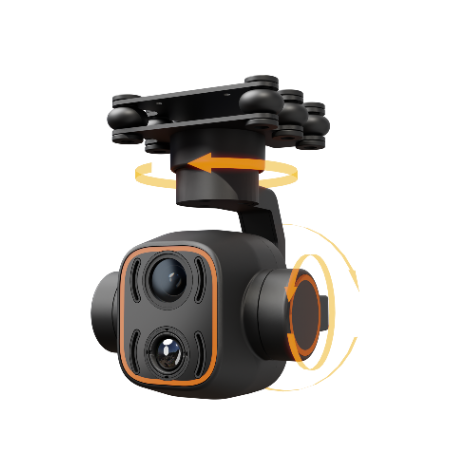
SKYDROID C12
Dual light Gimbal Camera C12 is a mini gimbal camera that integrates high-definition visible light cameras and thermal imaging sensors, providing a clear field of view while also...
View product details →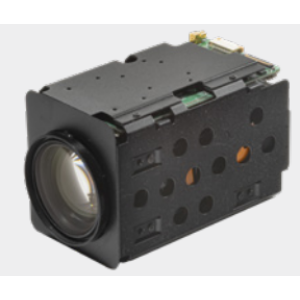
Global Shutter Camera
The 40x global exposure camera uses a global shutter sensor, where all pixels are exposed simultaneously, completely eliminating motion blur and rolling shutter artifacts. It is...
View product details →Frequently asked questions
What does the 6x zoom on the SIYI A8mini actually do?
The A8mini provides 6x digital zoom, which magnifies a region of the 4K image electronically. Unlike optical zoom, digital zoom enlarges existing pixels, so detail decreases as magnification increases. For missions requiring detail-preserving long-range magnification, an optical zoom payload such as the A40T Pro (40x optical) is the appropriate class.
Can the A8mini be mounted on platforms other than drones?
Yes. The product data lists drones, unmanned vehicles, unmanned boats, robots, and quadruped robots as supported usage scenarios, with nose-mounted and inverted-mounted modes available.
Is the A8mini suitable for night operations?
The A8mini is a visible-light payload built on an 8-megapixel 1/1.7-inch Sony CMOS sensor. The product data does not include low-light performance figures, so contact us for the datasheet. For heat-source detection at night, a thermal-capable payload such as the SKYDROID C12 is the relevant category.
Which autopilot protocols does the A8mini support?
The A8mini is compatible with and supports the ArduPilot and PX4 (MavLink) open-source protocols, which allows integration with the most widely used open autopilot ecosystems.
How does the A8mini compare with the A40T Pro for security missions?
They serve different payload classes. The A8mini is a 95 g miniature gimbal with 4K recording, 6x digital zoom, and a Sony CMOS sensor, suited to lightweight platforms and daylight observation. The A40T Pro offers 40x optical zoom, EO+IR dual sensors, and AI object tracking for long-range identification on platforms that can carry a larger payload. Full specifications for both are available on request.
Need help selecting the right system?
Tell us your mission, payload, and operating environment. Our team will help you compare options and request the right datasheets from verified suppliers.