The Lanying R6000 tiltrotor aircraft and the Gray Whale G1 both address vertical take-off and landing transport, but they operate at entirely different scales. The R6000, developed by Shenzhen United Aircraft Technology Co., Ltd., is a six-ton tiltrotor with a maximum payload of 2000 kg and a maximum range of 4000 km, designed for long-distance point-to-point transport in both unmanned and manned configurations. The Gray Whale G1, from Zhuhai Ziyan UAV Co., Ltd., is a transport unmanned helicopter with a 21 kg maximum payload, oriented toward medium to short-distance delivery tasks. For environmental monitoring programmes, the practical question is not which aircraft is superior overall, but which payload and range profile matches your mission structure.
Why Transport Platforms Matter in Environmental Monitoring
Environmental monitoring operations in regions with challenging geography, such as coastal West Africa with its island chains, river deltas, and seasonally flooded terrain, often depend less on the sensor platform itself and more on the logistics that keep field stations supplied. Instrument deployment, sample retrieval, fuel and battery resupply, and emergency material delivery all require aircraft that can operate without runways. Both the R6000 and the G1 are explicitly rated for islands, mountainous areas, and high-altitude or plateau conditions, which makes them candidates for resupply and logistics roles rather than direct sensing roles.
Neither product listing includes specifications for monitoring payloads such as gas sensors, water samplers, multispectral cameras, or data links. If your programme requires the aircraft itself to carry out sensing, contact us for the datasheet on either platform before drawing conclusions.
Head-to-Head Comparison: Lanying R6000 vs Gray Whale G1
The table below compares only attributes that appear in the supplied product data. Where a value is not published, it is marked as unavailable.
| Attribute | Lanying R6000 tiltrotor aircraft | Gray Whale G1 |
|---|---|---|
| Manufacturer | Shenzhen United Aircraft Technology Co., Ltd. | Zhuhai Ziyan UAV Co., Ltd. |
| Aircraft type | Six-ton tiltrotor (VTOL plus fixed-wing high-speed cruise) | Transport unmanned helicopter |
| Maximum payload | 2000 kg | 21 kg |
| Maximum range | 4000 km | Not published; described as medium to short-distance tasks — contact us for the datasheet |
| Wind resistance | Level 8 | Level 8 |
| Operating environments | Plateaus, mountains, islands, and other special environments | Islands, mountainous areas, high altitudes, complex terrains |
| Transport modes | Not published — contact us for the datasheet | Cargo box and air sling |
| Manned operation | Supports unmanned and manned long-distance transport | Unmanned |
| Certification | Not published — contact us for the datasheet | Special Airworthiness Certificate for Civil Unmanned Aircraft (Civil Aviation Administration of China) |
| Stated use cases | Urban air mobility, logistics and transportation, emergency rescue | Emergency material delivery, medium to short-distance regular transportation |
| Endurance | Not published — contact us for the datasheet | Not published — contact us for the datasheet |
Where the Lanying R6000 Fits
The Lanying R6000 tiltrotor aircraft is built around a specific combination: helicopter-style vertical take-off and landing paired with fixed-wing high-speed cruise. According to the product description, this sets a benchmark for long-distance and point-to-point efficient transportation. With a 2000 kg payload ceiling and a 4000 km maximum range, the scale of application is fundamentally different from a light utility UAV — think regional logistics chains, movement of bulky monitoring infrastructure such as meteorological masts or water-quality station components, emergency rescue supply runs, and crewed transport between bases.
For an environmental monitoring programme spread across dispersed sites — for example, coastal observation posts along a West African shoreline or highland stations separated by hundreds of kilometres — the R6000's profile addresses the inter-site logistics layer. Its level 8 wind resistance is relevant for maritime and coastal operations, where wind conditions routinely constrain lighter aircraft. Details on cruise speed, fuel or energy type, cabin configuration, and operating cost are not included in the listing; request the datasheet for those figures.
Where the Gray Whale G1 Fits
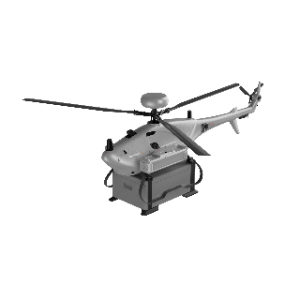
The Gray Whale G1 operates at the other end of the payload spectrum. Its 21 kg maximum payload and dual transport modes — cargo box and air sling — point toward repeated delivery runs: consumables, sampling equipment, spare parts, and emergency material delivery to positions that are difficult to reach by ground. The listing describes it as suited to medium and short-distance regular transportation, effectively solving transport problems caused by special geographical environments, climatic conditions, or ground traffic congestion.
One procurement-relevant distinction: the G1 has obtained the Special Airworthiness Certificate for Civil Unmanned Aircraft issued by the Civil Aviation Administration of China. No equivalent certification is stated in the R6000 listing, which matters for regulatory planning — though absence of data is not evidence of absence, so contact us for the datasheet to clarify the R6000's certification status. Range and endurance figures for the G1 are also not published; medium to short-distance is a qualitative description, not a specification.
Do Not Overlook the Small VTOL Fixed-Wing Tier
A comparison framed around the R6000 and G1 can mislead buyers into thinking these are the only options. For the sensing and patrol layer of an environmental monitoring programme, two smaller vertical take-off and landing fixed-wing drones from UING Intelligence Technology (Shenzhen) Co., Ltd. cover a workload neither transport platform is designed for:
- V3: a tri-axis vector VTOL fixed-wing drone with a maximum takeoff weight of 5.5 kg, a payload listed as 0.8 g maximum, endurance of 50 minutes at 0.6 kg, cruise speed of 68 km/h, control range over 20 km, a 3500 m maximum service ceiling, and quick single-soldier-carry assembly.
- V6E: an economical long-endurance VTOL fixed-wing drone with an 8 kg maximum takeoff weight, 1.3 kg maximum payload, 1.5 hours of endurance at 0.7 kg, cruise speed of 72 km/h, control range of 20 km to 50 km+, a 3500 m ceiling, and transport in a 125 cm x 34 cm x 34 cm box.
Note the wind resistance ratings for these smaller aircraft are lower — the V3 is rated to level 6 (fixed-wing) and level 5 (rotor), the V6E to level 5 (fixed-wing) and level 4 (rotor) — compared with level 8 on both the R6000 and G1. In coastal or monsoon-affected operating windows, this is a genuine constraint on flight scheduling.
Data Gaps You Must Close Before Procurement
- Endurance and cruise speed for the R6000 and G1 are not published; both matter for mission planning and cost-per-flight-hour estimates.
- Certification status for the R6000 is not stated in its listing; the G1 holds a CAAC Special Airworthiness Certificate for Civil Unmanned Aircraft.
- Neither transport platform lists environmental monitoring payloads, sensor compatibility, or data-link specifications.
- Pricing, maintenance requirements, and training support are not included in any of the four listings — contact us for the datasheet.
Selection Guidance Based on Mission Fit
Choose the Lanying R6000 tiltrotor aircraft if your programme requires moving heavy loads — up to 2000 kg — over long distances, up to 4000 km, between sites that lack runways, with the option of manned or unmanned operation. It fits regional logistics, infrastructure deployment, and emergency rescue roles supporting a distributed monitoring network.
Choose the Gray Whale G1 if your requirement is repeated short-to-medium-range delivery of loads up to 21 kg to field positions on islands, in mountains, or at high altitude, with cargo box and air sling flexibility and a documented civil airworthiness certificate.
Choose the V3 or V6E if the mission is the monitoring itself — aerial survey, patrol, and sensing flights within a 20 km to 50 km+ control range — and the aircraft must be transportable and quickly assembled by a small team.
In practice, large environmental programmes often need a combination: a small VTOL fixed-wing platform for routine sensing, a mid-size transport UAV like the G1 for field resupply, and a heavy-lift tiltrotor like the R6000 for regional logistics. Match the platform to the payload, distance, and regulatory profile of each task — and verify every unpublished figure with the manufacturer before committing budget.

Featured product
Lanying R6000 tiltrotor aircraft
Lanthanum R6000 is a six-ton tiltrotor aircraft independently developed by United Aircraft, which combines the dual advantages of helicopter vertical take-off and landing and fixed-wing aircraft high-speed cruise, setting a new benchmark for long-distance and point-to-point efficient transportation. With a maximum...
Products mentioned in this guide
Gray whale G1
The Grey Whale G1 is a transport unmanned helicopter. It features a maximum payload capacity of 21 kilograms, wind resistance level 8, and strong environmental adaptability. It...
View product details →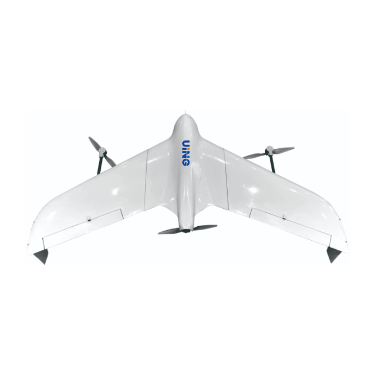
V3: 50 minutes of flight time at 0.6 kg, a tri-axis vector vertical takeoff and landing fixed-wing drone
Payload: 0.8g (maximum) Maximum takeoff weight: 5.5kg Cruise speed: 68km/h Control range: over 20km Maximum level flight speed: 30m/s Wind resistance rating: fixed-wing up to...
View product details →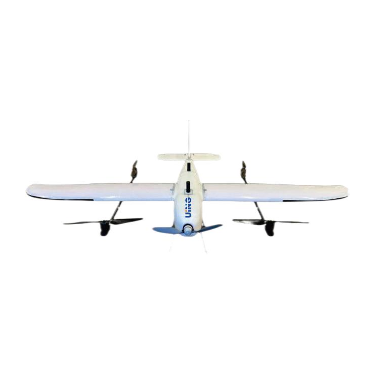
V6E: 1.5 hours endurance at 0.7 kg, an economical long-endurance vertical takeoff and landing fixed-wing drone
Payload: 1.3kg (maximum) Maximum takeoff weight: 8kg Cruise speed: 72km/h Control range: 20km to 50km+ Endurance: 1.5 hours at 0.7kg Maximum level flight speed: 28m/s Wind...
View product details →Frequently asked questions
What is the maximum payload of the Lanying R6000 compared to the Gray Whale G1?
The Lanying R6000 has a maximum payload of 2000 kg, while the Gray Whale G1 has a maximum payload capacity of 21 kilograms — a difference of roughly two orders of magnitude.
How far can each aircraft fly?
The R6000 has a stated maximum range of 4000 km. The Gray Whale G1 is described as handling medium to short-distance transportation tasks, but no range figure is published; contact us for the datasheet.
Which aircraft is certified for civil unmanned operations?
The Gray Whale G1 has obtained the Special Airworthiness Certificate for Civil Unmanned Aircraft issued by the Civil Aviation Administration of China. No certification is stated in the R6000 listing; contact us for the datasheet to confirm its regulatory status.
Can these aircraft carry environmental monitoring sensors?
Neither product listing specifies monitoring payloads, sensor integrations, or data-link equipment. Both are described as transport platforms. For sensor compatibility, contact us for the datasheet.
How do the V3 and V6E fit into an environmental monitoring programme alongside these transport aircraft?
The V3 (50 minutes endurance at 0.6 kg, control range over 20 km) and V6E (1.5 hours endurance at 0.7 kg, control range of 20 km to 50 km+) are small VTOL fixed-wing drones suited to aerial survey and patrol missions, while the R6000 and G1 handle the transport and resupply layer.
Need help selecting the right system?
Tell us your mission, payload, and operating environment. Our team will help you compare options and request the right datasheets from verified suppliers.