Drones for public safety and emergency response give agencies a practical way to extend visibility into areas that are slow, costly, or dangerous to reach on foot. The right platform depends on the mission: indoor autonomous drones for building patrol and monitoring, long-endurance VTOL aircraft for wide-area reconnaissance, and specialized platforms for water-based response. This guide walks through the workflow, integration considerations, operating constraints, training needs, and procurement questions that B2B buyers and public safety teams should work through before committing to a fleet.
Where Drones Fit in a Public Safety Workflow
A drone program in public safety is not a single tool but a set of mission profiles layered onto existing operations. Most agencies start by mapping their recurring tasks and identifying where an unmanned platform removes a bottleneck.
- Routine patrol and monitoring: recurring aerial or indoor checks of facilities, perimeters, and storage areas, replacing repetitive manual rounds.
- Incident assessment: getting an early view of a scene before crews commit, which helps allocate personnel and equipment.
- Search and detection: covering ground systematically during response operations, with imaging payloads and intelligent analysis supporting operator decision-making.
- Inventory and asset checks: verifying the location and condition of stored equipment, particularly in warehouses and depots that support emergency logistics.
Each of these tasks points to a different type of aircraft. An agency that primarily needs to patrol buildings and indoor facilities has very different requirements from one that needs to cover long distances in open terrain.
Matching the Platform to the Mission
Indoor operations are a distinct category. The Indoor Autonomous Flying Drone (RUIFYLI) from Shenzhen Huasai Ruifei Intelligent Technology is an example of a platform built specifically for enclosed environments. It is a small, lightweight, affordable autonomous flying robot offering intrusion alarm, indoor monitoring, flight patrol, active obstacle avoidance, high-precision positioning, intelligent analysis, and remote operation. Its stated application scenarios include indoor security patrol, intelligent inspection, exploration and detection, and warehouse inventory, with an emphasis on balancing security and privacy.
For outdoor missions, different categories apply. The XC-15 Vertical Takeoff Compound Wing UAV from TopXGun (Nanjing) Robotics is described as offering long endurance, high payload adaptability, and compatibility with payloads such as mapping, inspection, and environmental monitoring, which suits wide-area data collection. The Electric Amphibious Drone (KTY-X4pro) from Nanjing Kaitianyan is designed for water-based berthing, takeoff and landing, and is intended for patrol, environmental monitoring, and scientific investigation on water, which is relevant to agencies with rivers, lakes, or coastal responsibilities.
| Attribute | Indoor Autonomous Flying Drone (RUIFYLI) | XC-15 Compound Wing UAV | Electric Amphibious Drone (KTY-X4pro) |
|---|---|---|---|
| Operating environment | Indoor | Outdoor, vertical takeoff and landing | Water-based operations |
| Documented functions | Intrusion alarm, indoor monitoring, flight patrol, obstacle avoidance, high-precision positioning, intelligent analysis, remote operation | Mapping, inspection, and environmental monitoring payloads; long endurance | Patrol, environmental monitoring, scientific investigation on water |
| Typical public safety use | Facility patrol, warehouse inventory, indoor inspection | Wide-area reconnaissance and data collection | Water patrol and rescue-area monitoring |
| Detailed specifications | Contact us for the datasheet | Contact us for the datasheet | Contact us for the datasheet |
Integration Considerations Before Purchase
The hardware is usually the simplest part of a deployment. What determines whether a drone program delivers value is how the aircraft connects to existing command structures and information systems. Buyers should plan for the following before signing a purchase order.
- Command and control workflow: define who launches the aircraft, who reviews the imagery or alarms, and how findings are escalated to decision-makers.
- Data handling: agree in advance where flight data and images are stored, who has access, and how privacy is protected. The RUIFYLI's stated focus on balancing security and privacy is a useful prompt for indoor deployments, where staff and visitors are present.
- Alarm and alert integration: for patrol drones with intrusion alarm functions, clarify how alerts reach duty officers, whether through a standalone interface or an existing security management system.
- Payload planning: confirm which sensors and cameras the mission requires and whether the platform supports them, rather than selecting a drone first and payloads later.
- Site infrastructure: indoor drones need clear flight paths, obstacle mapping, and charging or swap logistics; outdoor platforms need launch and recovery sites and transport arrangements.
Operating Constraints and the East African Context
Public safety agencies in East Africa often operate with limited maintenance infrastructure, long distances between bases, and mixed urban-rural responsibility areas. These conditions shape realistic operating constraints.
- Indoor platforms such as the RUIFYLI reduce exposure to weather, dust, and long transport distances, because the aircraft operates inside a defined facility and can run patrols autonomously on a schedule.
- Outdoor long-endurance platforms like the XC-15 are better suited to covering dispersed sites, but buyers should factor transport, ground control, and battery logistics into the operating cost.
- Water-adjacent agencies considering an amphibious platform such as the KTY-X4pro should confirm suitability for their specific water conditions with the vendor before deployment.
- Regulatory requirements vary by country, and teams should verify national UAV rules, restricted zones, and any authorization needed for public safety operations with the relevant authority. Datasheets and vendor documentation, available on request, should be reviewed against these rules before purchase.
Training and Competency Planning
A drone that requires a highly trained pilot for every flight limits the scalability of a public safety program. Conversely, fully autonomous platforms shift the training burden toward mission planning, alarm review, and system administration.
- For autonomous indoor patrol drones, operator training should focus on configuring patrol routes, interpreting intelligent analysis alerts, and responding to system faults.
- For manually flown or semi-autonomous outdoor platforms, budget for pilot certification, recurrent training, and realistic scenario practice.
- Identify at least two trained operators per platform to avoid single-person dependency, a common failure point in small agency programs.
- Confirm with suppliers what training they provide, what documentation is included, and what ongoing support looks like; where this is not published, contact us for the datasheet and support terms.
Procurement Questions to Ask Before You Buy
Procurement teams should treat drone purchases the same way they treat any capital equipment decision: verify the claims, quantify the lifecycle cost, and confirm that the supplier can support the deployment. The following questions separate well-prepared vendors from the rest.
- What is the full technical specification, including positioning accuracy, endurance, and obstacle avoidance behavior? Request the datasheet directly rather than relying on marketing summaries.
- Which payloads are supported, and what is the process for adding or changing sensors later?
- How are firmware updates delivered, and what happens to autonomous patrol functions during an update cycle?
- What warranty, spare parts availability, and repair turnaround can the supplier commit to, particularly for buyers outside the vendor's home market?
- Can the platform export data in standard formats, or is it locked to a proprietary system?
- Are there documented deployments in similar environments, and can the vendor describe the operating conditions they were designed for?
Building a Realistic Deployment Plan
The most successful public safety drone programs start narrow. A single indoor autonomous patrol drone covering one high-value facility, or one long-endurance UAV supporting a defined response zone, gives the team time to refine workflows before scaling. Review alarm quality, patrol coverage, and operator workload after the first months of operation, then expand the fleet or add platforms, such as an amphibious unit for water duties or a compound wing aircraft for regional coverage, only where the initial deployment has proven the workflow. Agencies that treat the first platform as a pilot for the whole program, rather than a one-off purchase, are the ones that end up with drone operations their teams actually rely on.

Featured product
Indoor Autonomous Flying Drone
Indoor Autonomous Flying Drone The product is a small, lightweight, and affordable autonomous flying robot for indoor use. It has functions such as intrusion alarm, indoor monitoring, flight patrol, active obstacle avoidance, high-precision positioning, intelligent analysis, and remote operation, meeting the needs...
Products mentioned in this guide

Electric amphibious drone
This Electric Amphibious Quadcopter UAV ,the patented product of Kaitianyan, is suitable for water-based berthing, takeoff / landing and sailing, and mainly used for...
View product details →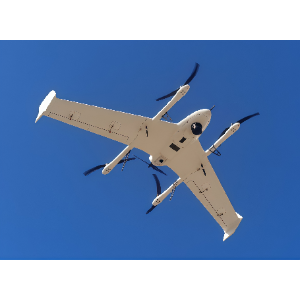
XC-15 Vertical Takeoff Compound Wing Unmanned Aerial Vehicle
The Xingxingchen-15 vertical take-off compound wing unmanned aerial vehicle (UAV) features outstanding flight performance, long endurance, high payload adaptability, and efficient...
View product details →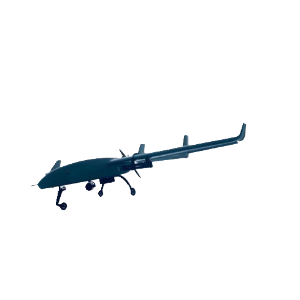
Inspection and Strike Integrated Drone
F160 is a new generation intelligent tactical unmanned aerial vehicle platform that deeply integrates 30x zoom optical reconnaissance, dual spectrum target locking, and...
View product details →Frequently asked questions
Can the RUIFYLI indoor drone be used outdoors for public safety patrols?
The supplied product data describes the RUIFYLI as a small, lightweight autonomous flying robot for indoor use, with scenarios including indoor security patrol, intelligent inspection, exploration and detection, and warehouse inventory. Outdoor use is not part of its stated application scope, so agencies with outdoor missions should consider a dedicated outdoor platform and confirm requirements with the vendor.
What payloads can the XC-15 carry for emergency response missions?
According to the product description, the XC-15 vertical takeoff compound wing UAV can flexibly accommodate various payloads such as mapping, inspection, and environmental monitoring, supporting data collection in different scenarios. For detailed payload specifications and compatibility, contact us for the datasheet.
Is the Electric Amphibious Drone suitable for rescue operations on lakes and rivers?
The KTY-X4pro is designed for water-based berthing, takeoff and landing, and sailing, and is mainly used for patrol, environmental monitoring, and scientific investigation on water. Its suitability for a specific rescue mission profile should be confirmed with the supplier; contact us for the datasheet and application details.
How does an indoor patrol drone handle privacy concerns in occupied buildings?
The RUIFYLI product data explicitly lists balancing security and privacy among its application scenarios. Agencies should additionally define their own data handling policy, covering where recordings are stored, who can access them, and how alerts are reviewed, before deployment.
What should we verify before purchasing drones for a public safety program in East Africa?
Verify the full technical datasheet, payload compatibility, training and support terms, spare parts availability, and the platform's fit to your actual mission environment (indoor, outdoor, or water-based). Also confirm compliance with national UAV regulations in your country with the relevant authority before committing to a purchase.
Need help selecting the right system?
Tell us your mission, payload, and operating environment. Our team will help you compare options and request the right datasheets from verified suppliers.