For infrastructure inspection programs, the battery and power supply specification that matters most is not a single number on a label but the set of management functions wrapped around the cells: how accurately the system reports state of charge, how it protects against misoperation and short circuits, how it communicates with the flight stack, and how it behaves in the temperature ranges your crews actually work in. This explainer breaks down those specifications in practical terms, using the Surveying Drone Smart Battery BMS (model LS012S030A-R4CA-C1) from Wuhan Topsound Technology as the reference product, and lists the questions procurement teams should put to any supplier before committing to a battery platform.
Why Battery Management Specifications Decide Mission Fit in Infrastructure Inspection
Infrastructure inspection differs from aerial photography or mapping in one decisive way: missions are often flown near energized equipment, towers, bridges, and other assets where a battery fault has consequences beyond a lost airframe. That shifts the specification priorities. Capacity and energy density still matter for endurance, but the management layer — the BMS — determines whether the pack behaves predictably across hundreds of charge cycles, whether crews can trust the reported charge level, and whether faults are caught before they become incidents.
When evaluating a battery or power supply for inspection work, buyers should read the specification sheet in four layers: protection (what the system prevents), measurement (what it reports and how accurately), communication (how it talks to the drone and the ground), and lifecycle behavior (how it ages, stores, and charges). The Surveying Drone Smart Battery BMS illustrates how these layers appear on a real product, so we will use its published feature set as the anchor for each explanation.
State of Charge, Balancing, and Measurement Accuracy
State of charge (SOC) is the specification that inspection crews interact with most. A BMS with high-precision SOC calibration gives operators a trustworthy estimate of remaining flight time; a BMS with loose calibration forces crews to pad every mission with safety margin, which effectively shortens the useful inspection window per battery swap. When you read a datasheet, ask how SOC is calibrated, over what temperature and load range the accuracy holds, and whether the figure is a lab measurement or a field-validated value. If the supplier does not publish those details, contact us for the datasheet — and treat reluctance to share it as a signal.
Cell balancing is the companion specification. Over successive cycles, individual cells in a pack drift apart in voltage; balancing brings them back together. The Surveying Drone Smart Battery BMS offers customizable cell balancing, which means the balancing strategy can be tuned rather than fixed. For buyers, the practical question is not just whether balancing exists but how it is configured: aggressive balancing shortens turnaround between flights, gentler balancing preserves cell life. Ask suppliers to explain the default strategy and what parameters can be customized.
Protection Features: What Each One Prevents in the Field
Protection specifications are easy to skim past, but each one maps to a specific failure mode. The reference BMS publishes the following protections, and buyers should expect equivalent clarity from any supplier:
- Anti-misoperation protection: prevents damage from incorrect connection or handling sequences — relevant when multiple technicians handle packs across a large inspection site.
- High-voltage interface protection: safeguards the connector and downstream electronics from high-voltage exposure at the interface, a concern on platforms with higher-voltage architectures.
- Optional short-circuit protection: note the word optional. Confirm whether it is fitted as standard on your configuration or requires a build option, because this is not a detail you want to discover after delivery.
- Self-discharge prevention to avoid swelling: addresses long-term storage behavior. Packs that sit between inspection campaigns are prone to swelling if the BMS does not manage self-discharge, and swollen packs are typically scrapped.
- Low-temperature resistance with preheating: critical for North American inspection programs that operate through winter. Preheating brings cells into a safe operating window before high-current discharge; ask for the specified preheating behavior rather than assuming it.
One caution for procurement teams: datasheets sometimes list protections without stating thresholds or response times. Where a supplier publishes a protection but not its parameters, request the full datasheet before comparing products on paper.
Communication, Data, and Predictive Maintenance
For enterprise fleets, the communication layer is where battery specifications increasingly separate commodity packs from fleet-grade ones. The reference product uses a positive-control CAN bus, which the manufacturer positions as a cost-reduction measure, and supports enhanced CAN communication security — a specification worth probing, since battery commands transmitted without protection are an attack or interference surface on connected fleets.
Data acquisition for predictive maintenance is the other half of this layer. A BMS that logs cell voltages, temperatures, and cycle behavior gives maintenance teams the data to replace packs on condition rather than on a calendar. For inspection programs running dozens of pack cycles per month, that difference compounds: calendar-based replacement discards usable capacity, while condition-based replacement requires trustworthy data. Firmware OTA updates complete the picture — a BMS that can be updated in the field can receive fixes and calibration improvements without hardware swaps, which reduces downtime and keeps a mixed-age fleet on consistent firmware.
Parallel Operation, Charging, and Power Architecture
Two further specifications affect daily operations. Multi-battery parallel support means the system can operate with multiple packs combined — useful for heavier inspection platforms or longer sorties — but parallel operation demands careful management of pack matching and startup sequencing, so ask how the BMS validates packs before paralleling. Protocol-based charging support means the pack and charger communicate during charging rather than simply applying current; this typically enables more controlled charge profiles and better long-term cell health, though the specific supported protocols should be confirmed with the supplier.
Low-power design and lightweight architecture round out the reference product's published features. Low standby power matters when packs sit between flights — it reduces the drain that compounds with storage time — while weight is a direct line item against payload and endurance budgets on any inspection airframe.
How This Compares to Other Battery Categories on the Market
The marketplace also lists complete smart battery packs that integrate comparable management functions at the pack level. The comparison below uses only published descriptions; it is intended to show how specification categories differ between a standalone BMS and integrated packs, not to rank products.
| Specification area | Surveying Drone Smart Battery BMS (Wuhan Topsound) | Industrial Drone Smart Batteries (ZHIANN) | Tattu UHV 6S LiPo (Grepow) |
|---|---|---|---|
| Product type | Battery management system (BMS) module | Integrated smart battery packs (24S70Ah 6048Wh; 12S30Ah 1332Wh) | Integrated high-voltage LiPo pack (41000mAh, 6S, 5C, 23.7V) |
| Balancing | Customizable cell balancing | Automatic balancing | Not stated in listing — contact us for the datasheet |
| Protection | Anti-misoperation, high-voltage interface, optional short-circuit protection | Double short circuit protection | Not stated in listing — contact us for the datasheet |
| Communication | Positive-control CAN bus, enhanced CAN security, firmware OTA | Intelligent parallel one-button startup | Not stated in listing — contact us for the datasheet |
| Charging | Protocol-based charging support | Smart fast charging | Supports 1C charging rate; high voltage 4.45V/cell |
| Thermal | Low-temperature resistance with preheating | Not stated in listing — contact us for the datasheet | Not stated in listing — contact us for the datasheet |
| Positioning | Long-endurance mapping missions stated as a fit | Not stated in listing | High energy density up to 300Wh/kg; safe discharge to 3.6V/cell |
The practical takeaway from this table: a standalone BMS such as the LS012S030A-R4CA-C1 is the right category when you are building or upgrading a platform and need control over the management layer, while integrated packs suit buyers who want cells, BMS, and enclosure delivered as one unit. Verify every empty cell in any comparison with the supplier's datasheet.
What Buyers Should Ask Suppliers Before Committing
Use the following checklist when issuing RFQs for inspection-fleet batteries and power supplies. Each question maps to a specification discussed above:
- SOC accuracy: What is the specified calibration accuracy, over what temperature range, and is it validated in field conditions or only in the lab?
- Balancing strategy: What is the default balancing approach, which parameters are customizable, and what is the balancing current?
- Protection completeness: Which protections are standard versus optional — specifically short-circuit protection — and what are the trip thresholds?
- Cold weather: What does the preheating function do at low temperature, at what temperature does it engage, and what current is available during preheat?
- Communication: Which CAN protocol and security features are implemented, and can firmware be updated over the air without returning the pack?
- Parallel operation: What checks does the BMS perform before allowing packs to operate in parallel, and what pack-matching criteria apply?
- Charging: Which charging protocols are supported, and is the charger part of the delivered system or sourced separately?
- Storage: How does the self-discharge prevention feature behave during multi-week storage between inspection campaigns?
Suppliers who can answer these questions from their datasheet — as the Wuhan Topsound product page does at the feature level — are generally easier to integrate with than those who answer in generalities. For any specification not published on the product page, including exact electrical parameters, request the datasheet directly before adding the product to a shortlist.

Featured product
Surveying Drone Smart Battery BMS
Main Functions: 1. Anti-Misoperation Protection, Firmware OTA Updates, High-Voltage Interface Protection 2. Multi-Battery Parallel Support, Customizable Cell Balancing, Multi-Status LED Indication Control 3. Positive-Control CAN Bus for Cost Reduction, Data Acquisition for Predictive Maintenance, Protocol-Based...
Products mentioned in this guide

Industrial Drone 24S70Ah Smart Battery
Smart Fast Charging, Automatic Balancing, Intelligent Parallel One-button Startup, Low Power Consumption, Self-developed Algorithm SOX Double Short Circuit Protection, Slow Power...
View product details →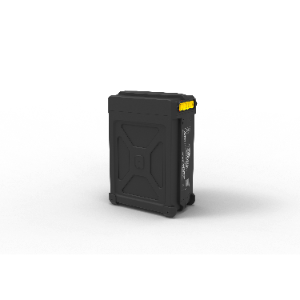
Industrial Drone 12S30Ah Smart Battery
Smart Fast Charging, Automatic Balancing, Intelligent Parallel One-button Startup, Low Power Consumption, Self-developed Algorithm SOX Double Short Circuit Protection, Slow Power...
View product details →
Tattu Ultra High Voltage 41000mAh 6S 5C 23.7V G-Tech Lipo Battery
"High Energy Density up to 300Wh/Kg; High Voltage 4.45V/Cell; Support 1C Charging Rate; Safe Discharge to 3.6V/Cell; Suit for Long Endurance Mapping Mission。"
View product details →Frequently asked questions
What does a battery management system (BMS) actually do on an inspection drone?
The BMS manages and protects the battery cells and reports their status to the rest of the system. On the Surveying Drone Smart Battery BMS, published functions include anti-misoperation protection, high-voltage interface protection, customizable cell balancing, high-precision SOC calibration, CAN bus communication, firmware OTA updates, and data acquisition for predictive maintenance. Together these functions determine how safely and predictably the pack performs across inspection missions.
Why is high-precision SOC calibration important for infrastructure inspection?
SOC calibration determines how accurately the BMS reports remaining charge. Inspection missions are planned around endurance margins, so an inaccurate SOC estimate forces crews to fly conservative schedules or land early. A BMS with high-precision SOC calibration, such as the reference product, gives planners a more trustworthy basis for scheduling; ask any supplier for the specified accuracy range and the conditions under which it holds.
Is short-circuit protection always included?
Not necessarily. On the Surveying Drone Smart Battery BMS, short-circuit protection is listed as optional. Buyers should confirm with the supplier whether it is fitted as standard on their chosen configuration or specified as a build option, and should request the datasheet for protection thresholds and response details.
How does low-temperature resistance with preheating help winter inspection work?
Lithium-based cells need to be within a safe temperature window before high-current discharge. A BMS with low-temperature resistance and preheating brings the pack into that window before flight, which is relevant for North American inspection programs operating in cold conditions. The product listing confirms the feature exists but does not publish preheating temperatures or durations, so request those parameters from the supplier.
Should I buy a standalone BMS or an integrated smart battery pack?
It depends on your platform strategy. A standalone BMS like the LS012S030A-R4CA-C1 suits teams building or upgrading airframes that need control over the management layer. Integrated packs, such as the ZHIANN 24S70Ah and 12S30Ah smart batteries or the Tattu UHV 6S LiPo, deliver cells and management in one unit. Compare the specification areas — protection, balancing, communication, charging, thermal behavior — against your mission requirements, and contact suppliers for datasheets where the listing does not provide figures.
Need help selecting the right system?
Tell us your mission, payload, and operating environment. Our team will help you compare options and request the right datasheets from verified suppliers.