For construction progress monitoring, the core question is whether you need a hangar that moves with the project or one that anchors a fixed, unattended site. The W01T Multi-rotor UAV Automated Hangar System from Huahang High-Tech is designed for lightweight, modular deployment and supports vehicle-mounted precision landing and takeoff, making it a fit for crews that document progress across shifting site locations. The QN260 Automatic Charging UAV Hangar from Wuhan Qianhang Huanyu is a fixed, IP65-rated unattended hangar for medium-sized UAVs, built for harsh environments such as marine, desert, Gobi and barren areas. This comparison covers both, plus the ARS-550H and ARCGine Autonomous Droneport System, using only the attributes available in the supplied data.
Why the Hangar Decision Shapes a Construction Monitoring Program
Construction progress monitoring depends on repeatable flight schedules: the same corridors, the same viewpoints, captured at regular intervals so that earthworks, structural milestones and site logistics can be tracked over time. A drone hangar is the infrastructure that makes that repeatability possible without a pilot on site every day. The right hangar determines how often you can fly, how quickly the aircraft is ready between sorties, and whether the station can survive the dust, heat, humidity and coastal conditions common on construction sites in Latin America and elsewhere.
The trade-off procurement teams face is between mobility and permanence. A mobile, vehicle-mounted system like the W01T Multi-rotor UAV Automated Hangar System can follow the project as active zones shift. A fixed unattended hangar like the QN260 can fly scheduled missions around the clock from a single protected location. Both approaches are valid; the mission profile should decide.
W01T Multi-rotor UAV Automated Hangar System: Overview
The W01T is a multi-rotor UAV automated hangar system from Huahang High-Tech (Beijing) Technology Co., Ltd. Its stated capabilities include autonomous precision takeoff and landing at airfields, automatic charging, real-time image transmission, and high-accuracy positioning and direction finding. The system is described as featuring lightweight deployment, modular configuration, and robust environmental adaptability.
Three operational modes are listed in the product data: vehicle-mounted precision landing and takeoff operations, convoy-escort flight modes, and reconnaissance positioning missions. For construction progress monitoring, the real-time image transmission and high-accuracy positioning are directly relevant to capturing and geo-referencing site imagery, while vehicle-mounted operation supports programs that cover multiple sites or long linear projects such as highways and pipelines.
Specifications not covered in the supplied data — including enclosure protection rating, dimensions, weight, charging time, and compatible UAV models — are not stated here. Contact us for the datasheet.
QN260 Automatic Charging UAV Hangar: Overview
The QN260 from Wuhan Qianhang Huanyu Technology Co., Ltd. is an automatic hangar compatible with medium-sized UAVs. It is designed for unattended operations in demanding scenarios — marine, desert, Gobi and barren areas — and its listed applications include wind power inspection, PV inspection, open-pit mine inspection, railway inspection, power grid inspection and oil pipeline inspection.
The QN260's environmental protection is specified in detail: an IP65-rated enclosure, 10-grade anti-corrosion coating, fully sealed closure during high-wind conditions, and built-in air conditioning and dehumidification systems. The manufacturer states it can resist salt spray, wave splash and rain erosion. Operationally, it supports precise autonomous UAV landing, automatic charging and battery swapping, meteorological monitoring, and emergency recovery mechanisms. It can also build a dedicated maritime communication link covering an 8 km range, and a multi-layer safety redundancy design enables full-process unattended operation.
Side-by-Side Comparison: W01T vs QN260
The table below compares only the attributes that appear in the supplied product data. Where a specification is not provided, it is marked as unavailable — request the datasheet from the manufacturer rather than relying on assumptions.
| Attribute | W01T Automated Hangar System | QN260 Automatic Charging UAV Hangar |
|---|---|---|
| Brand | Huahang High-Tech (Beijing) Technology Co., Ltd. | Wuhan Qianhang Huanyu Technology Co., Ltd. |
| Model | W01T | QN260 |
| Category | Drone Hangar | Drone Hangar |
| Compatible UAV class | Multi-rotor UAVs (per product description) | Medium-sized UAVs |
| Autonomous takeoff/landing | Autonomous precision takeoff/landing at airfields; vehicle-mounted precision landing/takeoff | Precise autonomous UAV landing |
| Energy management | Automatic charging | Automatic charging and battery swapping |
| Data transmission | Real-time image transmission | Dedicated maritime communication link covering an 8 km range |
| Positioning | High-accuracy positioning/direction finding | Not stated in supplied data — contact us for the datasheet |
| Environmental protection | Robust environmental adaptability (details not specified) | IP65-rated enclosure; 10-grade anti-corrosion coating; sealed closure in high winds; built-in air conditioning and dehumidification; resists salt spray, wave splash and rain erosion |
| Environmental monitoring | Not stated in supplied data | Meteorological monitoring and emergency recovery mechanisms |
| Deployment model | Lightweight deployment, modular configuration; vehicle-mounted operation | Fixed unattended hangar |
| Special flight modes | Convoy-escort flight modes; reconnaissance positioning missions | Not stated in supplied data |
| Stated use cases | Reconnaissance positioning missions; vehicle-mounted operations | Wind power, PV, open-pit mine, railway, power grid and oil pipeline inspection; unattended marine, desert, Gobi and barren-area operations |
| Safety design | Not stated in supplied data | Multi-layer safety redundancy design; full-process unattended operation |
Other Alternatives Worth Considering
ARS-550H Drone Hangar (Aros Information Technology)
The ARS-550H is a battery-swapping drone hangar described as a new type of low-altitude infrastructure that enables full-process autonomous operation of the DJI Matrice 400 drone. It integrates automatic control, energy management, environmental protection and intelligent scheduling systems, and can automatically complete autonomous takeoff and landing, battery swapping/charging, data transmission and status monitoring, supporting 7×24-hour unattended operation. If your construction fleet is already standardized on the DJI Matrice 400, this platform alignment is the ARS-550H's defining advantage. Details on enclosure ratings, environmental tolerance and dimensions are not in the supplied data — contact us for the datasheet.
ARCGine Autonomous Droneport System (Zhuhai ARCGine)
The ARCGine Autonomous Droneport System (model VP-M) supports unmanned UAV operation with autonomous takeoff and landing, automatic charging and discharging, battery hot replacement, remote monitoring, and all-weather operations. Battery hot replacement means the aircraft can be swapped to a fresh battery without waiting for a charge cycle, which can matter for high-frequency monitoring schedules. The supplied data does not specify compatible UAV models, environmental ratings or deployment dimensions — contact us for the datasheet.
How to Choose Based on Mission Fit
Rather than ranking these products, match each to the operational profile of your construction monitoring program:
- Choose the W01T if your monitoring program covers multiple active sites or long linear projects, and you need a hangar that can be deployed lightweight and modularly, operated from a vehicle, and repositioned as the project advances. Its real-time image transmission and high-accuracy positioning align with progress documentation and geo-referenced site capture.
- Choose the QN260 if you are establishing a fixed, unattended monitoring station at a harsh or remote site — for example a coastal port construction project, a mine in an arid region, or a site in Latin America with high humidity and salt exposure. Its IP65 enclosure, air conditioning and dehumidification, meteorological monitoring, and automatic charging and battery swapping are engineered for continuous unattended operation in those conditions.
- Choose the ARS-550H if your fleet is standardized on the DJI Matrice 400 and you want 7×24-hour unattended operation with battery swapping handled automatically.
- Choose the ARCGine VP-M if battery hot replacement and remote monitoring are priorities for your all-weather operations, and you can confirm platform compatibility with the manufacturer.
- For any of these, verify the missing specifications — enclosure rating, dimensions, weight, compatible UAV models, charging and swap times — by requesting the datasheet before adding the product to a shortlist.
Procurement Questions to Ask Before You Shortlist
Because the supplied data for these products varies in depth, your procurement team should close the information gaps directly with each manufacturer. Useful questions include: which UAV platforms are certified or validated for automated docking; what the hangar's physical footprint and installation requirements are; how charging and battery-swapping cycles affect daily flight capacity; what communication links are available at sites without existing network coverage; and what service and spare-parts support exists in your operating region. For buyers in Latin America, also confirm whether the manufacturer or its partners can support installation, commissioning and maintenance locally, and how the hangar's environmental rating matches the specific climate of your sites — coastal humidity, high-altitude conditions, and desert dust each place different demands on the enclosure.
A structured datasheet request across all four products will give you a like-for-like comparison beyond the attributes covered here, and will surface any integration requirements with your existing UAV fleet and ground control software.

Featured product
W01T Multi-rotor UAV Automated Hangar System
The system enables autonomous precision takeoff/landing at airfields, automatic charging, real-time image transmission, and high-accuracy positioning/direction finding. Featuring lightweight deployment, modular configuration, and robust environmental adaptability, it supports vehicle-mounted precision landing/takeoff...
Products mentioned in this guide

QN260 Automatic Charging UAV Hangar
The QN260 Automatic Charging UAV Hangar is an automatic hangar compatible with medium-sized UAVs. It boasts outstanding advantages including large loading space, high reliability,...
View product details →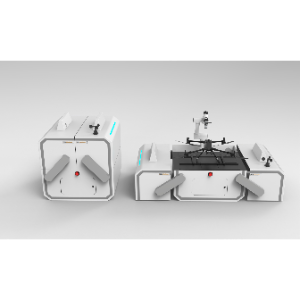
ARS-550H Drone Hangar
The ARS-550H Battery-Swapping Drone Hangar is a new type of low-altitude infrastructure that enables full-process autonomous operation of the DJI Matrice 400 drone. It integrates...
View product details →
ARCGine Autonomous Droneport System
Escorts safe flight; Unmanned operation of UAVs, autonomous takeoff and landing, automatic charging and discharging,battery hot replacement,remote monitoring and other all-weather...
View product details →Frequently asked questions
What is the main difference between the W01T and the QN260 hangars?
The W01T is built for lightweight, modular deployment with vehicle-mounted precision landing and takeoff, convoy-escort flight modes, and reconnaissance positioning missions, plus real-time image transmission and high-accuracy positioning. The QN260 is a fixed unattended hangar for medium-sized UAVs with an IP65-rated enclosure, automatic charging and battery swapping, meteorological monitoring, and an 8 km maritime communication link, designed for harsh marine, desert, Gobi and barren-area environments.
Which hangar is better for construction progress monitoring?
It depends on your mission profile. If your program covers multiple sites or a moving project and needs vehicle-mounted deployment, the W01T's mobility and real-time image transmission fit that workflow. If you need a fixed, unattended station flying scheduled missions from one protected location, the QN260's IP65 environmental protection and automatic charging/battery swapping are designed for that. Neither is universally better; the data supports both use cases.
Does the QN260 support battery swapping?
Yes. The QN260 supports precise autonomous UAV landing as well as automatic charging and battery swapping, and it is fitted with meteorological monitoring and emergency recovery mechanisms for full-process unattended operation.
Which UAV platforms are compatible with these hangars?
The ARS-550H is explicitly stated to enable full-process autonomous operation of the DJI Matrice 400. The QN260 is compatible with medium-sized UAVs. The W01T is described as a multi-rotor UAV automated hangar system, and the ARCGine VP-M does not list compatible platforms in the supplied data. For exact platform compatibility, contact us for the datasheet.
Are these hangars suitable for harsh environments in Latin America?
The QN260 has the most detailed environmental specifications in the supplied data: an IP65-rated enclosure, 10-grade anti-corrosion coating, fully sealed closure during high winds, built-in air conditioning and dehumidification, and resistance to salt spray, wave splash and rain erosion — making it suitable for marine, desert, Gobi and barren-area scenarios. The W01T is described as having robust environmental adaptability, but specific protection ratings are not provided. Contact us for the datasheet to confirm suitability for your specific site conditions.
Need help selecting the right system?
Tell us your mission, payload, and operating environment. Our team will help you compare options and request the right datasheets from verified suppliers.