For an environmental monitoring program in 2026, the right unmanned vehicle is the one whose endurance, control range, sensor payload, and launch/recovery method match your survey area and data requirements. The supplied data covers several unmanned vehicle options, including the LD750 Infantry Assault Unmanned Vehicle, the Egret-100 UAV, the LD1200 combat support unmanned vehicle, and the QR17 stationary UAV reconnaissance and strike equipment. This guide explains how to evaluate those options without ranking them, and what to verify before procurement.
Define the mission before comparing unmanned vehicles
Environmental monitoring can mean river basin inspection, coastal surveillance, forest health checks, industrial site monitoring, or long-term observation in remote terrain. Each mission changes the platform requirements. For short-range visual and thermal inspection, a small unmanned vehicle with optical zoom and infrared thermal imaging may be relevant. For large-area, long-duration surveillance, a fixed-wing platform with satellite communication and beyond-visual-line-of-sight control may be more suitable. The supplied data does not describe environmental monitoring-specific payloads for these models, so confirm sensor integration and data outputs with the datasheet.
- Area size and terrain: open desert, forest, river, or urban edge.
- Mission duration and revisit frequency: hours, days, or continuous monitoring.
- Data type: visible light, infrared thermal imaging, laser ranging, or custom environmental sensors.
- Control distance and data link: line-of-sight, satellite communication, or stationary detection.
- Launch and recovery: runway, vehicle takeoff, flat road, or fixed installation.
Core selection criteria for environmental monitoring programs
The table below uses only supplied product data. Where a value is not specified, contact us for the datasheet. It is intended to show how different unmanned vehicle attributes can be compared, not to rank the products.
| Attribute | LD750 | Egret-100 | LD1200 | QR17 |
|---|---|---|---|---|
| Category | Unmanned Vehicle | Drones | Unmanned Vehicle | Detection & Countermeasures Equipment |
| Endurance | Long endurance (no figure in data) | Up to 60 hours | Long endurance (no figure in data) | Not specified |
| Control/range | More than 800 m | Satellite communication for BVLOS; real-time image within 100 km | More than 800 m | Detect within 5 km; counter within 2 km |
| Payload/sensors | Strong light illumination, laser aiming indication, optical zoom, infrared thermal imaging, helmet aiming system; weapons | HD imaging, 30x visible light camera, infrared imaging, laser rangefinder; modular customizable | Adjustable payload: guns, rocket launchers, flamethrowers, reconnaissance equipment | Reconnaissance and strike equipment |
| Launch/recovery | Not specified | Vehicle takeoff and runway landing; flat roads | Not specified | Stationary |
Trade-offs to weigh: endurance, payload, and control range
Longer endurance often comes with a larger airframe and different launch/recovery needs. The Egret-100 is described as a medium-sized fixed-wing UAV with a 9.5 m wingspan, 70 kg maximum takeoff weight, and endurance up to 60 hours. The LD750 is described as a small reconnaissance and combat drone with strong maneuverability and long endurance, a control distance of more than 800 meters, and sensors including optical zoom and infrared thermal imaging. The LD1200 is described as heavy-duty, maneuverable, and long-endurance with a control distance of more than 800 meters, and its mission payload can be adjusted with options including reconnaissance equipment. The QR17 is stationary and detects targets within 5 kilometers and precisely counters targets within 2 kilometers. For environmental monitoring, verify whether your required sensors can be integrated, because the supplied data does not list environmental monitoring payloads for these models.
Integration questions for procurement teams
- What ground control station and data link are required for the operating distance?
- Does the payload interface support your environmental monitoring sensors and data outputs?
- What launch and recovery method fits your sites, and what training is needed?
- How will imagery, thermal data, or ranging data be processed, stored, and exported?
- What power, transport, and maintenance requirements apply in remote areas?
- For Latin America operations, what local spectrum, import, and flight permissions must be confirmed?
Procurement checklist for 2026
- Confirm the environmental monitoring mission area, duration, and revisit frequency.
- Match control range and data link to the operating distance and terrain.
- Verify sensor payload, data outputs, and whether custom integration is available.
- Check launch/recovery, transport, and site access constraints.
- Request the datasheet for any specification not listed in the product data.
- Confirm local spectrum, import, and flight permissions for your Latin America country.
- Plan training, spare parts, maintenance, and data handling responsibilities.
Where the LD750 fits in an unmanned vehicle evaluation
The LD750 Infantry Assault Unmanned Vehicle is described as a small reconnaissance and combat drone with strong maneuverability and long endurance. Its listed sensors include strong light illumination, laser aiming indication, optical zoom, infrared thermal imaging, and a helmet aiming system. It has a control distance of more than 800 meters and can carry weapons for reconnaissance search and firepower suppression on enemy combat personnel within 50-200 meters. For environmental monitoring buyers, the optical zoom and infrared thermal imaging may be relevant for inspection tasks, but the supplied data does not confirm environmental monitoring certifications or sensor integrations. Contact us for the datasheet before including it in an environmental monitoring procurement.
Related unmanned vehicle options to shortlist
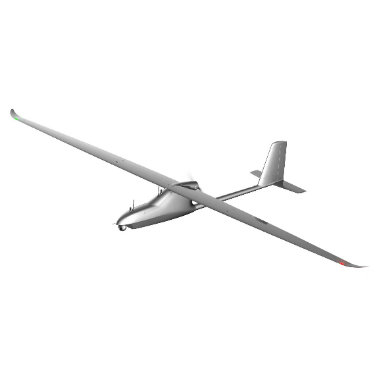
The Egret-100 UAV is described as a medium-sized fixed-wing ultra-long-endurance UAV with a 9.5 m wingspan, 70 kg maximum takeoff weight, and endurance up to 60 hours. It uses a highly integrated satellite communication system for beyond-visual-range flight control and supports real-time image transmission within 100 kilometers. It is equipped with high-definition imaging sensors, a built-in 30x visible light camera, infrared imaging components, and laser rangefinders, and it has on-board tracking, stabilization, and video processing functions. It is also a customizable modular platform. The LD1200 combat support unmanned vehicle is described as heavy-duty, maneuverable, and long-endurance with a control distance of more than 800 meters, intended for field combat, urban combat, and amphibious landings, with adjustable mission payloads including various guns, rocket launchers, flamethrowers, and reconnaissance equipment. The QR17 is stationary UAV reconnaissance and strike equipment that can detect targets within 5 kilometers and precisely counter targets within 2 kilometers. Each option has different attributes; match them to your documented mission requirements and request datasheets for unspecified details.

Featured product
LD750 Infantry Assault Unmanned Vehicle
A small reconnaissance and combat drone with strong maneuverability and long endurance. Equipped with advanced sensors such as strong light illumination, laser aiming indication, optical zoom, infrared thermal imaging, helmet aiming system, etc., with a control distance of more than 800 meters, and equipped with...
Products mentioned in this guide
Egret-100 UAV
Egret 100 is a medium-sized fixed-wing ultra-long-endurance UAV with 9.5m wingspan, 70 kg max.takeoff weight, and endurance up to 60 hours. It is equipped with highly integrated...
View product details →
Stationary Unmanned Aerial Vehicle (UAV) Reconnaissance and Strike Equipment
Stationary unmanned aerial vehicle (UAV) reconnaissance and strike equipment. It can detect targets within a range of 5 kilometers and precisely counter targets within 2...
View product details →
LD1200 combat support unmanned vehicle
A heavy-duty, maneuverable, long-endurance unmanned vehicle with a control distance of over 800 meters. This unmanned vehicle is for operations such as field combat, urban combat,...
View product details →Frequently asked questions
What is the LD750 Infantry Assault Unmanned Vehicle?
The supplied data describes the LD750 as a small reconnaissance and combat drone with strong maneuverability and long endurance. It is equipped with sensors such as strong light illumination, laser aiming indication, optical zoom, infrared thermal imaging, and a helmet aiming system. It has a control distance of more than 800 meters and can carry weapons for reconnaissance search and firepower suppression on enemy combat personnel within 50-200 meters.
Can the LD750 be used for environmental monitoring?
The supplied data describes the LD750 as a reconnaissance and combat drone with optical zoom and infrared thermal imaging. It does not list environmental monitoring-specific payloads, certifications, or performance figures. For environmental monitoring suitability, contact us for the datasheet.
What endurance does the Egret-100 UAV offer?
The Egret-100 is described as a medium-sized fixed-wing ultra-long-endurance UAV with endurance up to 60 hours. It has a 9.5 m wingspan and a 70 kg maximum takeoff weight. It also uses satellite communication for beyond-visual-range flight control and supports real-time image transmission within 100 kilometers.
What is the control distance of the LD750?
The supplied data states that the LD750 has a control distance of more than 800 meters.
What should Latin America buyers verify before procurement?
The supplied product data does not include regional certifications or local approvals. Buyers in Latin America should verify local spectrum, import, and flight permissions with the relevant authorities. For product-specific integration and compliance details, contact us for the datasheet.
Need help selecting the right system?
Tell us your mission, payload, and operating environment. Our team will help you compare options and request the right datasheets from verified suppliers.