Choosing Detection & Countermeasures Equipment in 2026 comes down to matching three things: the type of unauthorized aircraft you need to stop, the way your team operates (fixed posts or mobile response), and the legal framework in your region. For logistics and delivery operators, the core options are hand-held jammers that cut a drone's control and navigation links, broadband defense systems that suppress spectrum across a set frequency range, navigation decoy devices that redirect aircraft away from protected zones, and directional shields aimed at specific low-altitude targets. This guide explains how each category works, what to ask suppliers, and how to structure procurement so you buy equipment that fits your actual operational risk.
Why Logistics and Delivery Sites Need Countermeasures
Distribution centers, warehouses, and delivery hubs concentrate high-value inventory, operate around aircraft traffic, and often sit near urban airspace where unauthorized or "black flight" drones appear. An intruding UAV can disrupt scheduled delivery drone operations, photograph facilities, or simply create airspace uncertainty that forces you to pause legitimate flights. Countermeasure equipment addresses this by cutting the communication and navigation signals between an unauthorized UAV and its remote control, forcing it to land or leave the area, and thereby protecting the safety of the low-altitude airspace over your site.
The key procurement insight is that different devices solve different parts of this problem. A jammer that severs a control link behaves differently from a decoy that feeds false navigation signals, and a fixed broadband system behaves differently from a hand-held unit carried by a security patrol. Understanding these trade-offs before requesting quotes will save significant time in vendor evaluation.
The Main Equipment Categories Explained
Hand-held jamming interception devices
Hand-held units are built for mobile response. The Drone jamming interception device from Chengdu Anze technology Co., LTD (model Auav-b01) is designed in strict accordance with military or industrial indicators. It interferes with the data link, the map transmission link, and the navigation link of a UAV, cutting the communication and navigation signal between the drone and its remote control. The result is that the UAV is forced to automatically land or is driven away, allowing the operator to carry out the control task and secure the low-altitude airspace. For logistics teams, this form factor suits security staff who patrol perimeters or respond to specific intrusion points rather than manning a fixed station.
Broadband UAV defense systems
Fixed or deployable broadband systems take a spectrum-suppression approach. The RC809W-360 Broadband UAV Defense Equipment from Zhejiang Ruitong Electronic Technology Co., Ltd is applied to the defense of remote-controlled UAVs in key areas. It uses radio signal spectrum suppression to drive away or force-land invading UAVs, and its frequency band can be arbitrarily set from 300-6000MHz. The manufacturer highlights accurate strike frequency and angle, fast response speed, and easy operation. This category fits sites that need continuous coverage of a defined zone rather than a carried device.
Navigation decoy devices
Decoy systems work differently: instead of cutting signals, they take control of the aircraft's navigation. The drone navigation and decoy devices from Chengdu Anze technology Co., LTD (models An-Jam-202B/201C/201G) were developed to deal with security threats from "black flight" drones. By radiating low-power regenerative navigation satellite signal, with power not more than 10 dBm, the equipment invades the navigation system of the UAV and achieves interception control over aircraft that rely on navigation for flight control, so they cannot fly into the protected area. For logistics operators, this is a way to establish a protective boundary that redirects aircraft before they reach sensitive zones.
Directional anti-drone shields
Directional shields combine targeted jamming with a defined coverage pattern. The Enhanced Special Link Anti-Drone Shield (model ZK-DEF-B600) from Qingdao ZKDEFENCE Technology Co is designed for directional jamming and suppression against FPV racing drones, fixed-wing aircraft, consumer-grade UAVs, and other low-altitude aerial targets. It disables the control, video transmission, and navigation signals of these aircraft to safeguard the low-altitude airspace security of designated areas. This makes it relevant where a specific approach corridor or facility boundary needs protection.
Selection Criteria for 2026 Procurement
Use the following criteria to structure your evaluation. Where a specification is not published, request the datasheet from the supplier rather than relying on verbal claims.
- Deployment mode: decide between hand-held (like the Auav-b01) for mobile security teams and fixed or emplaced systems (like the RC809W-360 or ZK-DEF-B600) for continuous zone coverage.
- Mechanism: determine whether you need link jamming that forces a landing or drive-away, spectrum suppression across a broad band, or navigation decoying that redirects the aircraft away from the protected area.
- Frequency coverage: the RC809W-360 can be set anywhere from 300-6000MHz; for other products, contact us for the datasheet to confirm supported bands.
- Target aircraft types: the ZK-DEF-B600 explicitly covers FPV racing drones, fixed-wing aircraft, and mainstream consumer UAVs; confirm coverage for the aircraft types seen in your operating area.
- Response and control: evaluate how quickly the system can be brought to bear and how easily operators can use it under pressure.
- Power and signal characteristics: the An-Jam decoy series operates at low power (not more than 10 dBm), which matters for sites with sensitive RF environments; request power figures for any unit you evaluate.
Comparing the Available Options
The table below compares the four products in this category using only the information published by their manufacturers. It is not a ranking; the right choice depends on your deployment model and threat profile.
| Attribute | Auav-b01 (Chengdu Anze) | RC809W-360 (Zhejiang Ruitong) | An-Jam-202B/201C/201G (Chengdu Anze) | ZK-DEF-B600 (Qingdao ZKDEFENCE) |
|---|---|---|---|---|
| Form factor | Hand-held | Defense equipment for key areas | Navigation decoy device | Directional shield |
| Mechanism | Interferes data link, map transmission link, and navigation link | Radio signal spectrum suppression | Radiates low-power regenerative navigation satellite signal | Directional jamming and suppression |
| Frequency / power data | Contact us for the datasheet | Frequency band arbitrarily set from 300-6000MHz | Power not more than 10 dBm | Contact us for the datasheet |
| Effect on target UAV | Forces automatic landing or drives it away | Drives away or forces landing | Cannot fly into the protected area | Disables control, video transmission, and navigation signals |
| Stated target types | UAVs generally | Remote-controlled UAVs in key areas | "Black flight" UAVs using navigation for flight control | FPV racing drones, fixed-wing aircraft, consumer-grade UAVs |
Integration Questions to Ask Before You Buy
Countermeasure equipment does not operate in isolation. Before committing to a purchase, put these questions to each supplier:
- How does the device interact with our existing detection or perimeter systems, and is there a detection component required upstream of the countermeasure?
- What training and certification do operators need, and what is included with the purchase?
- What are the power, mounting, and environmental requirements for fixed installations such as the RC809W-360 or the ZK-DEF-B600?
- What documentation, test data, and datasheets are available for review before contract signature?
- What is the warranty, spare parts, and after-sales support arrangement for our region?
For buyers in Latin America, add one more question: confirm in writing what regulatory approvals or use authorizations apply in your specific country, since rules on RF transmission and jamming vary across the region and are typically administered by national telecommunications authorities. Your procurement team should treat this as a gating item, not an afterthought.
Procurement Checklist for Detection & Countermeasures Equipment
Work through this checklist before issuing a purchase order:
- Define the threat: which aircraft types (consumer UAVs, FPV drones, fixed-wing) appear near your logistics site, and at what altitudes and distances.
- Choose the deployment model: mobile hand-held response (Auav-b01), fixed zone defense (RC809W-360), boundary redirection (An-Jam decoy series), or directional corridor protection (ZK-DEF-B600).
- Obtain full datasheets, including frequency bands, power output, and operating conditions, for every shortlisted product.
- Confirm legal authorization to operate jamming or decoying equipment in your jurisdiction, and document who is permitted to activate it.
- Plan operator training and define standard operating procedures for activation, escalation, and incident recording.
- Verify integration with any existing detection, surveillance, or airspace awareness systems on site.
- Agree on delivery, installation support, warranty, and spare parts terms in the contract.
- Schedule a post-installation verification to confirm the equipment performs as specified in your actual environment.
Matching the Equipment to Your Operation
The most common procurement mistake is buying a single device and expecting it to cover every scenario. A hand-held jammer like the Auav-b01 gives a security patrol a direct response tool, but it depends on someone being close enough to act. A broadband system like the RC809W-360 covers a defined key area continuously, but it is a fixed commitment. Navigation decoys establish a protective boundary that stops aircraft from entering, and directional shields address specific corridors and aircraft classes. Many logistics operations combine two of these categories, for example a fixed system for the facility perimeter and a hand-held unit for patrol response. Define your operational scenarios first, then select the equipment that matches them, and let the datasheets, not marketing language, drive the final decision.

Featured product
Drone jamming interception device
Hand-held UAV jamming interception device is designed in strict accordance with military or industrial indicators. By interfering with the data link, the map transmission link and the navigation link of the UAV, the communication and navigation signal between the UAV and the remote control are cut off, so as to force...
Products mentioned in this guide
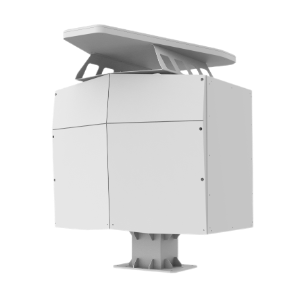
RC809W-360 Broadband UAV Defense Equipment
The RC809W-360 Broadband UAV Defense Equipment is a special equipment applied to the defense of remote control UAVs in key areas. It adopts the principle of radio signal spectrum...
View product details →
Drone navigation and decoy devices
The drone navigation decoy device is currently developed to deal with various security threats brought by the "black flight" drone. By radiating low-power regenerative navigation...
View product details →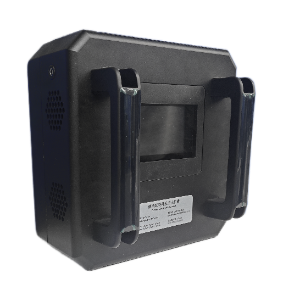
Enhanced Special Link Anti-Drone Shield
The Enhanced Special Link Anti-UAV Shield is mainly designed to conduct directional jamming and suppression against FPV racing drones, fixed-wing aircraft, consumer-grade UAVs and...
View product details →Frequently asked questions
What does a drone jamming interception device actually do?
The Auav-b01 hand-held drone jamming interception device interferes with the data link, the map transmission link, and the navigation link of a UAV. By cutting the communication and navigation signal between the drone and its remote control, it forces the UAV to automatically land or drives it away, securing the low-altitude airspace.
How is a navigation decoy device different from a jammer?
A jammer cuts the signals between the drone and its remote control. The An-Jam-202B/201C/201G decoy devices instead radiate a low-power regenerative navigation satellite signal (power not more than 10 dBm) that invades the UAV's navigation system, achieving interception control so the aircraft cannot fly into the protected area.
Which frequency range does the RC809W-360 cover?
According to the manufacturer, the frequency band of the RC809W-360 Broadband UAV Defense Equipment can be arbitrarily set from 300-6000MHz. For frequency details on other products in this category, request the datasheet from the supplier.
Can countermeasure equipment stop FPV racing drones and fixed-wing aircraft?
The ZK-DEF-B600 Enhanced Special Link Anti-Drone Shield is designed for directional jamming and suppression against FPV racing drones, fixed-wing aircraft, consumer-grade UAVs, and other low-altitude aerial targets, disabling their control, video transmission, and navigation signals. For other products, confirm target coverage in the datasheet.
Do I need authorization to operate jamming equipment in Latin America?
Rules on RF transmission and jamming vary by country and are typically administered by national telecommunications authorities. Before procurement, confirm in writing what regulatory approvals or use authorizations apply in your specific country, and treat this as a gating item in your purchasing process.
Need help selecting the right system?
Tell us your mission, payload, and operating environment. Our team will help you compare options and request the right datasheets from verified suppliers.