If you are procuring UAV technology for environmental monitoring in 2026, the core question is not which drone platform to buy first—it is which payload combination can actually deliver the observational data your program needs, integrate with your existing systems, and survive your operating environment. This guide walks procurement teams through the selection criteria that matter for monitoring missions, using three concrete payload examples from the SkyDrone Max marketplace: a high-end cooled MWIR thermal camera (the FJR 15×300mm), two uncooled infrared cores (the S640 and J1280), and a 4K optical camera (the ATC-UZ5710U). For any specification not published in the product data, contact the supplier for the datasheet before shortlisting.
What UAV Technology Means for Environmental Monitoring Programs
Environmental monitoring deployments—whether for wildfire observation, industrial site surveillance, perimeter alarm verification, or ongoing condition monitoring—place unusual demands on UAV payloads. Unlike a photography drone, a monitoring platform must operate repeatedly, often in harsh conditions, and must produce imagery that downstream teams can act on. That makes three payload categories central to most procurements: thermal imaging cores for detecting heat signatures and operating where visible light is insufficient, optical cameras for detailed visual documentation, and the integration hardware that ties payloads to the airframe and ground station.
The distinction between these categories drives most of the trade-offs in this guide. Thermal and optical payloads answer different mission questions, and choosing the wrong category is the most expensive mistake an environmental monitoring buyer can make.
Cooled vs Uncooled Thermal Cores: The Central Trade-off
Thermal imaging payloads divide into two families, and the choice between them shapes budget, integration effort, and mission capability.
Cooled MWIR cameras use a cryogenically cooled detector, which enables higher sensitivity and long-range observation. The Cooled Thermal Cameras 15×300mm from Beijing FJR Opto-electronic Technology illustrates the category: a high-end cooled MWIR thermal camera with a modular design and high integration, compound noise filtering, EDDE, CLAHE and other intelligent image processing algorithms, large FOV angle, high sensitivity, rich interfaces, high reliability, and strong scalability. The listed application fields include security monitoring, security alarm, industrial monitoring, and fire alarm—mission profiles that overlap substantially with environmental monitoring work such as fire detection and industrial site observation.
Uncooled infrared cores operate without cryogenic cooling. They are generally the more practical choice where vibration, shock, and environmental adaptation dominate the requirements list. Two FJR examples show the range within this category:
- S640 uncooled infrared core: a 640×512 detector built on a high-performance image processing platform, with multiple data interfaces, an internal lens control module, and automatic focusing compatible with continuous zoom and fixed-focus electro-optical infrared lenses. It is described as having high reliability and strong vibration and shock resistance, suitable for infrared surveillance equipment and areas with demanding environmental adaptation requirements.
- J1280 uncooled infrared core: a high-resolution 1280×1024 imaging core with advanced readout circuit design and image processing algorithms, a lens control module, and automatic focusing, suited to high-end, long-distance surveillance equipment.
The practical trade-off: cooled systems trade integration complexity and cost for high sensitivity; uncooled cores trade peak sensitivity for ruggedness, resolution options, and simpler deployment. Your monitoring mission profile—detection distance, dwell time, environmental stress—should determine which side of that trade you land on. For exact sensitivity, cooling, and power figures, request the datasheet from the supplier for each candidate.
| Attribute | Cooled MWIR (15×300mm) | Uncooled cores (S640 / J1280) |
|---|---|---|
| Detector type | Cooled MWIR thermal camera | Advanced process uncooled infrared detector |
| Resolution | Contact us for the datasheet | 640×512 (S640); 1280×1024 (J1280) |
| Key image processing | Compound noise filtering, EDDE, CLAHE | Advanced image processing algorithms |
| Optics | 15–300mm modular design, large FOV angle | Compatible with continuous zoom and fixed-focus lenses (S640); lens control module with auto focus (both) |
| Environmental suitability | High reliability, strong scalability | Strong vibration and shock resistance (S640) |
| Listed applications | Security monitoring, security alarm, industrial monitoring, fire alarm | Infrared surveillance equipment; long-distance surveillance (J1280) |
When an Optical Camera Belongs in the Payload Mix
Thermal payloads detect; optical payloads document. For environmental monitoring programs that need to verify what a thermal cue actually is—or produce visual records for reporting, compliance, or stakeholder communication—a high-resolution optical camera is a necessary companion. The KT&C ATC-UZ5710U 4K camera is a 4K 10x optical zoom camera listed for film and television production, security surveillance, live streaming, and industrial inspection. The 10x optical zoom allows operators to move from wide situational awareness to close visual inspection without repositioning the aircraft, which matters when monitoring sites are remote or access is restricted.
Many mature monitoring programs run thermal and optical payloads together on the same platform, using the thermal channel to cue the optical channel. If you plan a dual-payload configuration, confirm with both suppliers that the weight, power, and interface budgets support it—the product listings above do not include weight or power figures, so contact us for the datasheet.
Selection Criteria for Environmental Monitoring Payloads
Before comparing specific models, work through these criteria in order. They apply to any thermal or optical payload you are evaluating:
- Mission requirement first: Define what you must detect or document, at what range, in what conditions. A cooled MWIR camera justified by long-range fire monitoring is overkill for short-range site inspection, and vice versa.
- Resolution and image quality: Resolution figures such as 640×512 (S640) and 1280×1024 (J1280) are published and comparable. Onboard processing—such as the compound noise filtering, EDDE, and CLAHE in the FJR cooled camera—affects how usable the imagery is in the field.
- Integration burden: The FJR cooled camera emphasizes modular design, high integration, rich interfaces, and strong scalability. The uncooled cores include internal lens control modules and automatic focusing, and the S640 is compatible with multiple lens types. Ask how each payload attaches to your specific airframe and data link.
- Environmental tolerance: For East African operations—where dust, heat, and long transit distances between monitoring sites are common—the S640's stated strong vibration and shock resistance is a relevant selection factor. Confirm operating temperature and ingress protection ratings via the datasheet, as these are not in the listing data.
- Interfaces and data flow: Multiple data interfaces are listed for both the cooled camera and the uncooled cores. Verify early that the payload's interfaces match your flight controller, video downlink, and ground station, because interface mismatches are a common cause of delayed deployments.
- Supplier support and documentation: Payloads in this class are components, not consumer products. Confirm what documentation, SDK materials, and integration support the manufacturer provides before purchase.
Integration Questions to Ask Every Supplier
Payload procurement fails most often at the integration stage, not the specification stage. Put these questions to every supplier on your shortlist, and treat incomplete answers as a procurement risk:
- Which mechanical and electrical interfaces does the payload expose, and are adapter options available for our airframe and gimbal?
- What are the power requirements and voltage ranges? (Not listed in the current product data—request the datasheet.)
- How is the automatic focusing function controlled, and does lens control integrate with our ground station or run autonomously?
- Can the intelligent image processing features, such as CLAHE and noise filtering, be configured or disabled by the operator in flight?
- What is the lead time, warranty coverage, and repair path for deployments in East Africa or other regions distant from the manufacturer?
Suppliers who answer these questions with specifics—rather than marketing language—are generally safer partners for multi-unit monitoring programs.
A Procurement Checklist for UAV Monitoring Payloads
Use this checklist to move from shortlist to purchase order. It is deliberately conservative: no item advances until the previous one is confirmed in writing.
- Mission definition: Documented detection ranges, observation conditions, and output requirements signed off by the end user of the imagery.
- Payload category decision: Cooled MWIR, uncooled thermal core, optical, or a combination—justified against the mission definition, not against vendor literature.
- Datasheet request: Full specification sheets obtained for every candidate, including any figures not listed in marketplace data (weight, power, operating temperature, sensitivity).
- Integration verification: Written confirmation that the payload's interfaces, lens control, and data output are compatible with your airframe, gimbal, and ground segment.
- Environmental validation: Vibration, shock, temperature, and dust performance confirmed against your operating region's conditions—particularly relevant for East African field programs.
- Commercial terms: Lead times, spare parts availability, warranty, and support channels agreed before ordering, especially for programs running multiple aircraft.
- Pilot deployment: A defined evaluation period with acceptance criteria tied back to the original mission definition, before full fleet rollout.
Matching the Right Payload to Your 2026 Monitoring Program
For environmental monitoring buyers, the 2026 UAV technology market offers mature options at both ends of the thermal spectrum. If your program demands high sensitivity and long-range observation—typical of fire alarm and industrial monitoring applications—the FJR cooled MWIR 15×300mm camera is the example product to evaluate first. If your priority is rugged, integration-friendly thermal imaging with a choice of resolution tiers, the S640 and J1280 uncooled cores cover entry and high-end requirements respectively. And if visual documentation is the deliverable, the KT&C ATC-UZ5710U 4K camera with 10x optical zoom addresses that role directly. Rank candidates only after you have datasheets in hand; product listings alone do not contain enough information to support a defensible ranking, and any figure you need that is not published here should come directly from the supplier.

Featured product
Cooled Thermal Cameras
15-300mm is a high-end cooled MWIR thermal camera with modular design and high integration. With compound noise filtering, EDDE, CLAHE and other intelligent image processing algorithms, with large FOV angle, high sensitivity, easy integration, rich interface, high reliability, strong scalability and other...
Products mentioned in this guide

Uncooled infrared cores
S640 features an advanced process technology uncooled infrared detector (640x512), based on a high-performance image processing platform and advanced image processing algorithms,...
View product details →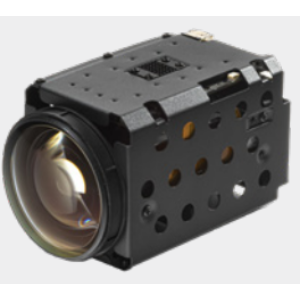
4K Camera
4K 10x optical cameras are widely used in film and television production, security surveillance, live streaming, and industrial inspection.
View product details →
Uncooled infrared cores
J1280 is a high-resolution (1280×1024) uncooled infrared imaging core, which features advanced imaging readout circuit design and image processing algorithms, providing a fine...
View product details →Frequently asked questions
What is the difference between a cooled and an uncooled thermal camera for UAV use?
Cooled MWIR cameras, such as the FJR 15×300mm, use a cryogenically cooled detector and are characterized in the product data by high sensitivity, large FOV angle, and intelligent image processing, making them suited to demanding applications like fire alarm and industrial monitoring. Uncooled cores, such as the FJR S640 and J1280, use an advanced process uncooled infrared detector and emphasize ruggedness—the S640 is noted for strong vibration and shock resistance—and come in resolution tiers from 640×512 to 1280×1024. The right choice depends on your mission range, sensitivity needs, and environmental conditions; request datasheets for detailed figures.
Which payload should I choose for wildfire or fire-related monitoring?
The FJR Cooled Thermal Cameras 15×300mm list fire alarm among their stated application fields, alongside security monitoring and industrial monitoring, which makes the cooled MWIR category the natural starting point for fire-related monitoring. Confirm detection range and sensitivity specifics with the supplier's datasheet before committing, as these figures are not included in the marketplace listing.
Can I combine a thermal camera and a 4K optical camera on one UAV?
Many monitoring programs pair a thermal core with an optical camera, using the thermal channel to cue visual verification through a camera such as the KT&C ATC-UZ5710U 4K 10x optical zoom camera. Whether a specific combination fits a given airframe depends on payload weight, power, and interface budgets, which are not published in the current product listings—contact us for the datasheet and consult your airframe supplier about the combined configuration.
What integration issues should we plan for when adding a thermal core to an existing fleet?
Plan for four areas: mechanical mounting and gimbal compatibility, electrical power and interface matching (the FJR cores advertise multiple data interfaces and internal lens control modules, but exact interface specifications require the datasheet), control of the automatic focusing function from your ground station, and configuration of onboard image processing features such as CLAHE and compound noise filtering. Verify each item in writing with the supplier before purchase.
How do I verify a payload can handle harsh field conditions in East Africa?
Start with what the manufacturer publishes: the FJR S640 is explicitly described as having high reliability and strong vibration and shock resistance, suitable for areas with demanding environmental adaptation requirements. For conditions specific to your deployment region—such as operating temperature ranges, dust ingress protection, and humidity limits—request the datasheet from the supplier, since these environmental ratings are not included in the marketplace product listings.
Need help selecting the right system?
Tell us your mission, payload, and operating environment. Our team will help you compare options and request the right datasheets from verified suppliers.