The right drone for a logistics or delivery operation in 2026 is the one whose airframe type, endurance, payload system, and autonomy features match your specific mission profile — not the one with the longest spec sheet. This guide walks procurement teams through the selection criteria that matter most, using four platforms available on SkyDrone Max as worked examples: the Autel Dragonfish tiltrotor VTOL, the Huahang M10 VTOL fixed-wing UAV, the Timestars TIM-W20, and the Chuangsheng CS-20V. For any specification not listed in a vendor's published data, request the datasheet before shortlisting.
Start with your mission profile, not the platform
Logistics and delivery teams deploy UAVs for a range of tasks: route and corridor reconnaissance, site and perimeter monitoring, emergency assessment across distribution networks, and inspection of infrastructure along freight routes. Before comparing products, write down the answers to three questions. First, where will the aircraft launch and recover — a prepared runway, a warehouse yard, or an unprepared field site? Second, how long is a typical mission, and how far does it reach? Third, what sensor or payload does the aircraft need to carry, and how often will it change?
The answers determine which airframe category fits. A team operating from fixed facilities with long transit distances has different requirements from one that must redeploy daily across multiple sites. Note that cargo-carrying capability is a distinct requirement from sensing: if your use case involves lifting or delivering physical loads, ask each vendor to confirm payload capacity and center-of-gravity limits in writing — contact us for the datasheet on any platform under consideration.
Platform types: tiltrotor, VTOL fixed-wing, and compact reconnaissance UAVs
The Dragonfish from Autel Robotics is a vertical takeoff and landing (eVTOL) tiltrotor aircraft designed for multi-sensor intelligence, surveillance, and reconnaissance (ISR) services. It is ultraportable and runway independent, assembles from case to takeoff within 5 minutes, and requires no additional launch or recovery equipment. Takeoff and landing can be automatic or manual. Published figures cite up to 179 minutes of flight time and a range of up to 45 km, extendable indefinitely with repeaters — performance figures you should verify against the current datasheet for your configuration.
The Huahang M10 VTOL fixed-wing UAV takes a different approach: runway-independent takeoff and landing combined with efficient cruise performance, precision waypoint navigation, built-in payload capacity, and rapid payload interchange. Its multi-redundant architecture and enhanced safety systems are aimed at long-range reconnaissance, emergency surveying and mapping, surveillance, and power line inspection — missions that share characteristics with corridor monitoring in logistics networks.
The TIM-W20 from Chengdu Timestars uses a non-planar dislocation structural layout that the manufacturer states reduces aircraft size, windage coefficient, and noise while improving load-bearing and endurance. Its flight control combines an AI module for intelligent obstacle avoidance, precise positioning, precise landing, intelligent navigation, and intelligent following. The CS-20V from Chuangsheng Aviation, meanwhile, uses a split quick-release design with tool-free disassembly, a dual-sensor gimbal integrating visible light and infrared thermal imaging for day-and-night operations, fully autonomous takeoff, landing and reconnaissance, and automatic return home on signal loss.
Side-by-side: what the published data shows
The table below compares the four platforms only on attributes stated in the supplied product data. Where a specification is not published, it is marked accordingly — this is exactly where a procurement process should demand datasheets rather than accept marketing copy.
| Attribute | Dragonfish (Autel) | M10 (Huahang) | TIM-W20 (Timestars) | CS-20V (Chuangsheng) |
|---|---|---|---|---|
| Airframe type | Tiltrotor eVTOL | VTOL fixed-wing | Reconnaissance UAV | VTOL fixed-wing |
| Runway independent | Yes | Yes | Contact us for the datasheet | Yes |
| Assembly / setup | Case to takeoff within 5 minutes | Contact us for the datasheet | Contact us for the datasheet | Split quick-release, tool-free disassembly |
| Endurance / range | Up to 179 min; up to 45 km, extendable with repeaters | Contact us for the datasheet | Contact us for the datasheet | Contact us for the datasheet |
| Sensors / payload | Quick-release payload changes; multiple EO/MWIR sensor options | Built-in payload capacity; rapid payload interchange | Contact us for the datasheet | Dual-sensor gimbal: visible light + infrared thermal imaging |
| Autonomy and safety | Automatic or manual takeoff/landing; single-operator operation with minimal training | Multi-redundant architecture; enhanced safety systems; precision waypoint navigation | AI obstacle avoidance, precise positioning, precise landing, intelligent navigation and following | Fully autonomous takeoff, landing and reconnaissance; auto return home on signal loss |
Note what this comparison does not do: it does not rank the platforms, because the supplied data does not support a like-for-like ranking on endurance, range, or payload for all four. Rankings drawn from incomplete data are a common procurement failure mode. Where gaps exist, fill them with vendor datasheets and, where possible, a structured demonstration against your own mission profile.
Endurance, range, and the true operational footprint
Published endurance and range figures are usually measured under favorable conditions with a specific payload and battery configuration. The Dragonfish's 179 minutes and 45 km range, for example, will vary with sensor payload and operating environment. Build margin into your planning: if your logistics corridor requires a 20 km outbound leg with sensing on station, an aircraft's maximum range is not the same as its usable mission radius. For platforms where range data is not published — including the M10, TIM-W20, and CS-20V in the supplied data — contact us for the datasheet and confirm figures under a payload configuration matching your own.
Also evaluate how range is extended in practice. The Dragonfish supports indefinite extension of range through repeaters, which implies a dependence on communications infrastructure or deployed relay units. Ask each vendor what repeater or link equipment is required, what it costs, and who operates it — this is an integration question that often surfaces after purchase rather than before.
Payload systems, sensors, and quick-swap capability
- Sensor fit determines mission value more than airframe speed. The Dragonfish offers multiple EO/MWIR sensor options on a quick-release mount; the CS-20V integrates visible light and infrared thermal imaging in a dual-sensor gimbal for day-and-night search of personnel, vehicles, and buildings in terrain.
- Quick-change payload systems cut downtime between missions. Both the Dragonfish (quick-release payload changes) and the M10 (rapid payload interchange) address this; confirm the mechanical interface and whether third-party payloads are supported.
- Ask whether payloads are certified or validated by the airframe manufacturer, what the payload bay dimensions and power budget are, and how software integration is handled. If any of this is not in the published data, request it in the datasheet.
- For logistics teams that will fly the same sensor profile on every mission, prioritize ease of configuration and calibration turnaround over maximum payload flexibility.
Autonomy, safety behaviors, and crew requirements
Autonomy directly drives operating cost. The Dragonfish is described as operable by a single operator with minimal training necessary — a meaningful difference for a logistics operation running multiple daily sorties. The CS-20V's fully autonomous takeoff, landing, and reconnaissance, plus automatic return home on signal loss, addresses the failure modes that most often end in lost aircraft. The TIM-W20's AI module adds intelligent obstacle avoidance and intelligent following, while the M10's multi-redundant architecture is a resilience consideration worth probing in detail with the vendor.
In every case, ask these integration questions before purchase: What happens on lost link — hover, return home, or something else? What is the documented behavior in GNSS-denied environments? What ground control software is included, and does it export data in formats your existing systems accept? What training and certification does the manufacturer provide for operators? If a vendor cannot answer from published documentation, treat that as a risk item on your evaluation scorecard.
Procurement considerations in North America
For teams operating in North America, three regional factors should shape the shortlist. First, confirm each platform's regulatory status for commercial operation in your jurisdiction and whether the manufacturer supports the approvals your missions require — particularly for operations beyond visual line of sight, which are relevant to the long-range profiles the Dragonfish and M10 are built for. Second, verify supply chain and support commitments: spare parts availability, repair turnaround times, and regional service coverage. Third, align data handling policies with your organization's requirements before the aircraft arrives, not after. None of these items appear in standard product listings, so they must be confirmed directly with the vendor or through our team — contact us for the datasheet and current regional support details.
Your 2026 UAV procurement checklist
- Define the mission profile in writing: launch/recovery sites, mission radius, duration, sensor requirements, and payload-change frequency.
- Request full datasheets for every shortlisted platform; do not fill specification gaps with assumptions or vendor claims.
- Verify endurance and range under your payload configuration, not the brochure configuration.
- Confirm autonomy behaviors: lost-link response, obstacle avoidance, autonomous takeoff/landing, and return-home logic.
- Assess crew requirements: single-operator operation (as with the Dragonfish) versus multi-person crews changes total cost significantly over a fleet's life.
- Check payload interchange: quick-release or tool-free systems (Dragonfish, M10, CS-20V) reduce turnaround time between sorties.
- Validate regional compliance, support coverage, spare parts availability, and training programs for your operating region.
- Run a structured field demonstration against your own logistics scenario before signing, and score it against the same checklist.
SkyDrone Max carries the full range of platforms discussed here. For configuration options, current availability, and complete technical documentation on the Dragonfish, M10, TIM-W20, or CS-20V, contact our team with your mission profile and we will supply the relevant datasheets.

Featured product
Dragonfish
The Dragonfish Series UAV is a vertical takeoff and landing (eVTOL), tiltrotor aircraft used to provide multi-sensor intelligence, surveillance, and reconnaissance (ISR) Services. The Dragonfish is ultraportable, runway independent, and assembles within 5 minutes from case to takeoff. The Dragonfish does not require...
Products mentioned in this guide
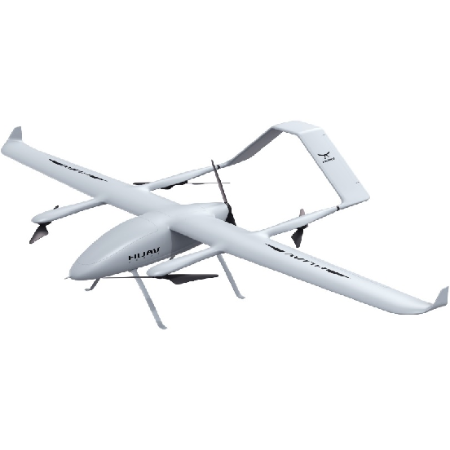
M10 VTOL Fixed-wing UAV
The system enables **runway-independent takeoff/landing**, **precision waypoint navigation**, and **efficient cruise performance**, featuring **built-in payload capacity**,...
View product details →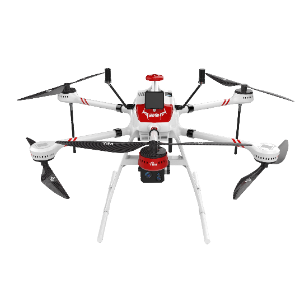
TIM-W20 Intelligent Reconnaissance UAV
TIM-W20 adopts the structural design of the original non-planar dislocation layout in the industry, which reduces the aircraft size and windage coefficient, reduces noise, and...
View product details →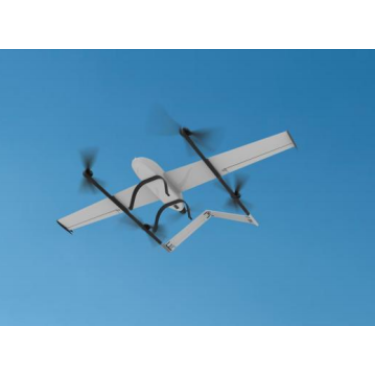
CS-20V VTOL Reconnaissance UAV
The CS-20V VTOL fixed-wing drone adopts a split quick-release design and supports tool-free quick disassembly. It is applicable to reconnaissance missions in forests and...
View product details →Frequently asked questions
Which drone is best for logistics and delivery operations in 2026?
There is no single best platform — the right choice depends on your mission profile. The Dragonfish suits teams needing rapid deployment (5-minute case-to-takeoff assembly), long endurance (up to 179 minutes), and range up to 45 km with repeater extension. The M10 favors long-range cruise with runway-independent operation, the TIM-W20 offers AI-driven navigation and obstacle avoidance, and the CS-20V provides day-and-night dual-sensor imaging with autonomous mission execution. Compare candidates against your written mission requirements rather than spec sheets alone.
Can the Dragonfish or other UAVs in this guide carry cargo for delivery?
The supplied product data describes these platforms primarily as reconnaissance, surveillance, and inspection aircraft. The M10 references built-in payload capacity and the TIM-W20 references improved load-bearing, but specific cargo weights, bay dimensions, and delivery mechanisms are not published in the data provided. Contact us for the datasheet on any platform to confirm payload capacity and whether it supports your delivery use case.
How long can the Dragonfish fly and how far can it operate?
According to the published data, the Dragonfish delivers up to 179 minutes of flight time and a range of up to 45 km, which can be extended indefinitely with repeaters. Actual performance depends on configuration and conditions, so confirm figures for your specific sensor payload and operating environment before committing.
Do these drones need a runway to take off and land?
Runway independence is a stated feature of the Dragonfish (vertical takeoff and landing with no additional launch or recovery equipment), the M10, and the CS-20V. This allows operations from warehouse yards, distribution hubs, and unprepared field sites. For the TIM-W20, contact us for the datasheet to confirm launch and recovery requirements.
What should I ask a UAV vendor before purchasing for a logistics fleet?
Request full datasheets with endurance and range measured under your payload configuration; documented lost-link and return-home behavior; sensor options and payload interchange interfaces; crew and training requirements; regional regulatory support; and spare parts and service commitments in your region. Any specification a vendor cannot provide in writing should be treated as an open risk in your evaluation.
Need help selecting the right system?
Tell us your mission, payload, and operating environment. Our team will help you compare options and request the right datasheets from verified suppliers.