The core difference between the Turbojet engine (SWIWIN SW800Pro) and the Fierce Eagle (Haery DB442) is power class and propulsion philosophy: the SW800Pro is a compact turbojet from a manufacturer whose lineup covers 6-120 kg of thrust, marketed for applications that include power inspection, while the DB442 is a heavy oil piston aero-engine producing 300-320 kW of takeoff power, sized for 1.5-3-ton-class helicopters and larger platforms. For infrastructure inspection teams, that means the turbojet path suits lighter, speed-oriented airframes, while the Fierce Eagle targets heavy-lift and long-endurance platforms. This comparison uses only the specifications published on the SkyDrone Max marketplace and flags every gap so your procurement team knows exactly what to request before committing.
Why Engine Selection Shapes an Infrastructure Inspection Program
Powerplant choice in infrastructure inspection—powerline corridors, pipeline routes, bridge and tower surveys—drives payload capacity, cruise profile, fuel logistics, and maintenance cycles. In Southeast Asia, where inspection routes often span humid coastal lowlands and elevated interior terrain, altitude behavior and fuel type become practical procurement questions rather than datasheet footnotes. A turbojet engine and a heavy oil piston engine sit at opposite ends of that decision, so understanding what each supplier actually documents is the first filter.
SW800Pro Turbojet Engine: What the Data Says
The Turbojet engine, model SW800Pro from SWIWIN TURBOJET EQUIPMENT CO.,LTD, belongs to a product family the manufacturer describes as covering 6-120 kg thrust levels in mass production. The published description claims small size, light weight, high push-to-weight ratio, fast acceleration, low fuel consumption, and high cost performance relative to mainstream imported products. Listed applications include aviation models, agricultural plant protection, forest fire protection, disaster relief, power inspection, single-person aircraft, and manned flight platforms.
For inspection program managers, the relevant point is that power inspection is explicitly named among the SW800Pro's intended use cases. However, the listing does not publish the SW800Pro's individual thrust figure, weight, fuel consumption values, or dimensions—those are family-level claims or absent entirely. Contact us for the datasheet to confirm the exact thrust rating, mass, and fuel profile before matching this engine to an airframe.
Fierce Eagle DB442: What the Data Says
The Fierce Eagle, model DB442, is a heavy oil piston aero-engine from Anhui Haery Aviation Power Co.,Ltd built around an opposed structure, high-pressure common rail technology, a high-pressure ratio supercharging system, lightweight design, and full authority digital control. The manufacturer states the engine is independently designed with 100% independent intellectual property rights and 100% localization, inheriting characteristics from the 120 kW-class Skylark heavy oil engine.
- Takeoff power: 300-320 kW, stated to support the power requirements of 1.5-3-ton-class helicopters and 3.0-5-ton-class platforms.
- High-altitude performance: the single-stage supercharged version does not decay in power at 5,000 m; the two-stage supercharged version does not decay at 6,000 m; extreme altitude is stated as up to 12,000 m.
- Cost positioning: after mass production, the manufacturer claims low procurement, maintenance, and operation costs versus imported heavy oil engines and domestic turbines of the same power level, with competitiveness in ton-kilometer cost for large-tonnage transport aircraft.
- Market focus: the civil low-altitude economy, with commercial applications emphasized.
Side-by-Side Comparison
The table below compares only attributes that appear in the supplied product data. Where a value is not published in the listing, it is marked as unavailable—request the datasheet from the seller rather than assuming a figure.
| Attribute | Turbojet engine (SW800Pro) | Fierce Eagle (DB442) |
|---|---|---|
| Engine type | Turbojet | Heavy oil piston aero-engine |
| Manufacturer | SWIWIN TURBOJET EQUIPMENT CO.,LTD | Anhui Haery Aviation Power Co.,Ltd |
| Power/thrust class | Family covers 6-120 kg thrust levels; per-model figure not listed—contact us for the datasheet | 300-320 kW takeoff power |
| Rated platform class | Not specified in listing | Supports 1.5-3-ton-class helicopters and 3.0-5-ton-class platforms (per manufacturer) |
| Fuel type | Not specified in listing | Heavy oil |
| Key technologies | Not itemized in listing | Opposed structure, high-pressure common rail, high-pressure ratio supercharging, lightweight design, FADEC |
| Altitude performance | Not specified in listing | No power decay at 5,000 m (single-stage) or 6,000 m (two-stage); extreme altitude up to 12,000 m |
| Stated advantages | Small size, light weight, high push-to-weight ratio, fast acceleration, low fuel consumption, high cost performance | 100% independent IP and localization; low procurement, maintenance, and operation costs after mass production |
| Stated inspection-relevant application | Power inspection (among listed applications) | Not explicitly listed; civil low-altitude economy and large-tonnage transport emphasized |
| Certifications | Not specified in listing—contact us for the datasheet | Not specified in listing—contact us for the datasheet |
Note that neither listing publishes pricing, and neither publishes third-party test results. Any procurement decision should be grounded in datasheets requested directly through the marketplace.
Two Adjacent Options Worth Shortlisting
Depending on where your airframe sits between these two power classes, two related listings on SkyDrone Max may fit better than either headline product.
Skylark DB416 heavy oil piston engine
From the same manufacturer as the Fierce Eagle, the Skylark DB416 publishes more granular performance figures: a cruise fuel consumption point of 220 g/kWh (stated as 30% lower than existing power), endurance up to 40 hours, power that does not decline at 5,000 m with a maximum altitude of 12,000 m, and a power-to-weight ratio up to 1.0 kW/kg compared with 0.7-0.8 kW/kg claimed for industry heavy oil engines. It runs on standardized heavy oil fuel with full electronic control and full-aircraft liquid cooling, stated to be unrestricted by environment. For long-endurance corridor inspection, those documented endurance figures make it a serious candidate.
Phoenix Golden Wing turbofan, turbojet, and turboshaft family
Phoenix Golden Wing Aerospace Power Technology (Zhuhai) Co., Ltd. lists an H70 turbofan with a thrust-to-weight ratio of 7.5, P-series turbojet engines covering 45-160 kgf of thrust, and a Z75 turboshaft with specific fuel consumption of 0.45 kg/kgf/h. The listing states all products passed verification tests at temperatures from -40°C to 55°C and at an altitude of 8,000 m, with applications including commercial space and emergency rescue. The company holds AS9100D aviation certification—a documented certification point neither the SW800Pro nor the DB442 listing includes. If certification traceability is a hard requirement in your tender, this is a differentiator to weigh.
Turbojet vs Heavy Oil Piston: Matching Engine to Mission
- Airframe weight first. If your inspection platform is a light, high-speed UAV in the thrust class the SWIWIN family serves, the SW800Pro turbojet is the coherent choice; if you operate 1.5-ton-plus helicopters or large fixed-wing platforms, the Fierce Eagle's 300-320 kW output is the relevant scale.
- Altitude profile. For routes over elevated terrain, the DB442's documented no-decay points at 5,000 m and 6,000 m with a 12,000 m extreme are explicit; the SW800Pro listing does not publish altitude data, so request it if high-altitude inspection is planned.
- Fuel logistics. The Fierce Eagle and Skylark run on heavy oil, which the listings position as standardized and logistically straightforward; the SW800Pro's fuel specification is not stated in the listing and must be confirmed via datasheet.
- Endurance requirements. Only the Skylark listing publishes an endurance figure (up to 40 hours) and a fuel consumption point (220 g/kWh). If endurance is your governing metric, ask all three suppliers for equivalent figures—do not extrapolate from family-level claims.
- Certification and compliance. Phoenix Golden Wing is the only one of the four listings that states a certification (AS9100D). For Southeast Asian utility tenders where supplier certification is scored, verify certification status with SWIWIN and Haery directly.
Procurement Next Steps
Start by fixing two numbers: your airframe's required power or thrust, and your maximum operating altitude. Then request datasheets for the SW800Pro turbojet, the Fierce Eagle DB442, and whichever adjacent option fits your class—Skylark for long-endurance piston power, or the Phoenix Golden Wing family for certified turbofan, turbojet, and turboshaft coverage from 45-160 kgf. Compare published figures only, and where a listing is silent—fuel consumption, per-model thrust, weight, certifications—contact the seller through the marketplace rather than relying on family-level marketing claims. A short pilot evaluation against your actual inspection corridor, with attention to hot-and-humid operating conditions common in Southeast Asia, will settle the turbojet-versus-heavy-oil question on evidence rather than assumption.
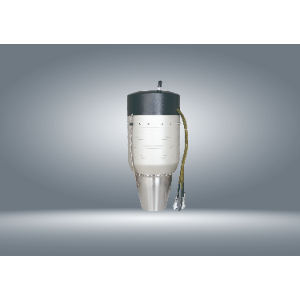
Featured product
Turbojet engine
At present, our company has a number of turbojet engines with various thrust levels to realize mass production and sales, covering 6-120 kg thrust levels. Compared with the mainstream imported products, our products have the advantages of small size, light weight, high push-to-weight ratio, fast acceleration, low fuel...
Products mentioned in this guide
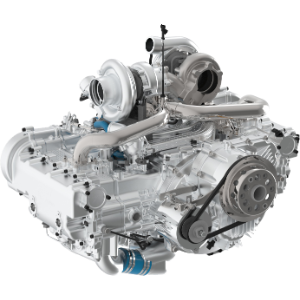
Fierce eagle
The DB442 heavy oil piston aero-engine adopts technologies such as an opposed structure, an efficient and reliable combustion system, high-pressure common rail technology, a...
View product details →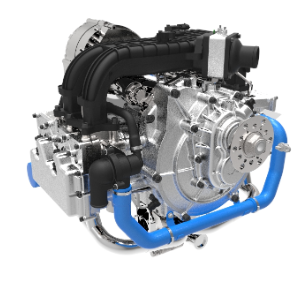
Skylark
The "Lark" DB416 heavy oil piston aviation engine adopts technologies such as opposed structure, efficient and reliable combustion system, high-pressure common rail technology,...
View product details →
H70 turbofan engine (thrust-to-weight ratio 7.5), P-series turbojet engines (45–160 kgf thrust)
The core products include the H70 turbofan engine (thrust-to-weight ratio 7.5), P-series turbojet engines (45–160 kgf thrust), and Z75 turboshaft engine (specific fuel consumption...
View product details →Frequently asked questions
What is the thrust rating of the SW800Pro turbojet engine?
The listing states that SWIWIN's turbojet product family covers 6-120 kg thrust levels in mass production, but it does not publish the individual thrust figure for the SW800Pro model. Contact us for the datasheet to obtain the exact specification.
Is the Fierce Eagle DB442 suitable for high-altitude inspection flights?
According to the listing, the single-stage supercharged version does not decay in power at 5,000 m and the two-stage supercharged version does not decay at 6,000 m, with an extreme altitude of up to 12,000 m. The manufacturer states this supports takeoff and landing at high altitudes and plateaus.
Which engine is better for power line inspection?
The SW800Pro's listing explicitly names power inspection among its applications, making it the more directly aligned option for lighter inspection UAVs. The Fierce Eagle DB442 is rated at 300-320 kW for 1.5-3-ton-class helicopters and larger platforms, so it suits heavy-lift inspection aircraft rather than small UAVs. Match the engine to your airframe class, and request datasheets for both to confirm figures.
Do any of these engines hold aviation certifications?
The SW800Pro and Fierce Eagle listings do not state any certifications—contact us for the datasheet or ask the suppliers directly. Among the related products, Phoenix Golden Wing states that its H70, P-series, and Z75 engines have passed AS9100D aviation certification, which may matter for tender compliance.
Are prices listed for these engines?
No. None of the listings publish pricing for the SW800Pro, the Fierce Eagle DB442, the Skylark DB416, or the Phoenix Golden Wing engine family. Contact the sellers through SkyDrone Max for current pricing and lead times.
Need help selecting the right system?
Tell us your mission, payload, and operating environment. Our team will help you compare options and request the right datasheets from verified suppliers.