For surveying and mapping operations, the propulsion components you select define how much terrain you can cover per flight, how reliably you meet data-collection windows, and how much maintenance downtime your fleet absorbs. This guide explains how to evaluate engines and powertrain parts for mapping UAV programs—covering platform matching, integration, operating constraints, training, and procurement questions—using the LX40 turbojet engine as a worked example alongside alternatives from the same Parts & Components category.
Why Propulsion Is a Mapping Decision, Not Just an Airframe Decision
Surveying and mapping missions are endurance- and coverage-driven. A photogrammetry or LiDAR campaign over a corridor, quarry, or infrastructure site only succeeds if the aircraft can hold its planned line at the required speed and altitude for the full sortie. That places three engine attributes at the center of the specification: thrust-to-weight ratio (which governs payload headroom for sensors), specific fuel consumption (which governs how much fuel you carry versus how much sensor mass), and operating envelope (which governs where the mission can legally and physically fly).
The LX40 Turbojet engine from Shanghai Ruirui Aviation Equipment Technology Co., Ltd. illustrates the kind of figures buyers should compare. It delivers a maximum thrust of 397 N with a thrust-to-weight ratio of approximately 11.1 kgf/kg, a specific fuel consumption of 1.58 kg/(daN·h), and an operational altitude range of 0–8000 m at speeds up to 0.8 Mach. Its compact structure—148.5 mm body diameter, 335 mm length, and 3530 g weight—is designed to balance lightweight construction with high strength, which matters when fuselage volume is constrained by sensor bays.
Matching Engine Type to Your Surveying Platform
Not every mapping program needs a turbojet. The right choice depends on the airframe class and mission profile, so treat the LX40 as one option in a portfolio rather than a default.
- High-speed, high-altitude corridor mapping: turbojets such as the LX40 or the smaller LX22 (220 N max thrust, thrust-to-weight ratio of 11.8, 1900 g weight, 120 mm diameter × 295 mm length) suit compact, fast fixed-wing platforms where speed range up to 0.8 Mach and 0–8000 m operational altitude are required.
- Propeller-driven fixed-wing survey aircraft: piston options like the BE-52EFI Engine, which supports 32–36 inch propellers and is designed for fixed-wing UAVs, powered paragliders, trikes, ultralight aircraft, and range extenders.
- Lighter or multi-configuration platforms: the BE-15EFI twin-cylinder engine, compatible with various customizable propeller sizes and suited to UAVs, aeromodels, and powered paragliders.
- Hybrid or range-extender architectures: the BE-52EFI is explicitly adaptable as a range extender and compatible with various generators for continuous onboard power supply—a relevant consideration when mapping payloads and datalinks draw significant electrical power.
| Attribute | LX40 Turbojet | LX22 Turbojet | BE-52EFI Engine |
|---|---|---|---|
| Max thrust | 397 N | 220 N | Contact us for the datasheet |
| Thrust-to-weight ratio | ~11.1 kgf/kg | 11.8 | Not applicable (propeller engine) |
| Specific fuel consumption | 1.58 kg/(daN·h) | 1.64 kg/(daN·h) | EFI, 20% more economical than carbureted engines |
| Weight | 3530 g | 1900 g | Contact us for the datasheet |
| Dimensions | 148.5 mm × 335 mm | 120 mm × 295 mm | Contact us for the datasheet |
| Max speed (engine) | 96,000 RPM | 117,000 RPM | Contact us for the datasheet |
| Operational altitude | 0–8000 m | 0–8000 m | Altitude compensation algorithm for high-altitude operation |
| Starting altitude | 0–4000 m | 0–4000 m | Optional preheating system for cold-weather starts |
Note the efficiency comparison within the LX series: the LX40's specific fuel consumption of 1.58 kg/(daN·h) is stated as superior to other high-thrust models in the series, and its power output significantly exceeds the LX23 (thrust-to-weight ratio of 10.0). Where series-level comparisons are provided by the manufacturer, they are fair to use in shortlisting—but validate against your own mission profile before committing.
Integration Considerations for Mapping Fleets
Integration effort is where procurement timelines are won or lost. Surveying and mapping UAVs carry dense payloads, so mounting interfaces, power take-off, and control wiring must be planned before purchase. Key points from the available product data:
- Power take-off flexibility: the BE-52EFI's main output shaft supports propellers, reducers, clutches, brakes, and other functional accessories, while the BE-15EFI's front shaft supports propellers and reducers and its rear shaft accommodates integrated starter-generators and coupling devices. Confirm which accessories your airframe requires before selecting an engine.
- Onboard power: both BE-series engines are compatible with generators for continuous power supply—critical for long mapping sorties where the sensor, autopilot, and datalink must stay powered independently of the propulsion battery.
- Installation and maintenance: the BE-15EFI features an integrated throttle servo mount for easy installation and maintenance, and its diaphragm carburetor supports 360° multi-direction installation—useful for unconventional airframe layouts.
- Starting systems: the BE-52EFI uses a top-mounted starter for convenient, efficient, and safe engine activation, with an optional preheating system for reliable cold-weather starts in extreme low temperatures.
- Fuel compatibility: the BE-15EFI runs on standard automotive gasoline, which simplifies field logistics for remote survey camps.
Operating Constraints: Altitude, Speed, and Regional Conditions
Both LX-series turbojets are rated for operational altitudes of 0–8000 m with starting altitude adaptability from 0 to 4000 m in complex environments—a relevant envelope for survey work across the Middle East, where programs may span coastal plains, desert basins, and elevated inland terrain within a single country's operations. The BE-52EFI's electronic fuel injection includes an altitude compensation algorithm for stable high-altitude operation, an alternative approach for piston platforms flying in mountainous survey areas.
One caution for buyers in hot-climate regions: the supplied specifications cover altitude, speed range (0–0.8 Mach for the LX series), and starting altitude, but do not include published thermal derating figures for sustained operation in extreme ambient heat. Before procurement, contact us for the datasheet covering temperature envelopes, duty-cycle limits, and any cooling requirements so your mission planning reflects real operating conditions rather than nominal figures.
Training and Crew Readiness
Turbojet and EFI piston engines place different demands on crews. Turbojet installations involve high rotational speeds—the LX40 reaches 96,000 RPM and the LX22 reaches 117,000 RPM—so operators need documented start-up, throttle-management, and shutdown procedures, plus inspection routines appropriate to high-RPM rotating equipment. EFI piston engines such as the BE-52EFI use DC-CDI ignition described as offering easy starting and superior stability, which reduces crew workload at the field but still requires training on fuel-system diagnostics and the preheating option where fitted. Build engine-specific training into your fleet onboarding, and confirm with suppliers what documentation, ground-support equipment, and service intervals are included—details not covered in the summary specifications, so contact us for the datasheet and support terms.
Procurement Questions to Ask Before You Buy
Use this checklist when evaluating Parts & Components suppliers for a surveying and mapping program:
- Which engine class matches our airframe—turbojet for high-speed platforms, or propeller-driven piston for endurance-focused survey aircraft?
- What are the complete performance envelopes, including thermal limits and derating for the climates we operate in?
- What power take-off accessories (reducers, clutches, brakes, starter-generators) are supported, and which are included versus optional?
- Is onboard generator compatibility available for our sensor and datalink power budget?
- What fuel specification is required, and is it compatible with fuel available at our operating sites?
- What training materials, maintenance documentation, and spare-parts support accompany the engine?
- Can the supplier provide the full datasheet and integration drawings for our airframe team before order commitment?
A disciplined shortlisting process—comparing thrust-to-weight, fuel consumption, altitude envelope, and integration support side by side—will surface the right engine faster than evaluating headline thrust alone. Whether your mapping program calls for a turbojet such as the LX40, a compact alternative like the LX22, or a propeller platform built around the BE-52EFI or BE-15EFI, the decision should trace back to coverage requirements, payload mass, and the operating conditions your crews actually face.

Featured product
LX40 Turbojet engine
Core Specifications Compact Structure: Body diameter 148.5mm, length 335mm, weight 3530g; the compact design balances lightweight construction with high strength. Powerful Thrust: Maximum thrust 397N, thrust-to-weight ratio approximately 11.1 kgf/kg; power output significantly exceeds that of other models in the...
Products mentioned in this guide
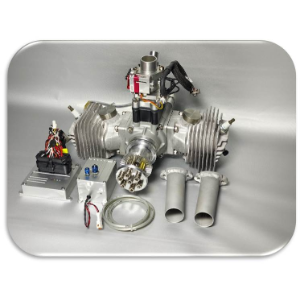
BE-15EFI Engine
**BE-15 Twin-Cylinder Engine Technical Specifications** **1. Engine Design** - Dual-cylinder single-intake configuration - Compact size with minimized vibration - Excellent...
View product details →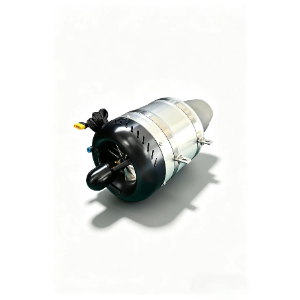
LX22 Turbojet engine
Core Parameters Compact Design: Body diameter 120 mm, length 295 mm, weight only 1900 g. Lightweight structure compatible with integration into compact devices. Extreme Thrust:...
View product details →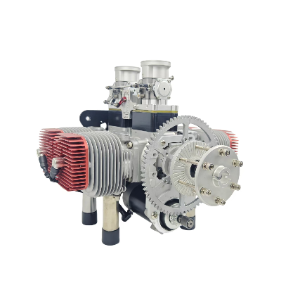
BE-52EFI Engine
**BE-52EFI Engine Technical Specifications** ● The **BE-52EFI Engine** is an upgraded model based on the **BE-50 series**, featuring a **four-cylinder dual-intake design**. It...
View product details →Frequently asked questions
Is a turbojet engine suitable for surveying and mapping UAVs?
Turbojets suit high-speed, high-altitude mapping platforms. The LX40 turbojet offers 397 N maximum thrust, a thrust-to-weight ratio of approximately 11.1 kgf/kg, an operational altitude of 0–8000 m, and a speed range of 0–0.8 Mach. For slower, endurance-focused propeller aircraft, piston engines such as the BE-52EFI may be a better fit.
How do the LX40 and LX22 turbojets compare?
The LX40 delivers 397 N maximum thrust at 3530 g weight (148.5 mm diameter × 335 mm length) with specific fuel consumption of 1.58 kg/(daN·h) and a maximum speed of 96,000 RPM. The LX22 delivers 220 N at 1900 g (120 mm × 295 mm) with specific fuel consumption of 1.64 kg/(daN·h) and a maximum speed of 117,000 RPM. Both operate at 0–8000 m altitude with starting altitude adaptability from 0 to 4000 m.
Can these engines power onboard electronics during long mapping flights?
Yes, for the piston options: both the BE-52EFI and BE-15EFI are compatible with generators for continuous onboard power supply, and the BE-15EFI's rear shaft accommodates integrated starter-generators. For turbojet generator options, contact us for the datasheet.
Are these engines suitable for high-altitude or hot-climate operations such as in the Middle East?
The LX40 and LX22 are rated for operational altitudes of 0–8000 m with starting altitude adaptability from 0 to 4000 m, and the BE-52EFI features an EFI altitude compensation algorithm for stable high-altitude operation. Published thermal performance figures for extreme ambient heat are not included in the summary specifications, so contact us for the datasheet before operating in hot climates.
What fuel do these engines use?
The BE-15EFI is compatible with standard automotive gasoline, which simplifies field logistics. Fuel specifications for the LX40, LX22, and BE-52EFI are not listed in the summary data—contact us for the datasheet to confirm fuel requirements for each model.
Need help selecting the right system?
Tell us your mission, payload, and operating environment. Our team will help you compare options and request the right datasheets from verified suppliers.