System Platforms specifications explain how a UAV command and control system is architected: what mission stages it covers, how it is configured, and how it connects drones with ground response forces. For maritime and port procurement teams, the most important specifications are not raw numbers but structural ones—modularity, the operational loop the platform supports (monitoring, command, rescue), and whether it enables whole-process control and intelligent scheduling. This guide explains those specifications in practice, using the Drone Management and Control Platform from Hangzhou Zhonghui Tonghang Aviation Technology as the reference product, and shows what to verify with any supplier before purchase.
What a System Platform Specification Actually Describes
Unlike airframes or payloads, a system platform is rarely specified in terms of range, endurance, or payload weight. Its specification sheet describes capabilities: which mission stages it manages, how it is structured internally, and how it integrates with other forces. The Drone Management and Control Platform is described as a professional intelligent command system tailored for fire emergency rescue, realizing whole-process control and intelligent scheduling of fire drones. That phrase—whole-process control—is a specification in itself. It tells you the platform is intended to manage a mission from detection through tasking through response, rather than serving as a single-purpose video viewer or flight logger.
For buyers in port and maritime environments, this distinction matters. A port incident—fire on a vessel, a hazardous material event at a terminal, a search-and-rescue call—requires the same operational loop as a structural fire: detect, command, respond. A platform designed around that loop transfers directly to maritime emergency scenarios; a platform designed only for flight telemetry does not.
Modular Architecture: The Specification That Determines Flexibility
The Drone Management and Control Platform is designed with a modular architecture, focusing on the three core links of "monitoring, command, and rescue", and supports flexible configuration according to actual combat needs. For procurement teams, modularity is one of the few platform specifications that can be evaluated without a live trial, because it determines three practical outcomes:
- Deployment scope: a modular system can be configured for the mission stages a specific port operation actually needs, rather than forcing a fixed, all-or-nothing package.
- Budget control: configuration flexibility means procurement can prioritize the monitoring, command, or rescue functions that address the operator's most pressing risk first.
- Growth path: modular architecture allows the platform to expand as operational requirements evolve—adding rescue coordination capabilities after an initial monitoring-focused deployment, for example.
When comparing platforms, ask each supplier specifically which modules exist, which are included in a base configuration, and which require separate activation. If this breakdown is not published, contact us for the datasheet or request it directly from the manufacturer.
Monitoring, Command, Rescue: How the Three Core Links Map to Port Missions
The platform's stated design centers on three operational links. Each has a direct equivalent in maritime and port operations:
- Monitoring: continuous aerial oversight of an incident scene—essential in port environments where a fire or spill can develop out of sight of shore-based observers.
- Command: intelligent scheduling and tasking of drone assets from a central point, giving incident commanders a coordinated air picture rather than ad-hoc individual flights.
- Rescue: directing air support to the response effort itself, not just observation—supporting the platform's stated goal of all-round air support for firefighting and emergency rescue scenarios.
The platform's stated objective is the deep integration of UAVs and ground firefighting forces, forming a modern operation mode of "rapid response, precise positioning, three-dimensional rescue, and data sharing". For port authorities, that data-sharing element deserves particular attention: an aerial platform that cannot pass its picture and tasking data to shore crews, tug teams, or terminal operators creates an information silo precisely when coordination matters most.
Comparing Platform Types in the System Platforms Category
The System Platforms category includes several distinct product types, and buyers frequently conflate them. The table below compares the reference product against related listings on SkyDrone Max, using only published descriptions.
| Attribute | Drone Management and Control Platform | Ground Station System | YuanWorld Low-Altitude Management Platform |
|---|---|---|---|
| Primary purpose | Intelligent command for fire emergency rescue; whole-process control and scheduling of fire drones | Monitoring, management, and task planning for UAVs, unmanned vehicles, unmanned ships, and unmanned underwater vehicles | Low-altitude UAV management: mapping, route drawing, flight control, operation tasks, reconnaissance, AI inspection |
| Architecture | Modular; three core links of monitoring, command, and rescue | Terminal system for unmanned systems across domains | Integrates AI, digital twin, and data mining; flight hubs and intelligent internal processing |
| Fleet compatibility | Fire drones (per published description) | Multiple unmanned system types | Supports multiple manufacturers and models of UAVs |
| Operational focus | Emergency response coordination with ground firefighting forces | Task planning and monitoring across air, ground, and surface domains | Full life cycle loop from data collection to intelligent analysis to business application |
| Best fit | Port fire and emergency response teams needing command-level coordination | Operators managing mixed fleets of unmanned vehicles and vessels | Operations requiring multi-vendor UAV management and beyond-line-of-sight control |
A third related product, Low-Altitude Master from DASPATIAL, integrates real-world 3D modeling with low-altitude UAV inspection, assigning precise 3D spatial coordinates to perception data. It is relevant where terminal mapping and georeferenced inspection are the priority rather than emergency command. Matching platform type to mission—command, fleet management, or geospatial inspection—is the single most consequential decision in this category.
Integration Specifications Buyers Should Verify
Because platform descriptions emphasize capability rather than numbers, integration is where most procurement risk hides. Before shortlisting any System Platform for a maritime deployment, verify the following with the supplier:
- Which drone models and manufacturers the platform supports, and whether adding new airframes requires integration work.
- How data sharing with ground forces is implemented—what formats, what interfaces, and what latency can be expected between drone observation and shore-side receipt.
- Whether command functions support multi-operator, multi-drone scheduling, and how incident commanders interact with the system during a live event.
- Deployment requirements: server infrastructure, network dependencies, and whether the platform operates within port IT and security constraints.
- Configuration options under the modular architecture—which modules are standard and which are optional.
The published description of the Drone Management and Control Platform confirms modular architecture and flexible configuration, but detailed technical parameters are not included in the listing. Contact us for the datasheet to obtain the full specification set before making a shortlist decision.
Procurement Questions for West African Port and Maritime Buyers
Port operators in West Africa face a specific combination of conditions: long coastlines, growing container throughput, and emergency response resources that are often concentrated at a small number of stations. In that context, the platform specifications that matter most are the ones that reduce dependence on dense ground infrastructure. A command platform built around whole-process control and intelligent scheduling allows a limited drone fleet to cover a wide port area, with precise positioning supporting faster response to incidents at berth, anchorage, or along the approach channel.
Buyers in the region should ask suppliers three questions before any trial: First, how does the platform perform its monitoring and command functions when communications between the drone team and the command center are constrained? Second, what training and configuration support is included to adapt the modular system to local response procedures? Third, can the supplier document how UAV and ground force integration works in practice—the data-sharing workflow described in the platform's operating model? If a supplier cannot answer these from published material, treat that as a procurement signal and request documentation in writing.
How to Evaluate a Platform Specification Sheet Like a Procurement Professional
A disciplined evaluation of any System Platform comes down to four checks. First, confirm the mission loop: does the platform cover the full sequence your operations require—monitoring, command, response—or only part of it? Second, confirm configurability: can the modular architecture be tailored to your port's actual procedures, and who performs that configuration? Third, confirm integration: which UAVs, which ground systems, and which data-sharing interfaces are supported. Fourth, confirm support: what documentation, training, and post-deployment assistance the manufacturer provides. The Drone Management and Control Platform addresses the first two checks explicitly in its published description—whole-process control, modular architecture, and flexible configuration—while the third and fourth should be confirmed through the datasheet and direct discussion with Hangzhou Zhonghui Tonghang Aviation Technology. Buyers who insist on documented answers to all four checks consistently avoid the most common failure mode in platform procurement: acquiring a capable system that was never configured to fit the operating environment it was bought for.

Featured product
Drone Management and Control Platform
The fire drone command and control platform is a professional intelligent command system tailored for fire emergency rescue, which realizes the whole process control and intelligent scheduling of fire drones. Provide all-round air support for fire fighting, emergency rescue and other scenarios. The platform is...
Products mentioned in this guide

Ground station system
This system is a terminal system developed for the monitoring, management, and task planning needs of unmanned systems such as unmanned aerial vehicles, unmanned vehicles,...
View product details →
Service provider of digital infrastructure for the entire space domain of air, land, sea and beyond
The low-altitude unmanned aerial vehicle management platform integrates key technologies such as artificial intelligence, digital twin, data mining and analysis to build core...
View product details →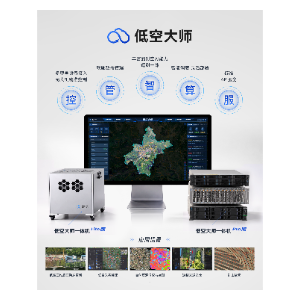
Low-Altitude Master—Integrated Low-Altitude Telemetry Product Solution
Low-Altitude Master—Integrated Low-Altitude Telemetry Product Solution Low-Altitude Master is a comprehensive solution that integrates real-world 3D modeling with low-altitude...
View product details →Frequently asked questions
What is a System Platform in UAV procurement?
A System Platform is the software and command infrastructure that manages drone operations—monitoring, tasking, scheduling, and data handling—rather than the aircraft itself. In the System Platforms category on SkyDrone Max, products range from emergency command platforms like the Drone Management and Control Platform to ground stations for mixed unmanned fleets and low-altitude management platforms with AI inspection capabilities.
Is the Drone Management and Control Platform suitable for maritime and port operations?
The platform is described as a command system for fire emergency rescue, providing whole-process control and intelligent scheduling of fire drones, with all-round air support for firefighting and emergency rescue scenarios. Those mission stages—monitoring, command, and rescue—map directly to port emergency scenarios such as vessel fires and terminal incidents. For deployment-specific details, contact us for the datasheet.
What does the platform's modular architecture mean in practice?
Per the published description, the platform is designed with a modular architecture focused on the three core links of monitoring, command, and rescue, and supports flexible configuration according to actual combat needs. In practice, this means buyers can configure the system around the mission stages their operation requires rather than deploying a fixed package. The exact module list is not published in the listing; request it from the supplier.
How does the platform integrate drones with ground response forces?
The platform's stated design goal is the deep integration of UAVs and ground firefighting forces, forming an operation mode of rapid response, precise positioning, three-dimensional rescue, and data sharing. The specific technical interfaces used for this data sharing are not detailed in the public listing, so buyers should obtain the datasheet and confirm integration requirements with the manufacturer before purchase.
How do I choose between a command platform, a ground station, and a low-altitude management platform?
Match the platform type to your primary mission. A command platform such as the Drone Management and Control Platform suits emergency response coordination. A ground station system, such as the listing from Shaanxi Huaxing Tongsheng, covers monitoring, management, and task planning across UAVs, unmanned vehicles, unmanned ships, and underwater vehicles. A low-altitude management platform such as YuanWorld suits operations needing multi-manufacturer UAV support, route drawing, AI inspection, and beyond-line-of-sight control.
Need help selecting the right system?
Tell us your mission, payload, and operating environment. Our team will help you compare options and request the right datasheets from verified suppliers.