Detection & countermeasures equipment refers to systems that identify, track and, where required, neutralize unauthorized UAV activity around protected sites. For logistics and delivery operations, these systems address a specific operational risk: drones flying over distribution centres, warehouses, cargo yards and delivery corridors can disrupt ground operations, compromise cargo security and create airspace safety issues. This FAQ answers the questions procurement teams most often ask before purchasing, using the UAV Defense System (TQ01) and related products on SkyDrone Max as concrete examples.
Why do logistics and delivery operations need drone detection?
Logistics facilities concentrate high-value inventory, vehicle fleets and time-sensitive delivery schedules in a compact area. An unauthorized drone can be used for reconnaissance of stock levels and loading patterns, or its presence alone can force a pause in crane, loading or flight operations until the airspace is confirmed clear. In regions with rapidly growing drone adoption, including Southern Africa, operators of distribution hubs and delivery networks are increasingly expected to demonstrate that they can monitor and manage low-altitude airspace above their facilities.
Detection equipment gives security and operations teams early awareness of UAV activity. Countermeasure capability, where deployed, closes the loop from detection to response. The right choice depends on the site layout, the threat profile and how the system will be operated day to day.
What does the UAV Defense System (TQ01) actually do?
The UAV Defense System from Shenzhen HYUCX Technology Co., Ltd. is a spectrum detection device. It uses radio spectrum frequency scanning, feature recognition and decoding technology to detect drone signals. It supports full-band detection from 20MHz to 6000MHz, which allows it to monitor a wide variety of UAV signal types rather than only a narrow set of frequencies.
- Full-band spectrum detection from 20MHz to 6000MHz for broad UAV signal coverage
- Unattended operation mode, reducing labour costs and operational complexity
- Highly integrated system design for simpler deployment and airspace safety management
- High environmental adaptability and reliability for stable operation in extreme conditions
For a logistics buyer, the unattended operation mode is often the most relevant feature: distribution centres typically cannot dedicate round-the-clock staff to airspace monitoring, and an automated spectrum detection system keeps watch without adding headcount. For detailed technical parameters beyond the published description, contact us for the datasheet.
How do detection-only and detection-plus-countermeasure systems differ?
Not all products in this category do the same job. Some systems focus purely on detection and identification, while others add suppression or neutralization capability. Understanding this distinction is essential before comparing quotations, because the scope of the system drives both cost and the approvals you may need to operate it.
| Attribute | UAV Defense System (TQ01) | Integrated Tracking and Strike System (JB-GZ-01) | Radio Detection Device (RG-LY-GRD03) |
|---|---|---|---|
| Primary function | Spectrum detection of UAV signals | Detection plus wideband, high-power suppression | Passive detection and identification |
| Detection method | Radio spectrum frequency scanning, feature recognition, decoding | Passive reception of drone data link transmissions | Cognitive radio, passive detection |
| Stated detection capability | 20MHz to 6000MHz full-band detection | Cross-references UAV data link signatures; drone library with 98%+ market coverage | UAV detection and identification within 3 km |
| Countermeasure function | Not stated in product data | Integrated wideband, high-power suppression | Not stated in product data |
| Operation mode | Supports unattended operation | AI command platform with auto/manual one-toggle switching | All-weather operation; networkable to extend range |
A third option, the Blind-Zone Compensated Detection Equipment (URD350D) from uniradar, is designed to fill monitoring gaps around secured areas. It uses radio detection and sensing technology, operates in all weather, provides early-warning detection of anomalous electromagnetic signals, and includes integrated countermeasure functionality to complete the closed loop from detection to neutralization. It is worth shortlisting when you already have partial coverage and need to close specific gaps rather than replace an entire deployment.
Can these systems integrate with our existing security infrastructure?
Integration is one of the first questions procurement teams ask, and the honest answer is that it varies by product. The Radio Detection Device (RG-LY-GRD03) explicitly features open reserved interfaces to meet customized detection needs, and networking multiple devices can extend the detection range. This makes it a practical candidate for sites that want to feed UAV detection data into a broader security picture, or for large logistics parks where several units can be networked across the perimeter.
The Integrated Tracking and Strike System (JB-GZ-01) includes an AI command platform described as a unified C2 system with auto/manual one-toggle switching, customizable warning and defence zones, and multi-scenario adaptability for urban and critical infrastructure environments. Its AI target recognition supports automatic classification of drones as friend/foe or legal/illegal, with an expandable signature database that learns continuously from new threat profiles. For a logistics operator, that classification capability matters: it helps distinguish your own authorized delivery drones from unknown intruders, reducing false alarms that interrupt operations.
For any system, ask the supplier to confirm in writing which interfaces, data formats and network protocols are supported, and whether integration with your existing security management platform requires additional engineering. If this is not published in the product data, contact us for the datasheet.
What compliance and documentation should we request from suppliers?
Counter-drone equipment sits in a regulated space, and the documentation burden falls on the buyer to verify. Before issuing a purchase order, procurement teams should request and file the following:
- Full technical datasheet, including detection frequency ranges, coverage and environmental ratings
- Certifications and regulatory approvals applicable in your operating country, particularly for any system with active countermeasure or suppression capability
- Written confirmation of which functions are passive (receive-only) versus active (transmitting), since this affects licensing requirements
- Deployment documentation covering installation, power requirements and network connectivity
- Support and maintenance terms, including firmware update policy for signature databases and detection libraries
Note that the TQ01 and the RG-LY-GRD03 are described as detection systems, and the RG-LY-GRD03 is explicitly passive, meaning it does not emit electromagnetic signals. Passive systems generally present a simpler regulatory picture, but you should still confirm local requirements with your national communications regulator before deployment. Systems with suppression functionality, such as the JB-GZ-01 and the URD350D, require additional scrutiny of the legal permissions needed to operate them in your jurisdiction.
How should we evaluate suppliers of counter-drone equipment?
Because this category mixes detection, identification and countermeasure technologies from different manufacturers, a structured evaluation protects you from buying capability you do not need. Use the following checklist during supplier assessment:
- Verify that claimed capabilities are documented: for example, the JB-GZ-01 states a drone library covering the full DJI series, major commercial brands and custom DIY drones with 98%+ market coverage. Ask how the library is updated and whether updates are included in support terms.
- Match the deployment model to your site: unattended, fixed installations such as the TQ01 suit facilities without dedicated monitoring staff, while networkable passive units such as the RG-LY-GRD03 suit large perimeters.
- Request references or case studies for deployments in comparable environments, such as ports, industrial zones or critical infrastructure.
- Confirm the supplier's ability to support installations in your region, including shipping, commissioning and ongoing technical support, particularly if you are procuring for sites in Southern Africa.
- Clarify what happens when a new drone model appears on the market: does the signature database update automatically, and at what cost?
A supplier who can answer these questions with documentation, rather than marketing language, is generally a safer procurement choice. Where a specification is not published, treat 'contact us for the datasheet' as a normal step in the evaluation, not a red flag, but do insist on receiving the datasheet before contract award.
Which system is right for a logistics or delivery operation?
Start from your operational requirement rather than the product brochure. If your priority is continuous, low-effort airspace awareness over a distribution centre, the UAV Defense System (TQ01) with its unattended operation mode and full-band 20MHz to 6000MHz detection is a strong starting point. If you need to distinguish your own authorized delivery drones from unknown aircraft and want an integrated command platform, evaluate the JB-GZ-01. If your site requires covert monitoring without any electromagnetic emissions, the passive RG-LY-GRD03 is designed for exactly that. And if you already have partial coverage with blind zones around sensitive zones, the URD350D is purpose-built as a gap-filling system with integrated countermeasures.
In most cases, the practical path is to shortlist two systems, request datasheets and integration documentation for both, and confirm regulatory requirements in your operating country before final selection. SkyDrone Max can connect you with the manufacturers directly for detailed technical responses.

Featured product
UAV Defense System
Sky One UAV Defense System - UAV Detection A spectrum detection device that uses radio spectrum frequency scanning, feature recognition and decoding technology to efficiently detect drone signals. The device supports full band detection from 20MHz to 6000MHz, ensuring effective monitoring of various UAVs. Support...
Products mentioned in this guide

Integrated Tracking and Strike System
Real-Time Reconnaissance & Surveillance Capable of persistent aerial monitoring over target areas, delivering real-time intelligence. Passive Detection Operates without emitting...
View product details →
Blind-Zone Compensated Detection Equipment
The URD350D Gap-filling Drone Detection System employs radio detection and sensing technology to safeguard secured areas. Featuring all-weather operation, long-range capability...
View product details →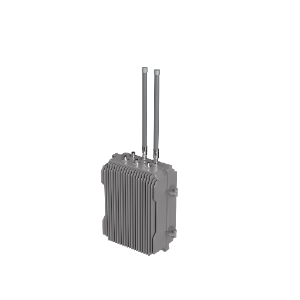
Radio Detection Device
This product employs advanced cognitive radio technology and utilizes passivedetection methods to effectively detect and identify UAV within a 3-kilometerrange without emitting...
View product details →Frequently asked questions
What frequency range does the UAV Defense System (TQ01) cover?
The TQ01 supports full-band detection from 20MHz to 6000MHz using radio spectrum frequency scanning, feature recognition and decoding technology. This range is designed to ensure effective monitoring of various UAV signal types. For the complete technical specification, contact us for the datasheet.
Can drone detection systems operate without a dedicated operator on site?
Yes, in some cases. The UAV Defense System (TQ01) supports an unattended operation mode with a highly integrated system design, which reduces labour costs and operational complexity for airspace safety management. This makes it suitable for logistics facilities that cannot staff airspace monitoring around the clock.
Is passive detection better than active detection for a logistics site?
They serve different needs. Passive systems, such as the Radio Detection Device (RG-LY-GRD03), detect and identify UAVs within a 3-kilometre range without emitting any electromagnetic signals, which is useful when you need covert monitoring. Active and countermeasure-equipped systems, such as the URD350D, add suppression capability to close the loop from detection to neutralization. The right choice depends on your threat profile and regulatory environment.
Can these systems distinguish our own delivery drones from unauthorized ones?
Some can. The Integrated Tracking and Strike System (JB-GZ-01) includes AI target recognition with automatic classification of drones as friend/foe or legal/illegal, supported by an expandable signature database and continuous learning from new threat profiles. This helps logistics operators running their own authorized drone deliveries reduce false alarms. Confirm classification capabilities for any other system by requesting the datasheet.
What documentation do we need before purchasing counter-drone equipment?
Request the full technical datasheet, applicable certifications and regulatory approvals for your operating country, written confirmation of which functions are passive versus active, deployment documentation, and support terms including signature database update policy. Systems with suppression functionality, such as the JB-GZ-01 and URD350D, additionally require verification of the legal permissions needed to operate countermeasures in your jurisdiction.
Need help selecting the right system?
Tell us your mission, payload, and operating environment. Our team will help you compare options and request the right datasheets from verified suppliers.