Detection & Countermeasures Equipment is a category of UAV security hardware that detects, identifies, locates, and—where required—neutralises unauthorized drones flying in protected low-altitude airspace. For precision agriculture buyers, these systems protect aerial survey flights, spraying missions, and on-farm data infrastructure from rogue drones that could disrupt operations, interfere with sensors, or compromise data. This FAQ answers the questions procurement teams most often ask before buying, using the H3 Pro from Beijing Lizheng Technology as a working example, and notes where you should contact us for the datasheet.
What Does Detection & Countermeasures Equipment Actually Do?
The category splits into two broad functions. Detection equipment monitors the low-altitude airspace around a site and reports on drone activity: who is flying, where, and how. Countermeasures equipment intervenes against a confirmed unauthorized drone, typically by disrupting its communication, navigation, or video transmission links so the aircraft is forced to land or leave the area.
For an agricultural enterprise, the detection side matters most day to day. Precision agriculture depends on trusted aerial data—crop health imagery, field mapping, and spray mission telemetry. An unidentified drone operating nearby can raise legitimate questions about espionage, data theft, or interference. A detection system such as the H3 Pro gives your security team factual flight data before any incident escalates.
How Does the H3 Pro Detect and Identify Drones?
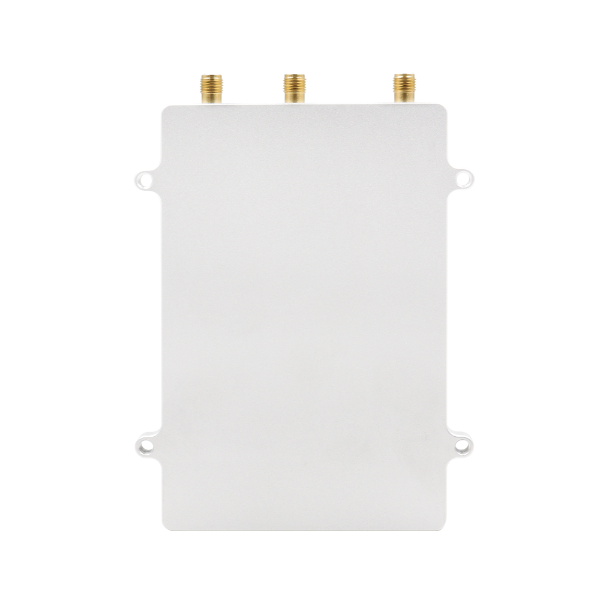
The H3 Pro, model 哨兵300, is built on CRPC 2.0 technology. According to the manufacturer, it uses a deeper data chain decoding solution to analyse and extract real-time flight attribute information from data in specific formats. It can accurately identify a drone's graphic and video stream, SN number, geo-location, trajectory, altitude, speed, and remote control position, allowing faster and more accurate detection and location of unauthorized drones.
- Technology basis: CRPC 2.0 with deep data chain decoding.
- Identifiable attributes: graphic and video stream, SN number, geo-location, trajectory, altitude, speed, remote control position.
- Design: integrated, small in size, light in weight, easy to carry.
- Suitability: all kinds of low-altitude protection scenarios.
- Detection radius, power requirements, and environmental ratings: contact us for the datasheet.
The portability point is worth emphasising for agricultural buyers. Farms, irrigation schemes, and plantation estates cover large areas and rarely have fixed security infrastructure at every boundary. An integrated, lightweight device that is easy to carry can be moved between blocks, harvest zones, or storage facilities as the risk picture changes.
How Do the Main Products in This Category Compare?
SkyDrone Max lists several Detection & Countermeasures products suited to different deployment models. The table below summarises what the supplied product data supports—no more.
| Attribute | H3 Pro | DDS T1 | Radio Detection Equipment (AOA) |
|---|---|---|---|
| Brand | Beijing Lizheng Technology Co.,Ltd | MicroPhase Technology (Shanghai) Co., Ltd. | Beijing Bohong Keyuan Information Technology Co., Ltd. |
| Core function | Detects and locates unauthorized drones via data chain decoding | Fixed drone detection for DJI 02/03/04 series and all Remote ID drones | Monitors, identifies, and direction-finds drone signals |
| Detection detail | SN number, geo-location, trajectory, altitude, speed, remote control position | Unique serial number, model, and other parameters; 1–10 km detection radius | ID number, model, and parameters from video transmission and remote control signals |
| Deployment | Integrated, small, lightweight, easy to carry | Fixed installation; TCP/IP networking for 24/7 operation | Operates day and night; emits no electromagnetic, acoustic, or optical signals |
| Integration notes | Contact us for the datasheet | Easily integrated into radar, optoelectronic, and jamming equipment via TCP/IP | Contact us for the datasheet |
What Integration and Compatibility Questions Should We Ask?
Procurement teams should separate detection capability from integration capability. The DDS T1 illustrates the distinction: its data explicitly states TCP/IP networking and easy integration into radar, optoelectronic, and jamming equipment, which matters if you are building a multi-sensor perimeter. For the H3 Pro, the data confirms its integrated design and decoding capability but does not publish interface specifications—contact us for the datasheet before planning any network integration.
- Ask whether the device outputs data in a format your existing security or farm management system can consume.
- Confirm whether detection is continuous (the DDS T1 states 24/7 operation) or event-based.
- Clarify what drone types are identifiable: the DDS T1 covers DJI 02/03/04 series and all Remote ID drones; the AOA device detects drones via their video transmission and remote control signals.
- For countermeasures, confirm the intervention method: the drone jamming interception device (Auav-b01) works by cutting off the UAV's communication and navigation links with its remote control.
What About Countermeasures—When Do We Need Jamming?
Detection answers the question 'is something flying and what is it?' Countermeasures answer 'what do we do about it?' The drone jamming interception device (Auav-b01) from Chengdu Anze Technology is a hand-held unit designed in strict accordance with military or industrial indicators. By interfering with the UAV's data link, map transmission link, and navigation link, it cuts communication and navigation signals between the drone and its remote control, forcing the drone to land automatically or driving it away.
A typical procurement pattern is layered: a fixed or portable detection unit (H3 Pro, DDS T1, or AOA device) provides awareness, while a jamming device is held in reserve for confirmed hostile or nuisance aircraft. Note that jamming equipment is subject to radio spectrum regulations in most jurisdictions—buyers should confirm local legal authorisation before deployment. Contact us for the datasheet on any countermeasures product before specifying it in a tender.
How Should We Evaluate Suppliers and Compliance Documentation?
Because much of this category involves security-grade hardware, documentation quality is a strong signal of supplier reliability. A disciplined evaluation process looks like this:
- Request the full datasheet for every shortlisted product, including detection radius, power, interfaces, and environmental ratings. Where our listings do not publish a figure, we direct you to contact us for the datasheet rather than guess.
- Ask for compliance documentation relevant to your jurisdiction, particularly for jamming or interception equipment.
- Verify stated identification capabilities against your real threat picture—for example, whether the drones of concern broadcast Remote ID (relevant to the DDS T1) or rely on video and control links (relevant to the AOA device).
- Assess support channels: response times, spare parts availability, and firmware update policies. Where these are not stated in the product data, ask the supplier directly.
- Pilot before scaling: deploy one unit across a representative field season before committing to a multi-site rollout.
Sourcing Detection & Countermeasures Equipment in West Africa
For agricultural enterprises and cooperatives in West Africa, the practical constraints shape the shortlist. Large, dispersed farm estates favour portable detection units—the H3 Pro's integrated, lightweight, easy-to-carry design fits this profile—while permanent installations around processing facilities or warehouses may justify fixed 24/7 detection like the DDS T1. Where power infrastructure is inconsistent, confirm power requirements and backup options with the supplier; contact us for the datasheet if these figures are not listed. Import documentation, spectrum authorisation for countermeasures, and local technical support are the three administrative items most often underestimated in regional tenders, so build them into your evaluation timeline from the start.
If you are assembling a procurement specification, start with the detection question—what you need to know about drones operating near your fields—then add countermeasures only where your risk assessment and local regulations justify them. The H3 Pro, DDS T1, AOA device, and Auav-b01 jamming interception device each address a different slice of that requirement, and our team can help you match products to your operational footprint.

Featured product
H3 Pro
Based on CRPC 2.0 technology, it adopts a deeper data chain decoding solution to analyse and extract real-time flight attribute information from data in specific formats, and accurately identifies the drone’s graphic&video stream, SN number, geo-location, trajectory, altitude, speed and remote control position, etc.,...
Products mentioned in this guide
DDS T1
This device is used in fixed drone detection equipment to identify DJI 02/03/04 series drones and all Remote ID drones. It features rapid response, stable operation, a detection...
View product details →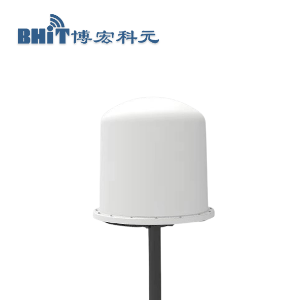
Radio Detection Equipment (AOA)
The equipment is capable of monitoring, identifying, and direction-finding drone signals. It detects drones by monitoring their video transmission and remote control signals,...
View product details →
Drone jamming interception device
Hand-held UAV jamming interception device is designed in strict accordance with military or industrial indicators. By interfering with the data link, the map transmission link and...
View product details →Frequently asked questions
What is Detection & Countermeasures Equipment used for in precision agriculture?
It protects low-altitude airspace around agricultural operations by detecting, identifying, and locating unauthorized drones that could interfere with survey flights, spraying missions, or sensitive farm data. Where necessary, countermeasures such as the hand-held drone jamming interception device (Auav-b01) can force an unauthorized drone to land or leave by cutting its communication and navigation links.
What can the H3 Pro detect about an unauthorized drone?
Based on CRPC 2.0 technology and a deeper data chain decoding solution, the H3 Pro analyses data in specific formats to extract real-time flight attributes, accurately identifying the drone's graphic and video stream, SN number, geo-location, trajectory, altitude, speed, and remote control position. For specifications not listed in the product data, contact us for the datasheet.
Can detection equipment integrate with our existing security systems?
It depends on the product. The DDS T1 supports TCP/IP networking and can be easily integrated into radar, optoelectronic, and jamming equipment, operating 24/7. The H3 Pro's listing confirms its integrated design but does not publish interface specifications—contact us for the datasheet to confirm integration options.
Which drones can these devices identify?
The DDS T1 identifies DJI 02/03/04 series drones and all Remote ID drones, including their unique serial number, model, and other parameters. The Radio Detection Equipment (AOA) detects drones by monitoring their video transmission and remote control signals, providing the target drone's ID number, model, and parameters. The H3 Pro identifies drones via data chain decoding of specific formats.
How should a procurement team evaluate suppliers of counter-drone equipment?
Request full datasheets and compliance documentation for each shortlisted product, verify that stated detection capabilities match your actual threat scenario (for example, Remote ID drones versus non-broadcast aircraft), confirm spectrum regulations apply to any jamming equipment, and assess support channels before committing. Where a specification is not published, ask the supplier directly rather than relying on assumptions.
Need help selecting the right system?
Tell us your mission, payload, and operating environment. Our team will help you compare options and request the right datasheets from verified suppliers.