Detection and countermeasures equipment gives port and terminal operators a practical way to stop unauthorized drones from entering protected zones such as berths, container yards, fuel storage areas, and restricted cargo handling zones. The core workflow is straightforward: a detection system identifies an approaching unmanned aircraft, and a countermeasure device — such as a navigation decoy or jamming unit — disrupts the drone's navigation or control links so it cannot continue into the protected area. For maritime and port operations in West Africa and other high-traffic regions, where low-altitude airspace above terminals, anchorages, and logistics corridors is increasingly shared, this equipment category addresses a specific and growing security gap that fences, patrols, and CCTV cannot close.
Why Ports Need Counter-Drone Capability
Port environments concentrate the assets that make unauthorized drone flight a serious concern: high-value cargo, fuel and chemical storage, passenger terminals, and continuous vessel operations. A drone that enters restricted airspace can disrupt crane operations, photograph security layouts, or interfere with vessel traffic. Conventional security measures do not address airborne incursions, because a small unmanned aircraft can approach from the water side, over nearby urban areas, or from beyond the perimeter fence.
Detection and countermeasures equipment closes this gap by targeting the drone's dependence on its own systems. Most commercial and consumer drones rely on navigation satellite signals for flight control. Countermeasure devices exploit this dependency: by radiating low-power regenerated navigation satellite signals, they can cause a drone relying on navigation for flight control to lose its intended flight path, preventing it from flying into the protected area and preserving low-altitude safety of the zone.
How the Workflow Operates in a Port Environment
A typical port deployment follows a layered sequence. Understanding each stage helps procurement teams specify the right combination of equipment.
- Detection: A detection device identifies and tracks an unauthorized drone approaching the terminal or protected zone. Detection is a separate function and should be procured alongside countermeasures where early warning is required.
- Assessment: Security teams confirm whether the aircraft is authorized or non-cooperative. Port operations often include legitimate drone activity such as surveys and inspections, so assessment procedures prevent countermeasures from being triggered against approved flights.
- Countermeasure activation: Once a drone is confirmed as a threat, the countermeasure device is activated. Navigation decoy devices and spoofing units work by invading the drone's navigation system with regenerated satellite signals; jamming devices interfere with the data link, map transmission link, and navigation link to cut communication between the drone and its remote control.
- Outcome: Depending on the device and mode, the drone is either prevented from entering the protected area, forced to land, or driven away from the zone.
For example, the Drone navigation and decoy devices from Chengdu Anze Technology Co., LTD (models An-Jam-202B/201C/201G) are developed specifically to deal with security threats from "black flight" drones. By radiating low-power regenerative navigation satellite signals at power not exceeding 10 dBm, the equipment invades the navigation system of unauthorized UAVs that depend on navigation for flight control, realizing interception control so the aircraft cannot fly into the protected area.
Choosing Between Navigation Deception and RF Jamming
The Detection & Countermeasures Equipment category includes several approaches, and ports should match the technology to their threat profile and operating constraints. Navigation deception devices and RF jamming devices act on different parts of the drone's control chain, and many operators deploy both.
| Attribute | Navigation decoy (An-Jam-202B/201C/201G) | Hand-held jamming device (Auav-b01) |
|---|---|---|
| Manufacturer | Chengdu Anze technology Co., LTD | Chengdu Anze technology Co., LTD |
| Method | Radiates low-power regenerated navigation satellite signals (≤10 dBm) to invade the UAV navigation system | Interferes with the data link, map transmission link, and navigation link |
| Effect | Interception control so the drone cannot fly into the protected area | Cuts communication and navigation signals, forcing the UAV to land automatically or be driven away |
| Form factor | Not specified in the listing — contact us for the datasheet | Hand-held |
| Typical role | Zone protection against navigation-dependent drones | Point defense and response by security personnel |
For buyers who need configurable strategies, the Navigation Spoofing device (Dream-A-J7000) from Beijing Bohong Keyuan Information Technology Co., Ltd. offers two standard modes — Defense Mode and No-Fly Zone Mode — with an optional Directional Expulsion Mode (eight directions) available upon request. This distinction between standard and optional modes is exactly the kind of detail procurement teams should confirm in writing before purchase.
Integration Considerations for Port Infrastructure
Countermeasure equipment rarely operates alone. Ports should plan integration across several dimensions before committing to a purchase.
- Detection pairing: Some countermeasure devices are designed to work with detection equipment. The RC809W-RN5 ISM UAV Defence Equipment from Zhejiang Ruitong Electronic Technology Co., Ltd, for instance, uses a directional transmitting antenna for directional interference against remote-controlled UAVs in the ISM band and explicitly needs to be used in conjunction with a detection device. Budget for the detection layer if it is not already in place.
- Coverage and placement: Protected zones in ports are rarely symmetrical. Berths, fuel farms, and cargo yards have different boundaries and sightlines. Confirm coverage geometry and mounting options with the manufacturer — contact us for the datasheet where placement details are not published.
- Power and environment: Maritime installations involve salt air, humidity, and continuous operation. Request environmental and power specifications directly from the supplier, as these are not included in standard product listings.
- Coordination with port authority and regulators: Countermeasure equipment transmits RF signals and affects navigation systems. Operators should confirm legal authorization and coordinate with the relevant aviation and maritime authorities in their jurisdiction before activation. SkyDrone Max does not publish regulatory approvals for these products; contact the manufacturers for certification documentation.
Operating Constraints Buyers Should Verify
The published descriptions of these products define their operating principle clearly, but several practical constraints must be confirmed with suppliers during procurement. First, signal power limits: both the navigation decoy devices and the Dream-A-J7000 spoofing device specify radiated power of no more than 10 dBm, which defines a low-power approach — but effective range and coverage depend on site conditions, so request the datasheet for deployment figures. Second, drone dependency: navigation deception works against UAVs that use navigation satellite systems for flight control; drones using other navigation methods may not be affected in the same way, which is why layered countermeasures including RF jamming are commonly specified. Third, response protocols: hand-held jamming devices such as the Auav-b01 require trained personnel to deploy them at the right position and time, so staffing and shift planning are part of the system design, not an afterthought.
Training Requirements for Port Security Teams
Counter-drone equipment is only as effective as the team operating it. Procurement plans should include training in three areas. Operators need to understand what each device does — the difference between intercepting a drone's navigation system and cutting its control links — so they select the correct response for each scenario. Security teams need clear escalation procedures that define who authorizes countermeasure activation, how authorized drone operations are identified and excluded, and how incidents are logged. Finally, maintenance staff need manufacturer guidance on testing and servicing the equipment; where maintenance schedules are not published in product listings, request them from the supplier. Buyers in West Africa and other regions with developing counter-UAS ecosystems should also ask manufacturers about on-site commissioning support and operator training programs, and confirm availability in writing.
Procurement Questions to Ask Before You Buy
A structured request-for-quotation process protects port buyers from gaps between what a product description promises and what a deployment delivers. Before ordering Detection & Countermeasures Equipment, put these questions to each supplier:
- Which countermeasure modes are standard, and which are optional? For example, the Dream-A-J7000 includes Defense Mode and No-Fly Zone Mode as standard, with Directional Expulsion Mode available upon request — confirm the same breakdown for any device you are evaluating.
- What detection equipment is required to pair with the countermeasure device, and is it included in the quotation?
- What are the coverage, mounting, power, and environmental specifications for the intended installation site? Contact us for the datasheet where these are not listed.
- What certifications and regulatory documentation can the manufacturer provide for your jurisdiction?
- What training, commissioning, and after-sales support is available, and at what cost?
- Can the supplier provide reference deployments in comparable maritime or port environments?
There is no single counter-drone product that fits every port. Navigation decoy devices such as the An-Jam-202B/201C/201G are a strong example of the navigation-deception approach, while hand-held jammers, ISM-band defence equipment, and configurable spoofing systems each serve different roles in a layered deployment. The most reliable procurement outcome comes from defining your protected zones and threat scenarios first, then selecting the equipment combination — detection plus countermeasures — that matches them, and validating every unpublished specification directly with the manufacturer before contract.

Featured product
Drone navigation and decoy devices
The drone navigation decoy device is currently developed to deal with various security threats brought by the "black flight" drone. By radiating low-power regenerative navigation satellite signal (power not more than 10 dBm), the equipment invades the "Black Fly" UAV navigation system, so as to realize the...
Products mentioned in this guide
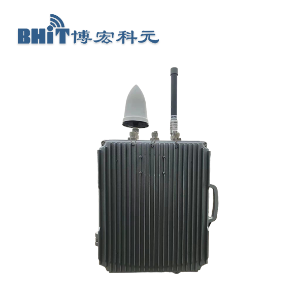
Navigation Spoofing
The navigation spoofing device is specifically developed to address various security threats posed by "non-cooperative" drones. By emitting low-power regenerated navigation...
View product details →
RC809W-RN5 ISM UAV Defence Equipment
The RC809W-RN5 ISM UAV Defence Equipment adopts the design of directional transmitting antenna, which can realize the directional interference attack on the remote control UAV in...
View product details →
Drone jamming interception device
Hand-held UAV jamming interception device is designed in strict accordance with military or industrial indicators. By interfering with the data link, the map transmission link and...
View product details →Frequently asked questions
How does a drone navigation decoy device stop an unauthorized drone?
It radiates low-power regenerated navigation satellite signals (power not more than 10 dBm) that invade the navigation system of a "black flight" UAV. Because the drone relies on navigation satellite signals for flight control, the device realizes interception control so the UAV cannot fly into the protected area, ensuring the low-altitude safety of the zone.
Do countermeasure devices work on all drones?
No. Navigation decoy and spoofing devices work against UAVs that use navigation satellite systems for flight control. For drones that rely on remote-control links, RF jamming devices such as the Auav-b01 hand-held unit interfere with the data link, map transmission link, and navigation link to cut communication between the drone and its remote control, forcing it to land automatically or driving it away. A layered approach covering both methods is commonly specified.
Does the RC809W-RN5 ISM UAV Defence Equipment work standalone?
No. According to the product description, the RC809W-RN5 uses a directional transmitting antenna to perform directional interference against remote-controlled UAVs in the ISM band, and it needs to be used in conjunction with a detection device. Budget for the detection layer when planning procurement.
What is the difference between Defense Mode and No-Fly Zone Mode on the Dream-A-J7000?
The Dream-A-J7000 navigation spoofing device comes standard with two spoofing and jamming strategies: Defense Mode and No-Fly Zone Mode. An optional Directional Expulsion Mode (eight directions) is available upon request. The product listing does not publish detailed behavioral specifications for each mode, so contact the manufacturer for the datasheet before purchase.
What should West African port operators confirm with suppliers before deploying counter-drone equipment?
Buyers should request the datasheet for coverage, mounting, power, and environmental specifications; confirm which countermeasure modes are standard versus optional; ask what detection equipment is required for pairing; request certification and regulatory documentation applicable to their jurisdiction; and confirm training, commissioning, and after-sales support terms in writing. SkyDrone Max does not publish these details in standard listings, so they must be verified directly with each manufacturer.
Need help selecting the right system?
Tell us your mission, payload, and operating environment. Our team will help you compare options and request the right datasheets from verified suppliers.