Choosing between the BE-50C Engine and the BE-15EFI Engine comes down to airframe class and integration requirements, not marketing labels. The BE-50C is a four-cylinder dual-intake carburetor engine that accommodates 32–34 inch propellers and targets fixed-wing UAVs, powered paragliders, trikes, ultralight aircraft, and range extenders. The BE-15EFI is a twin-cylinder single-intake engine listed for UAVs, aeromodels, and powered paragliders, with an integrated throttle servo mount and optional generator support. Neither product page publishes power output, weight, or fuel-consumption figures, so any procurement decision should start with a datasheet request. This comparison maps the documented differences so surveying and mapping teams can match each engine to the right platform.
Side-by-Side: Documented Specifications Only
The table below compares only attributes that appear in the supplied product data. Where a specification is not published, it is marked as unavailable and flagged for the datasheet. Resist the temptation to interpolate: for a surveying and mapping program, engine weight and propeller compatibility directly affect payload and endurance calculations, and assumptions at this stage tend to surface as costly airframe changes later.
| Attribute | BE-50C Engine | BE-15EFI Engine |
|---|---|---|
| Cylinder configuration | Four-cylinder, dual-intake | Twin-cylinder, single-intake |
| Fuel system | High-performance diaphragm carburetor; 360° multi-position installation | High-performance diaphragm carburetor; 360° multi-direction installation |
| Fuel type | Standard automotive gasoline | Standard automotive gasoline |
| Ignition | DC-CDI | DC-CDI |
| Construction | Ceramic-coated cylinders, forged crankshaft, lightweight aluminum alloy pistons | Ceramic-coated cylinders, forged crankshaft, lightweight aluminum alloy pistons |
| Starter | Top-mounted starter for ground starts | Not stated in supplied data—contact us for the datasheet |
| Throttle servo mount | Not stated in supplied data—contact us for the datasheet | Integrated throttle servo mount for easy installation and maintenance |
| Front output shaft | Propellers and reducers | Propellers and reducers |
| Rear output shaft | Starter-generator units and couplings; customizable PTO devices | Integrated starter-generators and coupling devices; customizable PTO |
| Propeller compatibility | 32–34 inch propellers | Various propeller sizes (customizable) |
| Optional generators | Not stated in supplied data—contact us for the datasheet | Generator options available for continuous power supply |
| Listed applications | Fixed-wing UAVs, powered paragliders, trikes, ultralight aircraft, range extenders | UAVs, aeromodels, powered paragliders |
| Power output, weight, fuel consumption | Not published—request the datasheet | Not published—request the datasheet |
Engine Architecture: Why Cylinder Count Matters for Mapping Airframes
The most fundamental difference is architecture. The BE-50C Engine uses a four-cylinder dual-intake design that the manufacturer describes as compact, low-vibration, and high-efficiency. The BE-15EFI uses a twin-cylinder single-intake configuration, also described as compact with minimized vibration and an excellent power-to-weight ratio. For a surveying and mapping operation, the practical implication is airframe matching: a four-cylinder engine built around 32–34 inch propellers belongs on larger fixed-wing platforms or range-extender duty, while a twin-cylinder unit is the natural fit for smaller UAV airframes and aeromodel-class platforms. Vibration matters as well—mapping payloads and gimbals are sensitive to harmonics, and the dual-intake layout of the BE-50C is positioned as a low-vibration design, though you should validate vibration data with the manufacturer before committing to a sensor mount.
Both engines share the same construction fundamentals: precision-cast cylinders with ceramic-coated walls, a forged crankshaft, and lightweight aluminum alloy pistons. The BE-50C explicitly claims a high power-to-weight ratio from this construction. Specific power and weight values are not published for either engine—contact us for the datasheet rather than relying on estimates.
Fuel System and Ignition: Operating Cost and Field Reliability
- Both the BE-50C and BE-15EFI run on standard automotive gasoline, which simplifies fuel logistics for remote survey campaigns in Southeast Asia, where pump gasoline is readily available across the region's survey corridors.
- Each engine uses a high-performance diaphragm carburetor with superior fuel atomization, high combustion efficiency, and 360° multi-position installation—useful when the engine must be mounted at an unconventional angle in a custom fuselage.
- Both use an advanced DC-CDI ignition system described as delivering easy starting and exceptional operational stability.
- Neither published description includes fuel-consumption figures. If your endurance models depend on burn rate, request the datasheet before finalizing mission planning.
One naming note worth flagging for procurement teams: despite the "EFI" in its model name, the supplied specification for the BE-15EFI describes a diaphragm carburetor fuel system, not electronic fuel injection. If electronic fuel injection is a procurement requirement, verify the configuration with the manufacturer before shortlisting this model.
Power Output and Integration: Shafts, PTO, and Onboard Power
Both engines follow the same dual-output philosophy. The front output shaft on each is compatible with propellers and reducers, while the rear shaft supports starter-generator units and couplings, with customizable connection options for various PTO devices such as propellers, clutches, and generators. The BE-50C adds a top-mounted starter that enables convenient and safe ground starts—a practical feature for field crews launching from unprepared strips. The BE-15EFI instead highlights an integrated throttle servo mount for easier installation and maintenance, and it is the only one of the two with published optional generator accessories for continuous onboard power supply. For mapping operations running a gimbal, GNSS receiver, and datalink simultaneously, generator availability can be a deciding integration factor—but confirm whether the BE-50C offers a comparable generator option by requesting the datasheet.
When to Step Up to the EFI Variants
Buyers comparing the BE-50C and BE-15EFI should also know where the related EFI models fit. The BE-50EFI Engine keeps the four-cylinder dual-intake layout of the BE-50 series but adds electronic fuel injection with an altitude compensation algorithm, which the manufacturer states is 20% more economical than carbureted engines. It retains the same 32–34 inch propeller compatibility and front/rear output configuration, with optional generators for onboard power. The BE-52EFI Engine is an upgraded BE-50-series model delivering higher power output at the same weight, with an optional preheating system for reliable cold-weather starts and 32–36 inch propeller compatibility. For surveying and mapping programs operating from highland bases or planning winter campaigns, those EFI features address conditions that a carburetor does not.
| Attribute | BE-50C | BE-50EFI | BE-52EFI |
|---|---|---|---|
| Fuel system | Diaphragm carburetor | EFI with altitude compensation | EFI with altitude compensation |
| Fuel economy claim | Not stated | 20% more economical than carbureted | 20% more economical than carbureted |
| Cold-weather option | Not stated | Not stated | Optional preheating system |
| Propeller range | 32–34 inch | 32–34 inch | 32–36 inch |
| Power output | Not published—request datasheet | Not published—request datasheet | Higher power output than BE-50 series at same weight |
Selection Guidance: Match the Engine to the Mission
Base your choice on mission fit rather than unspecified performance claims. The guidance below uses only what the published data supports.
- Choose the BE-50C if you operate larger fixed-wing survey aircraft, trikes, ultralight aircraft, or range-extender applications that call for 32–34 inch propellers and a four-cylinder dual-intake engine with top-mounted ground starting.
- Choose the BE-15EFI if your fleet runs smaller UAVs, aeromodels, or powered paragliders, and you value an integrated throttle servo mount plus published optional generator support for onboard power.
- If your survey area includes high-altitude terrain or hot-and-high conditions common in parts of Southeast Asia, the BE-50EFI and BE-52EFI with EFI altitude compensation are the documented options for stable high-altitude operation.
- If cold-weather launching is in scope, the BE-52EFI's optional preheating system is the only such feature documented in this range.
- In every case, request the datasheet for power output, weight, and fuel consumption before finalizing payload and endurance budgets—none of these figures appear in the published descriptions.
All four engines come from Jining Yunbao Technology Co, Ltd, which simplifies vendor management and spares logistics if your fleet mixes carbureted and EFI models. Procurement teams should confirm lead times, warranty terms, and spares availability directly with the supplier, as these details are not covered in the supplied product data.

Featured product
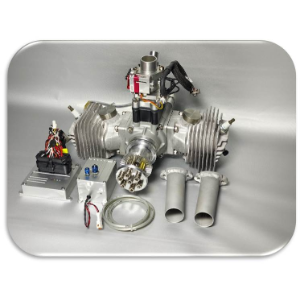
BE-50C Engine
**BE-50C Carburetor Engine Technical Specifications** ● **Four-cylinder dual-intake design** - Compact size, low vibration, and high operational efficiency ● **Advanced engine construction**: - Precision-cast cylinders with ceramic-coated walls - Forged crankshaft - Lightweight aluminum alloy pistons...
Products mentioned in this guide
BE-15EFI Engine
**BE-15 Twin-Cylinder Engine Technical Specifications** **1. Engine Design** - Dual-cylinder single-intake configuration - Compact size with minimized vibration - Excellent...
View product details →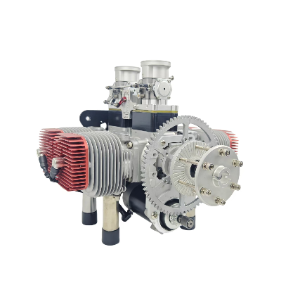
BE-52EFI Engine
**BE-52EFI Engine Technical Specifications** ● The **BE-52EFI Engine** is an upgraded model based on the **BE-50 series**, featuring a **four-cylinder dual-intake design**. It...
View product details →
BE-50EFI Engine
**BE-50EFI Engine Technical Specifications** ● **Four-cylinder dual-intake design** - Compact size, low vibration, and high operational efficiency. ● **Advanced...
View product details →Frequently asked questions
What is the main difference between the BE-50C and BE-15EFI engines?
The BE-50C is a four-cylinder dual-intake engine compatible with 32–34 inch propellers, listed for fixed-wing UAVs, powered paragliders, trikes, ultralight aircraft, and range extenders. The BE-15EFI is a twin-cylinder single-intake engine listed for UAVs, aeromodels, and powered paragliders, with an integrated throttle servo mount and optional generator support.
Do the BE-50C and BE-15EFI run on the same fuel?
Yes. Both are compatible with standard automotive gasoline, which the manufacturer notes is easy to source and keeps operating costs low. Neither published description provides fuel consumption figures—contact us for the datasheet.
Does the BE-15EFI actually use electronic fuel injection?
Despite the model name, the supplied specification for the BE-15EFI describes a high-performance diaphragm carburetor, not an EFI system. If EFI is a requirement for your program, verify the configuration with the manufacturer or consider the BE-50EFI and BE-52EFI, which document EFI with altitude compensation.
Which engine is better for high-altitude surveying operations?
The published data supports the EFI models for altitude: the BE-50EFI and BE-52EFI both feature an electronic fuel injection system with an altitude compensation algorithm for stable high-altitude operation. No altitude performance claims are published for the carbureted BE-50C or BE-15EFI—contact us for the datasheet.
Where can I find power output, weight, and fuel consumption figures?
These specifications are not included in the published product descriptions for any of the engines compared here. Contact us for the datasheet to obtain power output, weight, and fuel consumption data before finalizing your airframe integration or endurance planning.
Need help selecting the right system?
Tell us your mission, payload, and operating environment. Our team will help you compare options and request the right datasheets from verified suppliers.