A robot for training and education programs is a platform that lets students and technical staff practice real operating skills—navigation, payload handling, and mission planning—without the risks and costs of field deployments. Underwater robots, or ROVs, are one of the most effective categories for this purpose: they operate in a bounded, observable environment (a pool, tank, or sheltered dock), they expose learners to sensors and propulsion systems that transfer directly to industrial work, and their modular designs teach maintenance and configuration skills. In this article, we use the FIFISH W6 as a worked example of what an underwater training platform offers, and we cover workflow design, integration, operating constraints, training structure, and the procurement questions B2B buyers in North America should ask before purchasing.
Why Underwater Robots Fit Training and Education Programs
Underwater robotics occupies a useful middle ground in technical education. It is complex enough to teach genuine engineering and operational skills—buoyancy, current resistance, navigation under uncertainty, and sensor fusion—yet contained enough to run safely inside an institutional facility. For vocational programs, maritime academies, and university engineering departments, an ROV-based curriculum covers skills that employers in inspection, surveying, and offshore support actively hire for.
A capable example is the FIFISH W6, a marine-grade underwater intelligent robotic platform from QYSEA rated for dives to 350 meters. Its patented Q-Motor propulsion system and the self-developed Q-DVL module are designed to enhance navigation speed, current resistance stability, and operational precision—attributes that matter in a training context because students learn on hardware whose behavior resembles what they will encounter in professional deployments. The platform also integrates an inertial navigation system, a rapid positioning system, and an intelligent measurement system, giving instructors multiple subsystems to teach against.
A Typical Training Workflow with an Underwater ROV
A structured ROV training program generally moves through four stages. Each stage maps to specific capabilities of the platform you choose.
- Stage 1 – Systems familiarization: Students learn the platform's architecture, including propulsion, navigation, and control interfaces. On the FIFISH W6, this includes the Q-Motor propulsion system and the Q-DVL navigation module.
- Stage 2 – Basic maneuvering: Trainees practice station-keeping, controlled descent, and lateral movement in a pool or tank, building an intuition for how current resistance and thruster response affect handling.
- Stage 3 – Positioning and measurement tasks: Using the platform's inertial navigation, rapid positioning, and intelligent measurement systems, students execute structured missions such as target location and dimensional measurement exercises.
- Stage 4 – Modular tooling and maintenance: The W6's modular design supports simultaneous deployment of multiple functional accessories and rapid component replacement, so trainees can practice reconfiguring the vehicle between missions—a core industrial skill.
This staged workflow is deliberately platform-agnostic. Any ROV with adequate navigation and modularity can support it; the W6 is simply one example of a platform whose specifications align with these stages.
Integration Considerations for Training Facilities
Before an ROV enters a curriculum, procurement teams should assess how it integrates with the facility's existing infrastructure and teaching goals. Key considerations include:
- Operating environment: Confirm the platform's depth rating and current-handling characteristics against your training venue. The W6 is rated to 350 meters, which covers pool, tank, and open-water training scenarios; contact us for the datasheet to verify environmental tolerances for your specific site.
- Sensor and navigation teaching: If your curriculum includes navigation theory, choose a platform with a documented navigation stack. The W6's Q-DVL module and inertial navigation system give instructors concrete subsystems to teach.
- Modularity and spares: Platforms that support rapid component replacement reduce downtime between classes and allow multiple accessory configurations to be taught in a single term.
- Data and measurement output: If students will produce reports or maps, verify that the platform's measurement system exports data in a format your course software can process. Contact us for the datasheet for interface details.
- Cross-domain pairing: Many institutions combine underwater and aerial platforms in one robotics program. Aerial platforms such as the Rhino 10S P6X—an indoor-capable FPV drone with open-source flight control support—are designed for research and teaching scenarios and can run alongside ROV training.
Comparing Example Platforms for a Training Program
The FIFISH W6 is not the only option in the Robot category. QYSEA's E-MASTER (FIFISH E-IM) is a related platform aimed at inspection and measurement scenarios, and aerial platforms can complement or substitute depending on your curriculum. The table below compares the three supplied examples strictly on documented attributes.
| Attribute | FIFISH W6 | FIFISH E-MASTER (E-IM) | Rhino 10S P6X |
|---|---|---|---|
| Domain | Underwater ROV | Underwater ROV | Aerial FPV drone |
| Depth / altitude rating | Dives to 350 meters | Contact us for the datasheet | Indoor-capable flight; contact us for the datasheet |
| Navigation systems | Q-DVL module, inertial navigation, rapid positioning | Contact us for the datasheet | Optional centimeter-level RTK positioning module; binocular positioning and obstacle avoidance |
| Modularity | Modular design; simultaneous deployment of multiple accessories; rapid component replacement | Quick-release modular system; unibody streamlined design | Open-source flight control; optional onboard computers (RhinoSky RK3588, Nvidia Orin series) |
| Endurance | Contact us for the datasheet | Contact us for the datasheet | Up to 16 minutes no-load |
| Documented training use | Suitable for challenging underwater operations training | Specialized solutions for underwater surveying, mapping, and emergency rescue | Suitable for scientific research, teaching, and AI development scenarios |
Note that the Rhino 10S P6X documents a specific transfer path: research and development results on this platform can be seamlessly transplanted to the industrial-grade R900S UAV. For institutions that want students to move from classroom work to industrial platforms, that documented continuity is a relevant procurement criterion. The same logic applies underwater: training on the W6's modular architecture prepares students for the E-MASTER's quick-release modular system, since both come from the same manufacturer's design philosophy.
Operating Constraints to Plan Around
Underwater training programs face constraints that aerial or ground robot programs do not. Plan for the following:
- Water access and safety: A pool, tank, or sheltered dock is required, with supervision protocols for anyone working near water. The W6's 350-meter depth rating far exceeds typical training depths, so depth is rarely the limiting factor—supervision and visibility are.
- Current and visibility: The W6's Q-DVL module and Q-Motor propulsion are designed to improve current resistance stability and navigation precision, but training venues should still document water conditions for each session.
- Battery and turnaround logistics: Contact us for the datasheet for battery specifications and charging times, and build turnaround time into your class schedule.
- Accessory management: Because the W6 supports simultaneous deployment of multiple functional accessories, inventory and configuration management become part of the training operation itself—assign this as a student responsibility to reinforce asset-tracking skills.
Structuring the Training Program
Effective ROV training programs combine classroom theory, simulation or bench work, and supervised water time. A practical structure for a semester-length course looks like this:
- Weeks 1–3: Classroom instruction on underwater physics, ROV architecture, and navigation fundamentals, using the platform's documented subsystems (Q-Motor, Q-DVL, inertial navigation) as case studies.
- Weeks 4–6: Bench work on component replacement and accessory configuration, exploiting the W6's rapid component replacement design.
- Weeks 7–12: Supervised water sessions progressing from basic maneuvering to positioning and measurement missions using the rapid positioning and intelligent measurement systems.
- Final assessment: A complete mission—plan, configure, execute, and report—mirroring how industrial operators run ROV tasks.
For programs that want to certify operators, check whether the manufacturer or its North American distribution partners offer operator training. Contact us for details on available training support for the FIFISH W6 and E-MASTER platforms.
Procurement Questions for B2B Buyers
Before committing budget, procurement teams should put the following questions to any supplier of a robot for training and education programs:
- What is the exact depth rating, and is it sufficient for our planned training venues? (For the W6: 350 meters.)
- Which navigation and positioning systems are included as standard, and which are optional? Request the datasheet for the full list.
- What accessories are available for the modular system, and what is the lead time for replacement components?
- What operator training, documentation, and curriculum support does the manufacturer provide?
- What are the warranty terms and service options in North America?
- How does the platform's data output integrate with our existing course software and reporting tools?
Getting written answers to these questions before purchase protects both the budget and the teaching schedule. Where a specification is not published in the product description—endurance figures, battery details, and interface protocols for the W6, for example—contact us for the datasheet rather than assuming.
Choosing Between Underwater and Aerial Training Platforms
Some institutions will find that an underwater ROV is the right primary platform; others may prioritize aerial systems or run both. The deciding factors are your industry alignment and facility constraints. Maritime academies and inspection-focused programs benefit most from ROV training, and the FIFISH W6's combination of 350-meter depth capability, Q-DVL navigation, and modular tooling makes it a strong example platform for that track. Programs focused on AI, autonomy, and flight control research may lean toward aerial platforms like the Rhino 10S P6X, which supports open-source flight control software, AI visual tracking, positioning and obstacle avoidance, 5G remote control, and cluster control development. The RhinoSky P6X industrial-grade triple redundant flight control, 16-minute no-load endurance, 140 km/h maximum speed, 3 kg maximum load, and level 7 wind resistance give students a documented performance envelope to work within. Many programs find that running both domains—underwater and aerial—produces graduates with the broadest operational skill set.

Featured product
FIFISH W6
The FIFISH W series is a marine-grade underwater intelligent robotic platform capable of diving to depths of 350 meters. Equipped with the newly patented Q-Motor propulsion system and Finorigin's self-developed Q-DVL module, it significantly enhances underwater navigation speed, current resistance stability, and...
Products mentioned in this guide
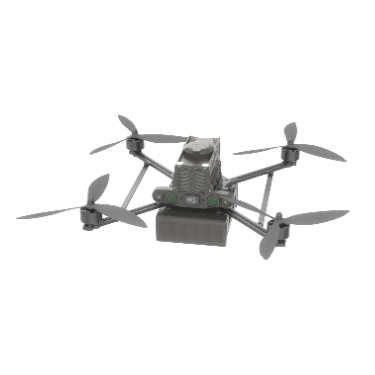
Open-platform 10-inch Intelligent FPV Drone
The Rhino 10S P6X is a lightweight FPV drone that can fly indoors. This aircraft model has stable and reliable flight performance, and supports open source flight control...
View product details →
E-MASTER
The FIFISH E series breaks through traditional limitations with its innovative unibody streamlined design and quick-release modular system, ensuring safe, reliable, and highly...
View product details →
Gansu Unis GU400 X Intelligent Drone Battery Swap Hangar
The GU400X Intelligent Battery Swap Hangar is custom-developed by Gansu Unis for the DJI Matrice 400 industrial drone. Engineered for high-intensity and high-frequency industrial...
View product details →Frequently asked questions
What depth can the FIFISH W6 reach during training exercises?
The FIFISH W6 is a marine-grade underwater intelligent robotic platform capable of diving to depths of 350 meters. This rating covers typical training venues such as pools, tanks, and sheltered open-water sites. For detailed environmental specifications, contact us for the datasheet.
Can the FIFISH W6 be used for underwater measurement training?
Yes. The platform integrates an inertial navigation system, a rapid positioning system, and an intelligent measurement system, which support structured positioning and measurement exercises in a training curriculum. Contact us for the datasheet for measurement system specifications.
How does the FIFISH W6's modular design benefit a training program?
The W6 features an innovative modular design that allows simultaneous deployment of multiple functional accessories and enables rapid component replacement. This lets students practice reconfiguring the vehicle between missions and reduces downtime between classes.
Is there an aerial alternative for robotics training programs?
Yes. The Rhino 10S P6X is a lightweight FPV drone that can fly indoors and supports open-source flight control software, AI visual tracking, positioning and obstacle avoidance, 5G remote control, and cluster control development. It is suitable for scientific research, teaching, and artistic aerial photography, and its results can be transplanted to the industrial-grade R900S UAV.
What is the difference between the FIFISH W6 and the FIFISH E-MASTER?
Both are QYSEA underwater robots. The W6 is a marine-grade intelligent robotic platform rated to 350 meters with Q-Motor propulsion and a Q-DVL navigation module. The E-MASTER (FIFISH E-IM) uses a unibody streamlined design with a quick-release modular system and is dedicated to inspection and measurement scenarios. For full specifications of either model, contact us for the datasheet.
Need help selecting the right system?
Tell us your mission, payload, and operating environment. Our team will help you compare options and request the right datasheets from verified suppliers.