If your mining operation plans to fly drones for stockpile measurement in 2026, the training decision comes down to three things: the licence level your flight profiles actually require, a training provider whose testing authority and pass rate you can verify, and trainer aircraft that mirror the missions your pilots will fly. This guide walks procurement teams through those decisions using real options available on the market, including the Intermediate Multi-Rotor Beyond Visual Line of Sight Pilot (Pilot-in-Command) course, entry-level VLOS training, and the trainer aircraft and demonstration platforms that support a complete training programme.
Why training is the first procurement decision, not the last
In mining and stockpile measurement, the UAV is rarely the constraint — the certified crew is. A haul fleet cannot wait for a pilot who is cleared only to fly within visual line of sight when the survey plan requires them to operate beyond it across a large pit or a dispersed stockyard. Training capacity therefore shapes everything downstream: how many sites you can cover, whether you can rotate pilots-in-command, and whether your programme can scale past a single surveyor. Procurement teams that treat training as a line item bought after the aircraft typically discover that the aircraft specification was the easier half of the purchase.
Licence levels: matching certification to the mission
Training providers structure drone certification in tiers, and the tier you buy should be driven by operational need rather than by ambition. The core levels on offer are:
- Visual Line of Sight (VLOS): the entry qualification for flying small multirotor drones within sight of the pilot. Adequate for close-range inspection tasks where the pilot maintains an unobstructed view of the aircraft.
- Beyond Visual Line of Sight (BVLOS): the qualification needed when surveying large pits, long haul routes or stockyards that exceed visual range — the defining characteristic of most stockpile measurement work.
- Instructor level: for building internal training capability, allowing your operation to develop its own pilots rather than outsourcing every refresher.
For example, the Visual Line-of-Sight (VLOS) Pilot for Small Multirotor Drones course (/products/p/796.html) from Shenzhen Xinxiang UAV Technology is the appropriate starting point for crews flying close-range tasks, while the BVLOS pilot-in-command course below is the tier relevant to stockyard-scale operations. Buying VLOS-only training for a BVLOS mission — or the reverse — wastes budget either way.
Choosing a training provider: what to verify
Provider selection criteria should be verifiable from published data. Where a figure is not published, ask for the datasheet rather than accepting a verbal assurance. A useful checklist for the provider itself:
- Testing authorisation: is the provider an authorised testing centre, and for which jurisdiction? XinXiang Drones, for instance, is a CAAC-authorized testing center for Guangdong Province — a fact you can confirm and cite internally.
- Aircraft-type coverage: does the provider train on the aircraft categories you fly? A provider covering multi-rotor, helicopter and VTOL aircraft gives a mining operation room to change platforms without changing schools.
- Licence-level coverage: confirm VLOS, BVLOS and instructor levels are all available, so you can build a progression path rather than stitching courses together.
- Class size and teaching method: small-class teaching concentrates instructor time per pilot; ask how many students per class before you book.
- Certification pass rate: XinXiang Drones publishes a certification pass rate exceeding 95%. A provider unwilling to state a pass rate should be asked for supporting data.
For operations needing the highest qualification tier, the Intermediate Multi-Rotor Beyond Visual Line of Sight Pilot (Pilot-in-Command) course is the natural fit for teams responsible for large-area mining surveys. Note that course duration, pricing and intake dates are not listed in the published data — contact us for the datasheet.
Trainer aircraft: buying the flying platform alongside the course
If you are building an internal training capability — which the instructor-level licence makes possible — you will also need trainer aircraft that meet your regulator's training requirements. Published specifications matter here more than marketing claims, because the airframe must physically support the syllabus: dual-battery payload for realistic mission weight, enough endurance for a full training exercise, and compatibility with ground station instruction and beyond-visual-line-of-sight blind-flight training.
| Attribute | Four types of trainer aircraft (HYYF-6ZH) | Ball-shaped UAV (JX GS01) |
|---|---|---|
| Category | Parts & Components — trainer aircraft | Training & Education — training platform |
| Dimensions (w/o propellers) | 1740 × 1740 × 690 mm | Contact us for the datasheet |
| Dimensions (w/ propellers) | 2435 × 2435 × 690 mm | Contact us for the datasheet |
| Empty weight | 15.2 kg (excluding flight control system) | Contact us for the datasheet |
| Effective payload | 15 kg (dual batteries) / 20 kg (single battery) | Contact us for the datasheet |
| Endurance | 38 minutes | Contact us for the datasheet |
| Materials | Aerospace aluminum, CF, GF, PA66+GF30 | Contact us for the datasheet |
| Compliance / training support | Complies with CAAC training requirements; supports pilot, aircraft commander and instructor training, ground station and BVLOS blind-flight training | Vertical takeoff in place, one-click takeoff/landing, adjustable flight speed, pressure-based altitude determination, LED light control, 360° rollover |
The HYYF-6ZH trainer from XI'AN HENGYAN is the more complete solution for a dedicated training fleet, because its published data explicitly covers CAAC compliance and BVLOS blind-flight instruction. The Junxi JX GS01 ball-shaped UAV is better understood as a supplementary skills platform — its one-click takeoff/landing, adjustable speed and 360° rollover capability suit basic handling and confidence-building exercises — but its dimensions, weight and endurance are not published, so contact us for the datasheet before specifying it into a curriculum.
Integration questions to ask before you sign
Training rarely fails on flying skill alone; it fails on integration with your operation's procedures and regulators. Put these questions to every provider under consideration:
- Regulatory alignment: certification referenced in this guide follows CAAC requirements. If your operation is based in Southern Africa — South Africa, Botswana, Zambia, Namibia and neighbouring markets — confirm with your procurement and aviation-legal teams how the provider's certification maps to your local civil aviation authority's recognition requirements, and whether any local conversion or additional licensing is needed. Do not assume automatic equivalence.
- Ground station training: does the course include ground station operations, or is that a separate module? The HYYF-6ZH supports ground station training; ask whether the course bundles it.
- BVLOS methodology: for mining surveys, confirm the course covers blind-flight procedures rather than only visual-range practice.
- Fleet fit: will pilots train on multi-rotor aircraft comparable to your survey fleet, or on types they will never fly operationally?
- Instructor pipeline: if you intend to certify internal instructors, confirm the provider offers instructor-level training and what prerequisites apply.
Procurement checklist for Training & Education in 2026
Before issuing a purchase order, work through the following list. Items marked with an asterisk are not published in the product data referenced above and should be requested as part of the datasheet.
- Licence level confirmed against actual flight profiles (VLOS vs BVLOS vs instructor).
- Provider's testing-authorisation status verified in writing.
- Certification pass rate obtained from published data or supplied documentation.
- Class size and instructor-to-student ratio stated in the contract.*
- Course duration, pricing and intake schedule requested.*
- Trainer aircraft specification sheet reviewed against your regulator's training requirements.
- Endurance and payload of trainer aircraft checked against your planned exercise duration and mission weight.
- Ground station and BVLOS blind-flight training coverage confirmed for each airframe in the training fleet.
- Regulatory recognition pathway for your region documented — particularly important for Southern African operations.
- Progression path defined: which pilots take VLOS first, who advances to BVLOS, and when instructor certification is scheduled.
The trade-offs procurement teams should accept
Every training purchase involves trade-offs, and it is better to make them consciously. A small-class provider with a high pass rate may offer fewer intake dates than a high-volume school; published data on intakes was not available for the courses above, so ask. Buying a compliant trainer aircraft such as the HYYF-6ZH adds a capital line item to the programme, but it is the only way to guarantee your pilots rehearse BVLOS blind-flight procedures on hardware designed for that syllabus. And a supplementary platform like the JX GS01 adds handling practice value without adding BVLOS training capability — useful, but not a substitute. Rank your requirements before the shortlist, not after, and the trade-offs resolve themselves into a defensible procurement decision.

Featured product
Intermediate Multi-Rotor Beyond Visual Line of Sight Pilot (Pilot-in-Command)
XinXiang Drones is a CAAC-authorized testing center for Guangdong Province, offering training for various types of drones, including multi-rotor, helicopters, and VTOL aircraft, as well as different levels of CAAC licenses (visual line of sight, beyond visual line of sight, and instructor). We employ small-class...
Products mentioned in this guide

Visual Line-of-Sight (VLOS) Pilot for Small Multirotor Drones
XinXiang Drones is a CAAC-authorized testing center for Guangdong Province, offering training for various types of drones, including multi-rotor, helicopters, and VTOL aircraft,...
View product details →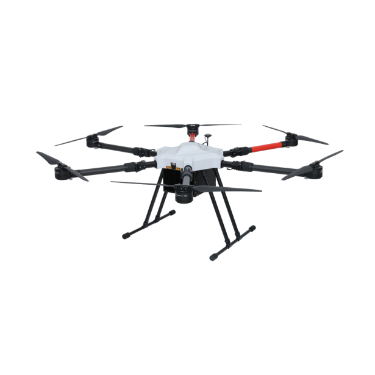
Four types of trainer aircraft
Dimensions (without propellers) 1740mm (Length) × 1740mm (Width) × 690mm (Height) Dimensions (with propellers) 2435mm (Length) × 2435mm (Width) × 690mm (Height) Empty weight...
View product details →
Ball-shaped UAV
Vertical takeoff in place, one-click takeoff/landing, adjustable flight speed, intelligent altitude determinationbased on air pressure, LED light control, 360° rollover
View product details →Frequently asked questions
What licence level does a mining stockpile measurement programme need?
Stockpile measurement across a large pit or stockyard generally requires operations beyond visual range, which points to a Beyond Visual Line of Sight qualification such as the Intermediate Multi-Rotor BVLOS Pilot (Pilot-in-Command) course. Close-range support tasks can be flown by pilots holding a VLOS qualification, and instructor-level certification lets you build internal training capability over time.
Is the CAAC licence valid in Southern Africa?
The training described is CAAC-authorised, with XinXiang Drones acting as a CAAC-authorized testing center for Guangdong Province. Recognition of that certification in Southern African jurisdictions depends on your local civil aviation authority's requirements. Confirm the recognition pathway with your aviation-legal advisors before enrolling — the training data does not state regional validity, so treat that as a verification step, not a given.
What is the certification pass rate for XinXiang Drones courses?
The published data states a certification pass rate exceeding 95%. For any additional documentation supporting that figure, contact us for the datasheet.
Do I need to buy trainer aircraft separately from the pilot course?
If you are certifying pilots through an authorised testing centre, the course structure governs what aircraft you need to purchase — ask the provider whether training aircraft are included. If you are building an internal training fleet alongside instructor-level certification, a compliant trainer such as the HYYF-6ZH, which supports pilot, aircraft commander and instructor training including ground station and BVLOS blind-flight training, is specified for that purpose.
What information is missing from the published training data?
Course duration, pricing, intake dates and class sizes are not included in the published product data for the pilot courses, and the Ball-shaped UAV (JX GS01) does not publish dimensions, weight or endurance. Request the datasheet from the provider for any specification not listed here before finalising your procurement decision.
Need help selecting the right system?
Tell us your mission, payload, and operating environment. Our team will help you compare options and request the right datasheets from verified suppliers.