When you procure a System Platforms product for security or counter-UAS operations, the specifications that matter most are not flight times or payload limits — those belong to the airframe. They are the software and management capabilities: which AI algorithm applications are integrated, how the platform manages fleets and mission data, and whether the system supports a land-air integrated safety management model. This article explains those specification categories in practice, using the UAV Inspection Platform (Unmanned Aerial Vehicle) Inspection Platform V1.0.0-MB by Mango Intelligent Technology (Jiangsu) Co., Ltd. as the reference product, and outlines the questions your procurement team should put to any supplier.
What the System Platforms category actually covers
In the SkyDrone Max marketplace, System Platforms are the command, management, and intelligence layer that sits above unmanned hardware. Three patterns appear across the category: platform management systems that integrate AI algorithm applications with UAV hardware, ground station terminals for monitoring and task planning, and city-scale orchestration platforms that control networks of automated docks. The UAV Inspection Platform falls into the first pattern — it relies on UAV hardware facilities and integrates self-developed AI algorithm applications with an intelligent platform management system.
For a security procurement team, this distinction matters because a platform specification that looks impressive on a datasheet is meaningless without the hardware it controls, and vice versa. Counter-UAS and perimeter security programs fail most often at the integration layer: sensors and aircraft that cannot share data, or AI outputs that no operator can act on. When you review a System Platforms product, you are essentially reviewing how well that integration problem has been solved.
Reading the UAV Inspection Platform specifications
The supplied product data describes the UAV Inspection Platform as focused on intelligent UAV inspection technology, serving fields such as urban management, forestry protection, and energy security. Three specification elements in that description have direct operational meaning:
- Self-developed AI algorithm applications: the platform's analytical capability is built in-house rather than licensed from a third party. In practice this means the supplier controls the algorithm roadmap and can be asked directly about update cycles, failure modes, and customization — questions you cannot easily answer for a black-box third-party algorithm.
- Intelligent platform management system: this is the fleet and mission management layer. It is what turns individual UAV sorties into a managed program with task assignment, data handling, and oversight.
- Land-air integrated safety management system: the stated architecture aims to unify ground and aerial assets under one safety management framework, which is the structural foundation a security operations center needs if it is to supervise mixed unmanned assets.
The supplier also states that this model reduces operational costs and improves work efficiency by liberating labor. Those are supplier claims about outcomes, not measured figures — treat them as claims to validate in a pilot, and contact us for the datasheet if you need published performance data.
How specifications map to mission fit
Each documented specification points to a different mission profile. Use the stated application fields as your primary guide, because they indicate where the supplier has operating experience:
- Urban management: relevant to municipal security and low-altitude governance programs, where patrols serve multiple departments from a single data-gathering effort.
- Forestry protection: relevant to border-adjacent and remote-area monitoring where manual patrols are slow and labor-intensive.
- Energy security: relevant to protecting generation sites, substations, and pipeline corridors — environments where a land-air integrated approach matches the mix of ground and aerial assets already deployed.
If your mission profile is counter-UAS detection, tracking, or interception specifically, note that the supplied data does not describe detection sensors, jamming capability, or interoperability with counter-UAS effectors. Contact us for the datasheet and confirm scope with the supplier before assuming the platform covers those functions.
Comparing documented platform scope across the category
The table below compares the main product with related System Platforms listings on the marketplace, using only attributes documented in the supplied data. It is a scope comparison, not a performance benchmark.
| Attribute | UAV Inspection Platform V1.0.0-MB | Related platforms |
|---|---|---|
| Brand | Mango Intelligent Technology (Jiangsu) Co., Ltd. | Foshan Heneng IoT; Quzhou Southeast Flying Vision; Shaanxi Huaxing Tongsheng |
| Architecture | AI algorithm applications integrated with UAV hardware plus an intelligent platform management system | Government patrol platform with shared data model; city-scale unmanned airport control; multi-domain ground station terminal |
| Documented scope | Intelligent UAV inspection for urban management, forestry protection, energy security | Urban, agriculture, environmental protection; 70+ scenarios with hundreds of unmanned airports; UAVs, unmanned vehicles, ships, underwater vehicles |
| Documented response claim | Not stated in supplied data | 5-minute emergency arrival (Feishi Inspection Platform) |
| Model identifier | V1.0.0-MB | Not stated in supplied data |
Questions to ask any System Platforms supplier
Specifications in this category are often presented at the architectural level rather than as measurable numbers. Convert them into answerable questions during procurement:
- Which AI algorithm applications are included as standard, and which are optional or paid add-ons? Are the algorithms self-developed, as stated for the UAV Inspection Platform, or third-party licensed?
- How many concurrent UAVs, operators, and data streams does the platform management system support? Contact us for the datasheet where a concurrency figure is not published.
- What does the land-air integrated safety management system actually connect to on the ground side — which unmanned ground vehicles, sensors, or terminals are supported?
- What are the documented use cases closest to your mission, and can the supplier grant a structured pilot or site visit for one of them?
- How are software updates, algorithm retraining, and security patches delivered, and who owns the data collected during operations?
- Does the platform export data in open formats your existing security management system can consume, or only through the vendor's own interfaces?
Procurement notes for Southeast Asian buyers
Southeast Asian agencies and critical-infrastructure operators typically buy security UAV capability across several departments at once — a dynamic documented in the related Low-Altitude Urban and Rural Governance platform, which uses a unified collection and shared usage model so one data-gathering effort serves multiple departments. That shared-model approach can be a practical fit for regional budget structures where a single program must justify itself to city management, environment, and public safety stakeholders simultaneously.
Two regional realities should shape your specification review. First, urban density in major Southeast Asian metros favors platforms with automated, dock-based operations and AI-driven route planning of the kind described for the Feishi Inspection Platform, which documents high-frequency updating of urban 3D base data and adaptive intelligent route planning. Second, energy security is a common national priority across the region, and the UAV Inspection Platform's stated energy security field aligns with that demand. In both cases, verify which elements of the architecture are proven in comparable climates and regulatory environments, and ask the supplier for reference deployments where such details exist. If a supplier cannot document a deployment in a comparable context, contact us for the datasheet and confirm the platform's readiness for your specific operating conditions.
Putting the specifications into a decision framework
A practical way to close an evaluation is to score each candidate platform on three axes drawn directly from the specification categories above: integration (does the AI algorithm layer connect to your hardware and your security management system?), management (does the platform management system support the number of operators and missions you will actually run?), and architecture (does the land-air integrated model match the mix of assets in your security program?). The UAV Inspection Platform V1.0.0-MB documents all three axes at the architectural level; whether it meets your measured thresholds is a question for the supplier, a structured pilot, and — where published figures are not available — the datasheet you request before contract.

Featured product
UAV (Unmanned Aerial Vehicle) Inspection Platform
This product focuses on the intelligent inspection technology of unmanned aerial vehicles (UAVs), and is committed to providing cutting-edge services in multiple fields such as urban management, forestry protection, and energy security. Relying on the UAV hardware facilities, the product integrates self-developed AI...
Products mentioned in this guide
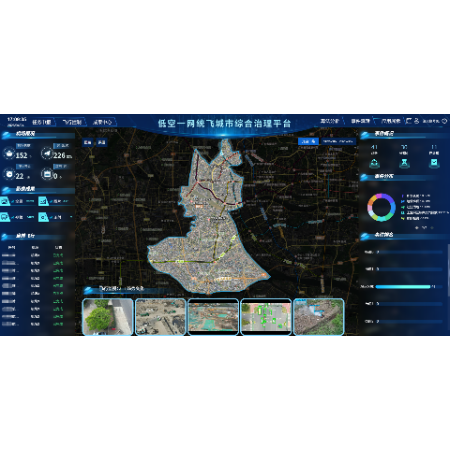
Low-Altitude Urban and Rural Governance
Based on our fully domestic AI flight inspection platform, we build low-altitude urban governance scenarios to improve urban management efficiency and effectiveness. Unified...
View product details →
飞视巡检平台
We have independently developed the "Feishi Inspection Platform", which can control hundreds of unmanned airports throughout the city through a series of advanced AI algorithms....
View product details →
Ground station system
This system is a terminal system developed for the monitoring, management, and task planning needs of unmanned systems such as unmanned aerial vehicles, unmanned vehicles,...
View product details →Frequently asked questions
What does 'System Platforms' mean in a drone procurement context?
It refers to the software and management layer above the airframe: platform management systems, integrated AI algorithm applications, ground station terminals, and city-scale orchestration software. The UAV Inspection Platform V1.0.0-MB, for example, integrates self-developed AI algorithm applications with an intelligent platform management system that relies on UAV hardware facilities.
Is the UAV Inspection Platform suitable for counter-UAS detection and interception?
The supplied data describes the platform's focus as intelligent UAV inspection for fields including urban management, forestry protection, and energy security, built around a land-air integrated safety management system. It does not document counter-UAS detection or interception functions. Contact us for the datasheet and confirm the platform's scope with the supplier for your specific use case.
Which performance figures are published for the UAV Inspection Platform?
The supplied data does not include performance figures such as flight endurance, detection range, or processing throughput. The supplier states the model reduces operation costs and improves work efficiency, which are outcome claims rather than measured specifications. Contact us for the datasheet for any figures not listed here.
Can one platform serve several government departments from a single operation?
Shared-use operation is documented for the related Low-Altitude Urban and Rural Governance platform by Foshan Heneng IoT, which uses a unified collection and shared usage model so one-time data gathering serves multiple departments. Whether the UAV Inspection Platform supports an equivalent model is a question to raise with that supplier directly.
How should we validate a System Platforms purchase before contracting?
Score candidates on integration, management, and architecture: confirm which AI algorithm applications are standard, how many concurrent aircraft and operators the platform management system supports, and how the safety management architecture connects to your ground assets. Request a structured pilot tied to a documented use case — such as urban management, forestry protection, or energy security — and contact us for the datasheet wherever published figures are missing.
Need help selecting the right system?
Tell us your mission, payload, and operating environment. Our team will help you compare options and request the right datasheets from verified suppliers.