The core difference between the DJI Airport 3 and the QC200-M3 Small Battery Swapping Drone Nest comes down to deployment philosophy and power management. The DJI Airport 3 is a flexible hangar platform that supports fixed deployment, vehicle-mounted mobile deployment, and phone-based setup through the new DJI industry app, paired with the D-RTK 3 relay station. The QC200-M3 is a lightweight, fixed-deployment nest for small industrial drones that performs automatic battery swaps for unattended operation. If your training or education program needs a system that can move between a campus, a vehicle, and emergency-response exercises, the DJI Airport 3 fits that brief. If your priority is repeated, unattended flight sessions from a single fixed site with automatic battery exchange, the QC200-M3 is the closer match. Full technical specifications are not included in the available data, so request datasheets from each manufacturer before making a procurement decision.
Why Drone Hangars Matter for Training and Education Programs
Training organizations, technical institutes, and enterprise academies face a specific procurement problem: they need equipment that can support repeated student flight sessions, instructor demonstrations, and scenario-based exercises without requiring a large ground crew for every launch and recovery. Automated drone hangars address this by housing the aircraft, managing power, and enabling remote operation, which lets instructors focus on teaching rather than manual battery handling and launch procedures.
For programs training operators for real industrial work, such as inspection, mapping, and emergency response, a hangar also teaches the workflow students will encounter in the field: remote mission planning, automated launch and recovery, and unattended or remotely supervised operations. This makes the choice of hangar platform a curriculum decision as much as a hardware decision.
DJI Airport 3: Flexible Deployment as the Defining Feature
The DJI Airport 3, manufactured by Shenzhen Wuce Spatial Information Co. Ltd, is positioned around adaptability. According to the available product data, it can be flexibly deployed and reshapes operational paradigms in three ways:
- Paired with the new generation D-RTK 3 relay station, it allows more flexible selection of fixed deployment addresses, which matters for campuses or training sites where ideal placement options are limited.
- Deployment can be completed using a mobile phone through the new DJI industry app, lowering the setup barrier for instructors and students who are not dedicated field engineers.
- It supports mobile deployment in vehicles for the first time, making scheduling more efficient during emergency operations and covering long-distance inspection needs, which is directly relevant to scenario-based training for emergency-response and corridor-inspection roles.
For a training provider, this combination means one hangar unit can potentially serve a fixed campus installation, a vehicle-mounted field exercise, and long-distance inspection simulations. Detailed specifications, such as weight, dimensions, environmental ratings, and compatible aircraft models, are not included in the available data; contact us for the datasheet.
QC200-M3 Small Battery Swapping Drone Nest: Unattended Operation with Automatic Battery Swap
The QC200-M3, from Hefei Kedian Zhichao Information Technology Co., Ltd., takes a different approach. Its product description emphasizes fixed deployment, flexible mobility, lightweight design, unattended operation, remote communication, automatic battery swap, real-time monitoring, and extended operational range for small industrial drones.
The automatic battery swap is the standout capability here. Instead of recharging the aircraft in place, the nest exchanges batteries automatically, which can reduce turnaround time between flights. For training programs running back-to-back student sorties from a fixed site, or for demonstrating unattended operations concepts, this workflow has clear instructional value. It also mirrors the battery-swap logistics that some industrial operators use in production environments.
As with the DJI Airport 3, the available data does not include technical specifications such as swap cycle time, battery capacity, nest dimensions, or supported aircraft. Contact us for the datasheet before evaluating it against your curriculum requirements.
Side-by-Side Comparison Based on Available Data
The table below compares only the attributes that appear in the supplied product data. Where a specification is not provided, it is marked as unavailable, and buyers should request a datasheet rather than relying on assumptions.
| Attribute | DJI Airport 3 | QC200-M3 Small Battery Swapping Drone Nest |
|---|---|---|
| Product category | Drone Hangar | Drone Hangar |
| Manufacturer | Shenzhen Wuce Spatial Information Co. Ltd | Hefei Kedian Zhichao Information Technology Co., Ltd. |
| Model | 大疆机场3 (DJI Airport 3) | QC200-M3 |
| Deployment model | Fixed deployment with flexible site selection; vehicle-mounted mobile deployment supported | Fixed deployment with flexible mobility |
| Power management | Not stated in available data | Automatic battery swap |
| Unattended operation | Not stated in available data | Yes, per product description |
| Remote communication and monitoring | Deployment via DJI industry app on mobile phone | Remote communication and real-time monitoring |
| Companion infrastructure | Pairs with the new generation D-RTK 3 relay station | Not stated in available data |
| Target aircraft class | Not stated in available data | Small industrial drones |
| Positioning use cases | Emergency operations scheduling; long-distance inspections | Unattended operations; extended operating range |
| Dimensions, weight, environmental rating | Contact us for the datasheet | Contact us for the datasheet |
| Certifications and compliance | Contact us for the datasheet | Contact us for the datasheet |
Related Alternatives: Mini100-M3 and CC300
Two additional drone hangars from the same manufacturer, Hefei Kedian Zhichao, are worth considering alongside the QC200-M3, because they represent the other two deployment philosophies in this product family.
Mini100-M3 Compact Charging Drone Nest
The Mini100-M3 serves small industrial UAVs with fixed deployment, flexible mobility, lightweight design, unattended operation, remote communication, and real-time monitoring, and is described as effectively extending the operating radius of UAVs. The key distinction from the QC200-M3 is power management: the Mini100-M3's description references charging rather than automatic battery swap. If your training program values simplicity and does not need battery-exchange logistics in the curriculum, the Mini100-M3 may be the more straightforward fixed-site option. Swap time, charge time, and capacity figures are not in the available data; contact us for the datasheet.
CC300 Truck-Mounted Mobile Nest
The CC300 is a truck-mounted mobile nest for small industrial UAVs, described with mobile deployment, mobility and flexibility, field command, remote communication, real-time monitoring, and extended operating radius. It is the closest conceptual match to the DJI Airport 3's vehicle-mounted capability. For training programs that run field exercises in changing locations, such as search-and-rescue drills or rural inspection simulations, a truck-mounted nest keeps the entire operation mobile. Truck platform compatibility, payload limits, and setup time are not specified in the available data; contact us for the datasheet.
Procurement Considerations for Training and Education Buyers
When evaluating these hangars for a training or education program, the available product data points to four practical questions to put to each supplier:
- Deployment workflow: Can the unit be set up by instructors or students with minimal specialist involvement? The DJI Airport 3 explicitly supports phone-based deployment via its industry app; ask the other vendors how their setup process works.
- Power logistics: Does your curriculum benefit from teaching automatic battery swap (QC200-M3), in-nest charging (Mini100-M3), or is power management out of scope for the platform (DJI Airport 3, per available data)?
- Mobility requirements: If exercises move between sites, confirm vehicle-mounted support. The DJI Airport 3 states this capability directly, and the CC300 is built as a truck-mounted unit.
- Ecosystem and positioning: The DJI Airport 3 pairs with the D-RTK 3 relay station for flexible fixed-site selection. Ask QC200-M3, Mini100-M3, and CC300 suppliers about their positioning and communication stacks, since this is not detailed in the available data.
For buyers in Latin America, logistics and support considerations add weight to these questions. Confirm with each manufacturer the availability of regional support, documentation in Spanish or Portuguese, and import documentation for your country. None of these details are covered in the supplied data, so treat them as mandatory due-diligence items before issuing a purchase order.
Selection Guidance: Match the Hangar to the Mission
Because the available data is limited to deployment models, power management approaches, and stated feature sets, selection guidance should rest on mission fit rather than performance claims:
- Choose the DJI Airport 3 if your program needs one hangar that can serve fixed campus deployment, vehicle-mounted field exercises, and long-distance inspection training, and if your workflow already uses or plans to use the DJI ecosystem with the D-RTK 3 relay station.
- Choose the QC200-M3 if your priority is a lightweight fixed site running unattended operations with automatic battery swap, for example high-frequency student sorties or demonstrations of autonomous battery-logistics workflows.
- Choose the Mini100-M3 if you want a compact fixed-site charging nest for small industrial UAVs and battery swapping is not part of your training objectives.
- Choose the CC300 if your exercises are inherently mobile and field command from a truck platform is the core requirement.
Before finalizing any purchase, request full datasheets from Shenzhen Wuce Spatial Information Co. Ltd and Hefei Kedian Zhichao Information Technology Co., Ltd., verify compatible aircraft models against your existing fleet, and, where possible, arrange a demonstration that reflects your actual training scenarios. The right hangar is the one that matches how your students and instructors will actually operate, not the one with the longest feature list.
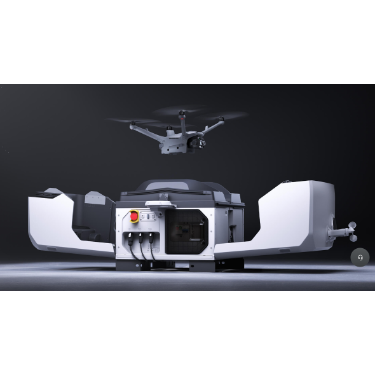
Featured product
DJI Airport 3
DJI Airport 3 has excellent adaptability, can be flexibly deployed, and reshapes a new paradigm of operations. Paired with the new generation D-RTK 3 relay station, it allows for more flexible selection of airport fixed deployment addresses. With the new DJI industry app, deployment can be completed using a mobile...
Products mentioned in this guide
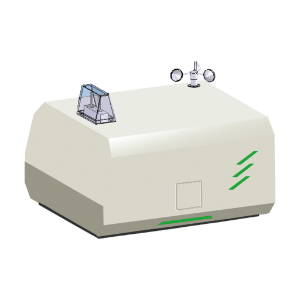
QC200-M3 Small Battery Swapping Drone Nest
Empowering small industrial drones with fixed deployment, flexible mobility, lightweight design, unattended operation, remote communication, automatic battery swap, real-time...
View product details →
Mini100-M3 Compact Charging Drone Nest
Enable small industrial UAVs, fixed deployment, flexible mobility, light-weight design, unattended, remote communication, real-time monitoring.and effectively extend the operating...
View product details →
CC300 truck-mounted mobile nest
Enable small industrial UAVs, mobile deployment, mobility and flexibility, fieldcommand, remote communication, real-time monitoring, and effectivelyextend the operating radius of...
View product details →Frequently asked questions
What is the main difference between the DJI Airport 3 and the QC200-M3?
Based on the available data, the DJI Airport 3 emphasizes flexible deployment: fixed sites selected with the help of the D-RTK 3 relay station, phone-based setup via the DJI industry app, and first-time support for vehicle-mounted mobile deployment. The QC200-M3 emphasizes fixed deployment of small industrial drones with automatic battery swap for unattended operation. Detailed specifications for both are not in the available data; contact us for the datasheets.
Which drone nest is better for a training academy with a fixed campus?
Both the DJI Airport 3 and the QC200-M3 support fixed deployment. If your curriculum includes emergency-response scenarios or long-distance inspection training, the DJI Airport 3's vehicle-mounted capability adds flexibility. If your program focuses on unattended operations and battery-swap workflows from one site, the QC200-M3's automatic battery swap is the more relevant feature. Confirm compatibility and specifications with each manufacturer before deciding.
Does the QC200-M3 charge the drone or swap batteries?
According to its product description, the QC200-M3 performs automatic battery swaps for small industrial drones. The related Mini100-M3 Compact Charging Drone Nest is described around charging instead. Charge times, swap times, and battery capacities are not provided in the available data; contact us for the datasheet.
Can the DJI Airport 3 be deployed from a vehicle?
Yes. The product description states that the DJI Airport 3 supports mobile deployment in vehicles for the first time, making scheduling more efficient during emergency operations and covering long-distance inspection needs. Vehicle platform requirements and setup details are not in the available data; contact us for the datasheet.
What specifications should I request before buying a drone hangar for training?
At minimum, request dimensions and weight, supported aircraft models, power and battery specifications, environmental ratings, communication and positioning systems, setup and deployment procedures, and applicable certifications for your region. None of these specifications are included in the available product data for the DJI Airport 3, QC200-M3, Mini100-M3, or CC300, so contact us for the datasheets.
Need help selecting the right system?
Tell us your mission, payload, and operating environment. Our team will help you compare options and request the right datasheets from verified suppliers.