An eVTOL (electric vertical take-off and landing) aircraft is an electrically powered platform that takes off and lands vertically but cruises on aerodynamic lift, and for B2B buyers the most consequential procurement question is usually which power system will sustain flight endurance, altitude tolerance, and operational reliability at the scale your program requires. In training and education contexts, that question also extends to documentation quality, integration support, and supplier responsiveness, because a training fleet must support repeatable instruction, not just demonstration flights. This FAQ answers the questions procurement teams actually ask when specifying eVTOL power systems, using the 30kW aviation liquid-cooled fuel cell power system from Qingyan Easy H2 Power Technology as a worked example.
What should training and education buyers evaluate first in an eVTOL?
Training programs differ from operational fleets in one key respect: aircraft are flown intensively, by pilots of varying experience, in a fixed geographic area. That shifts procurement priorities. Rather than optimizing for a single mission profile, evaluate:
What power system options exist for eVTOL platforms?
eVTOL buyers typically compare two power architectures: hydrogen fuel cell systems and lithium-based batteries. Both appear in the SkyDrone Max marketplace, and both have aviation-focused variants. The main product in this article is purpose-built for aviation and, per the manufacturer, is suitable for long-endurance cargo UAVs, eVTOL aircraft, and other applications. It integrates ultra-thin titanium metal bipolar plates, ultra-lightweight accessories, full-altitude adaptive optimal control, multi-level fault diagnosis, and real-time intelligent management.
For smaller platforms or ground-based training aids, the same supplier offers an air-cooled fuel cell power system in 1kW and 2kW closed graphite and closed metal configurations. It uses a closed-cathode design, operates from -20°C to 40°C, and supports modular scalability. Its stated applications include industrial UAVs, small backup power supplies, and two-wheel electric vehicles. For battery-based propulsion, two UAV solid-state lithium batteries are available: the M50.5V67NW with cell energy density of at least 330Wh/kg and the M22.8V25NW at at least 280 Wh/kg. Both operate from -40°C to 60°C, support a continuous 3C discharge rate, offer customized design, and are suited to long-endurance tasks such as surveying or delivery.
| Attribute | 30kW liquid-cooled fuel cell | Air-cooled fuel cell (1-2kW) | Solid-state lithium M50.5V67NW |
|---|---|---|---|
| Category | eVTOL | Battery / power supply | Battery / power supply |
| Rated power / energy | 30 kW | 1kW and 2kW models | Cell energy density ≥330 Wh/kg |
| Temperature range | -35°C to 55°C | -20°C to 40°C | -40°C to 60°C |
| Altitude support | 0 to 8,000 m | Not stated — contact us for the datasheet | Not stated — contact us for the datasheet |
| Notable features | Titanium metal bipolar plates, ultra-lightweight accessories, multi-level fault diagnosis | Closed-cathode configuration, modular scalability | Gel-state electrolyte, solid-state separator, 3C continuous discharge |
| Stated applications | Long-endurance cargo UAVs, eVTOL aircraft | Industrial UAVs, small backup power, two-wheel EVs | Surveying, delivery, other long-endurance tasks |
Which power system fits a training program?
Match the power system to the platform class, not to a generic ranking. A full-scale eVTOL trainer or a long-endurance cargo UAV used in an advanced air mobility curriculum has very different power demands from a small industrial UAV used in introductory flight labs. The 30kW liquid-cooled fuel cell is purpose-built for aviation and lists eVTOL aircraft among its target applications. The 1-2kW air-cooled systems address small UAV platforms and auxiliary power. The solid-state lithium batteries support platforms where battery energy density and a 3C continuous discharge rate are the governing requirements. If your training syllabus includes cold-weather or high-altitude flight modules, the -35°C to 55°C range and 0 to 8,000 m altitude envelope of the 30kW system are directly relevant; for any envelope detail not listed in the supplier data, contact us for the datasheet.
What compliance and documentation should buyers request?
Procurement teams should never accept marketing descriptions as a substitute for technical documentation. Before awarding a contract, request:
How do you evaluate an eVTOL power system supplier?
Use a structured checklist rather than intuition. A practical evaluation for training and education buyers:
What should East African buyers consider specifically?
For training and education programs in East Africa, two environmental factors deserve explicit attention. First, elevation: training sites at altitude reduce the margin between operating conditions and the power system's rated envelope, so confirm the supported altitude range for any candidate system. The 30kW liquid-cooled fuel cell explicitly supports 0 to 8,000 meters, which covers a wide range of regional training locations; for other products, contact us for the datasheet. Second, thermal conditions: the 30kW system's -35°C to 55°C operating range and the solid-state batteries' -40°C to 60°C range both indicate tolerance for hot operating conditions, but buyers should still verify the continuous-duty behavior at their site's peak temperatures with the supplier. Third, plan for lead times, import procedures, and local service arrangements early, since training programs depend on aircraft availability rather than one-off deliveries.
How should you structure the purchasing process?
A disciplined sequence reduces risk for institutional buyers:
SkyDrone Max can facilitate datasheet requests, supplier introductions, and specification comparisons for the products listed here. Contact us for the datasheet or a quotation for the 30kW aviation liquid-cooled fuel cell power system, the air-cooled fuel cell family, or the solid-state lithium battery options.

Featured product
30kW aviation liquid-cooled fuel cell power system
With a rated power of 30 kW, this system is purpose-built for aviation applications. It integrates multiple cutting-edge technologies, including ultra-thin titanium metal bipolar plates, ultra-lightweight accessories, full-altitude adaptive optimal control, multi-level fault diagnosis, and real-time intelligent...
Products mentioned in this guide
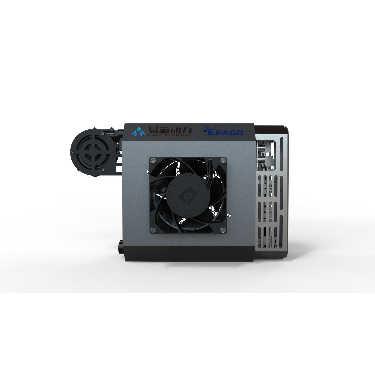
Air-cooled fuel cell power system
Purpose-built for aviation applications, this system features a light and compact structure and integrates multiple cutting-edge technologies, including a closed-cathode...
View product details →
UAV solid state lithium batteryM50.5V67NW
Cell energy density≥330Wh/kg Temperature range: -40°C to 60°C Innovative gel-state electrolyte, solid-state separator, high-voltage cathode, and high-capacity anode materials...
View product details →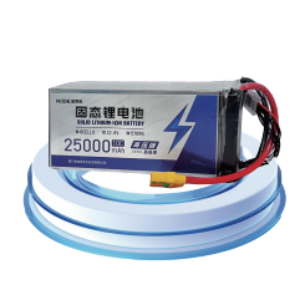
UAV solid state lithium battery M22.8V25NW
Cell energy density ≥ 280 Wh/kg Temperature range: -40°C to 60°C Innovative gel-state electrolyte, solid-state separator, high-voltage cathode, and high-capacity anode...
View product details →Frequently asked questions
What is an eVTOL, and why does it matter for training programs?
An eVTOL is an electric vertical take-off and landing aircraft that lifts off vertically and cruises on aerodynamic lift. For training and education buyers, eVTOL platforms are becoming part of advanced air mobility curricula, which makes power system selection — endurance, thermal envelope, and altitude capability — a core procurement decision. The 30kW aviation liquid-cooled fuel cell power system lists eVTOL aircraft among its stated applications.
What is the 30kW aviation liquid-cooled fuel cell power system designed for?
It is purpose-built for aviation with a rated power of 30 kW. It integrates ultra-thin titanium metal bipolar plates, ultra-lightweight accessories, full-altitude adaptive optimal control, multi-level fault diagnosis, and real-time intelligent management. It operates from -35°C to 55°C and supports altitudes from 0 to 8,000 meters, with stated applications including long-endurance cargo UAVs and eVTOL aircraft.
Can I use the 30kW fuel cell system at high altitude or in extreme temperatures?
The published data states stable operation across -35°C to 55°C and support for high-altitude applications from 0 to 8,000 meters, with full-altitude adaptive optimal control. For details beyond the published description, such as continuous-duty performance at specific site conditions, contact us for the datasheet.
How do fuel cell systems compare with solid-state lithium batteries for UAV training fleets?
They serve different profiles. The 30kW liquid-cooled fuel cell is an aviation-focused system aimed at eVTOL and long-endurance cargo UAVs, with a -35°C to 55°C operating range and 0 to 8,000 m altitude support. The air-cooled fuel cell systems (1-2kW) suit small industrial UAVs and backup power, operating from -20°C to 40°C with modular scalability. The solid-state lithium batteries offer cell energy density of at least 330 Wh/kg (M50.5V67NW) or 280 Wh/kg (M22.8V25NW), operate from -40°C to 60°C, support 3C continuous discharge, and are suited to long-endurance tasks like surveying and delivery. Choose based on your platform class and mission profile, and request datasheets for any figures you need to verify.
What documentation should we request before purchasing eVTOL power systems?
Request the full technical datasheet, certification and conformity documentation relevant to your region, the test basis for stated temperature and altitude ranges, integration and interface documentation for your airframe, and written warranty and service terms. Where any of these are not published in the product data — for example, certifications for the 30kW fuel cell system — contact us and we will request them from the manufacturer on your behalf.
Need help selecting the right system?
Tell us your mission, payload, and operating environment. Our team will help you compare options and request the right datasheets from verified suppliers.